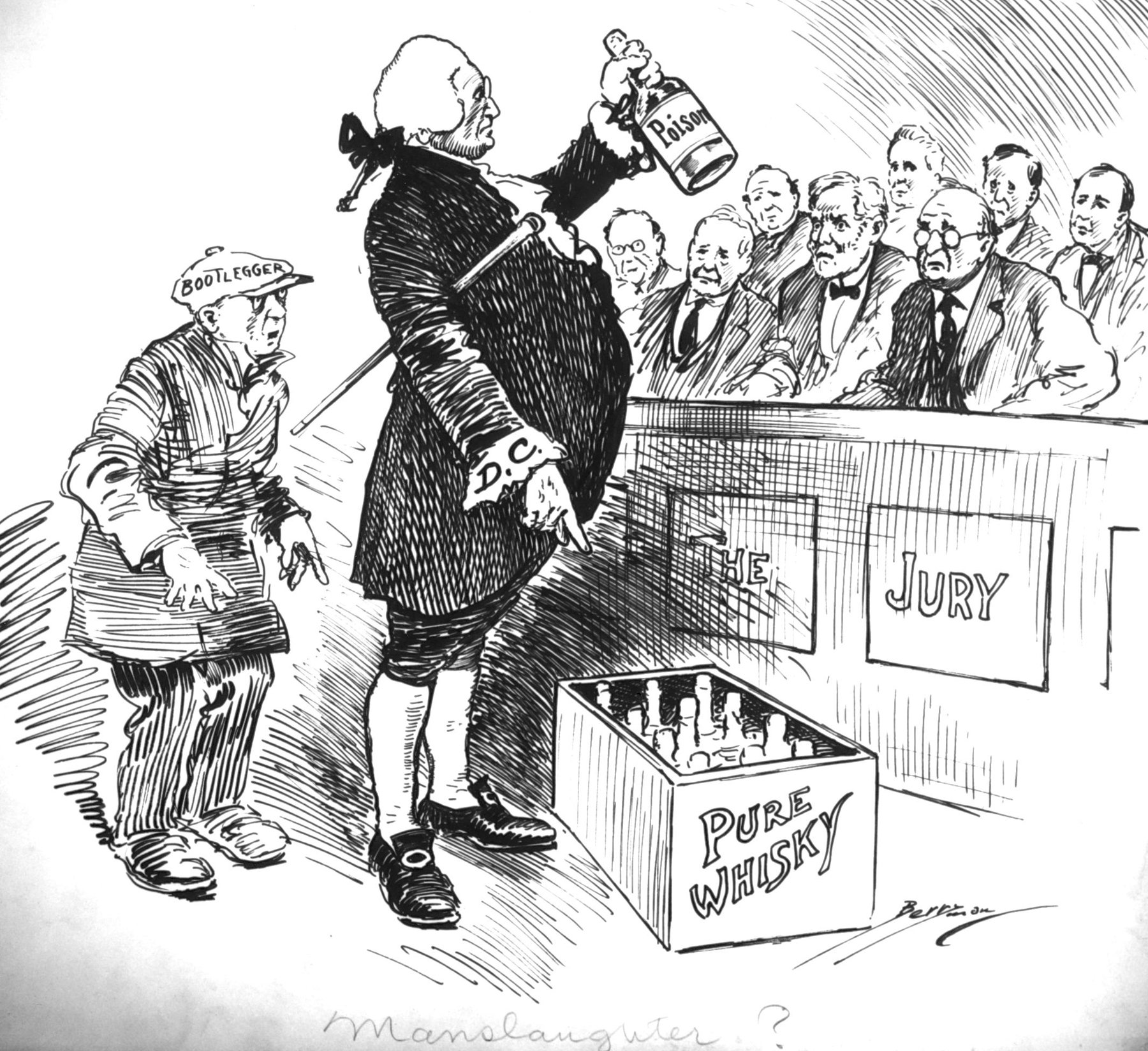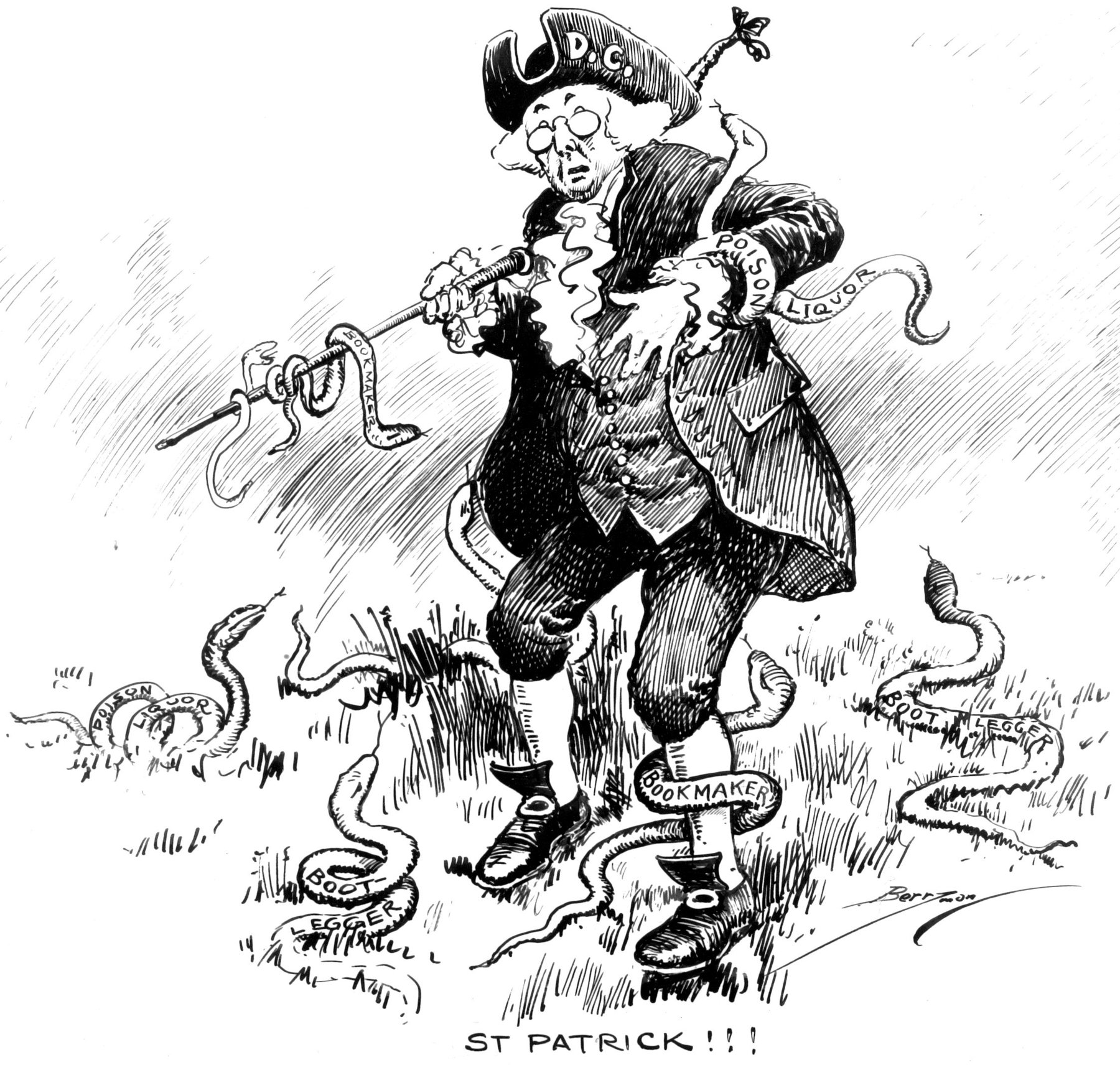
This section collects primary records of national Prohibition from the National Archives, the Library of Congress, the Statutes at Large, the Supreme Court, and the histories that federal agencies publish about themselves. It does not retell the period. Each record is its own page, with its citation and rights, and the prose below says only what those pages say. Where two federal pages disagree, the disagreement is stated.
The law
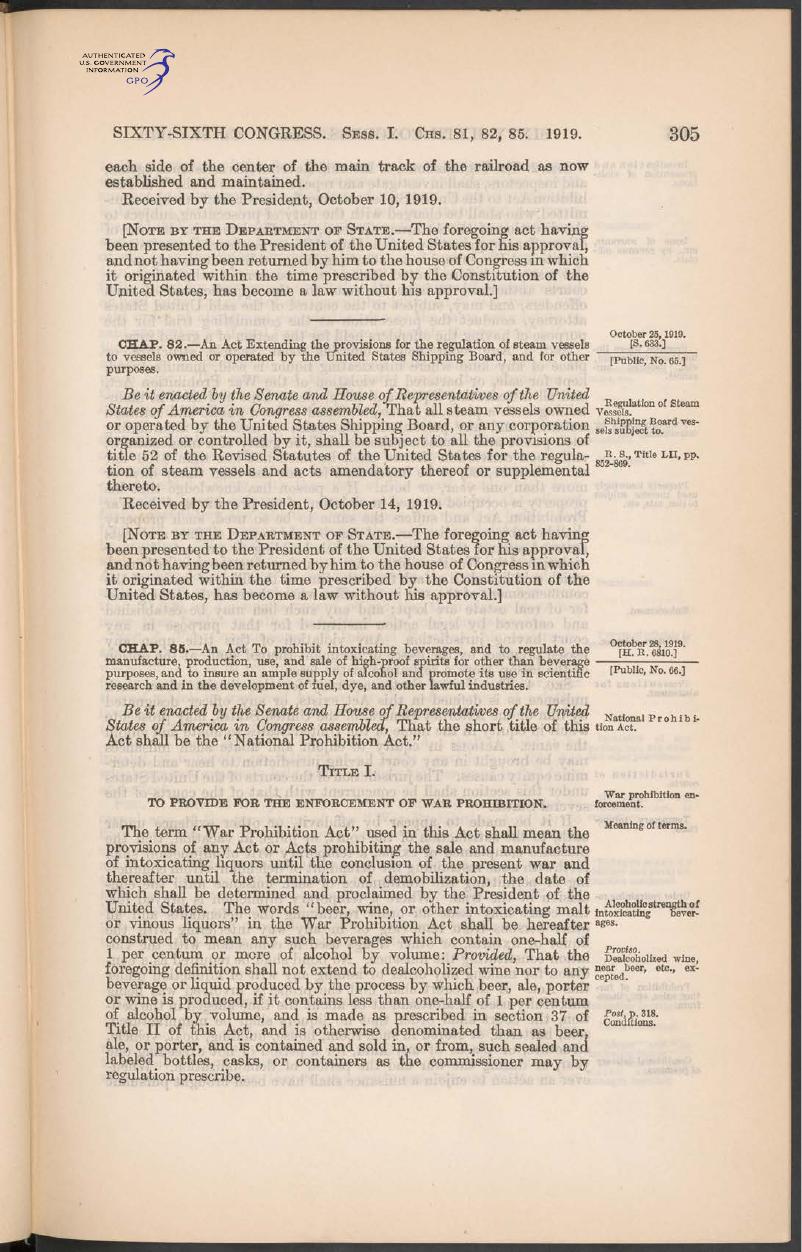
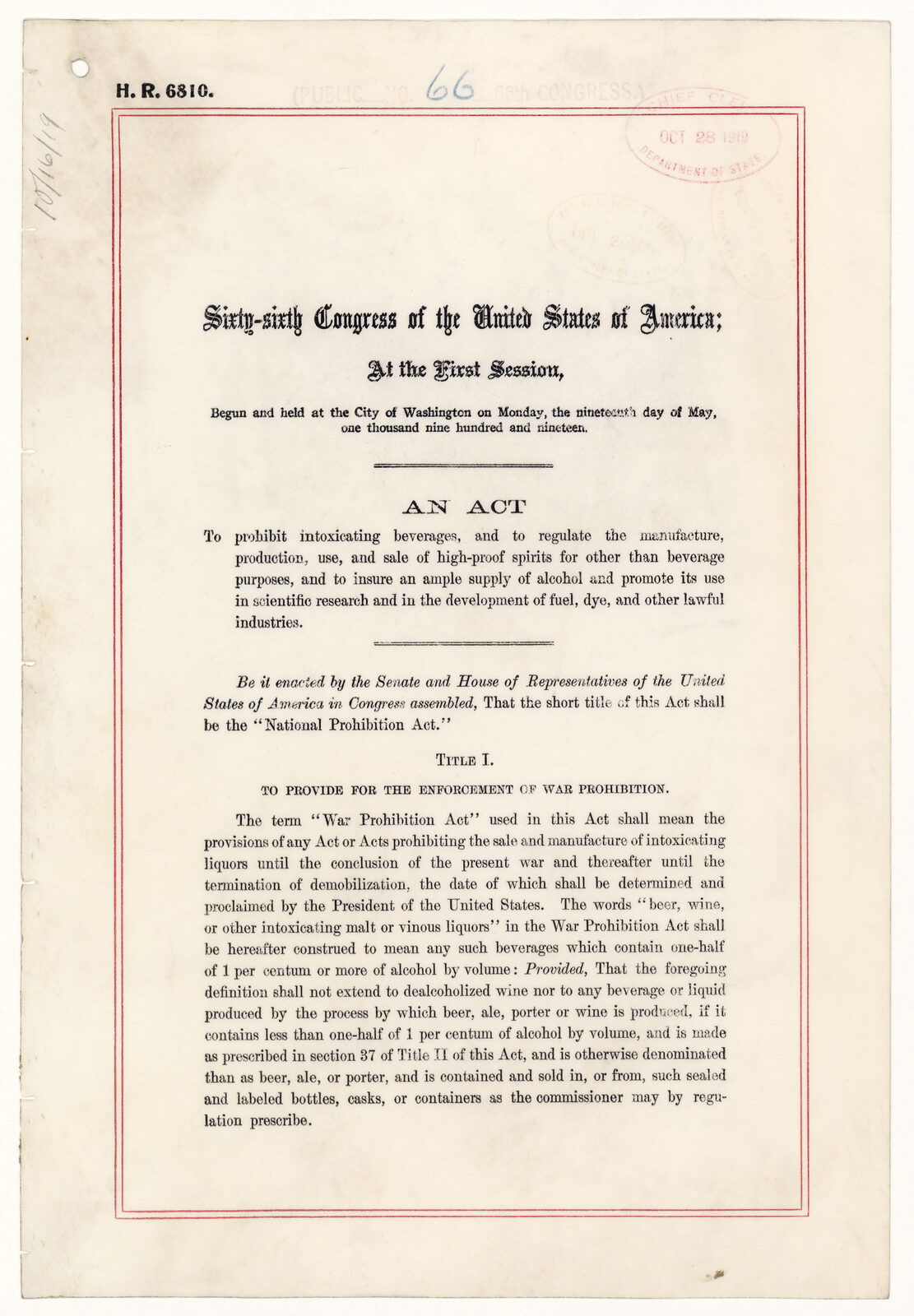
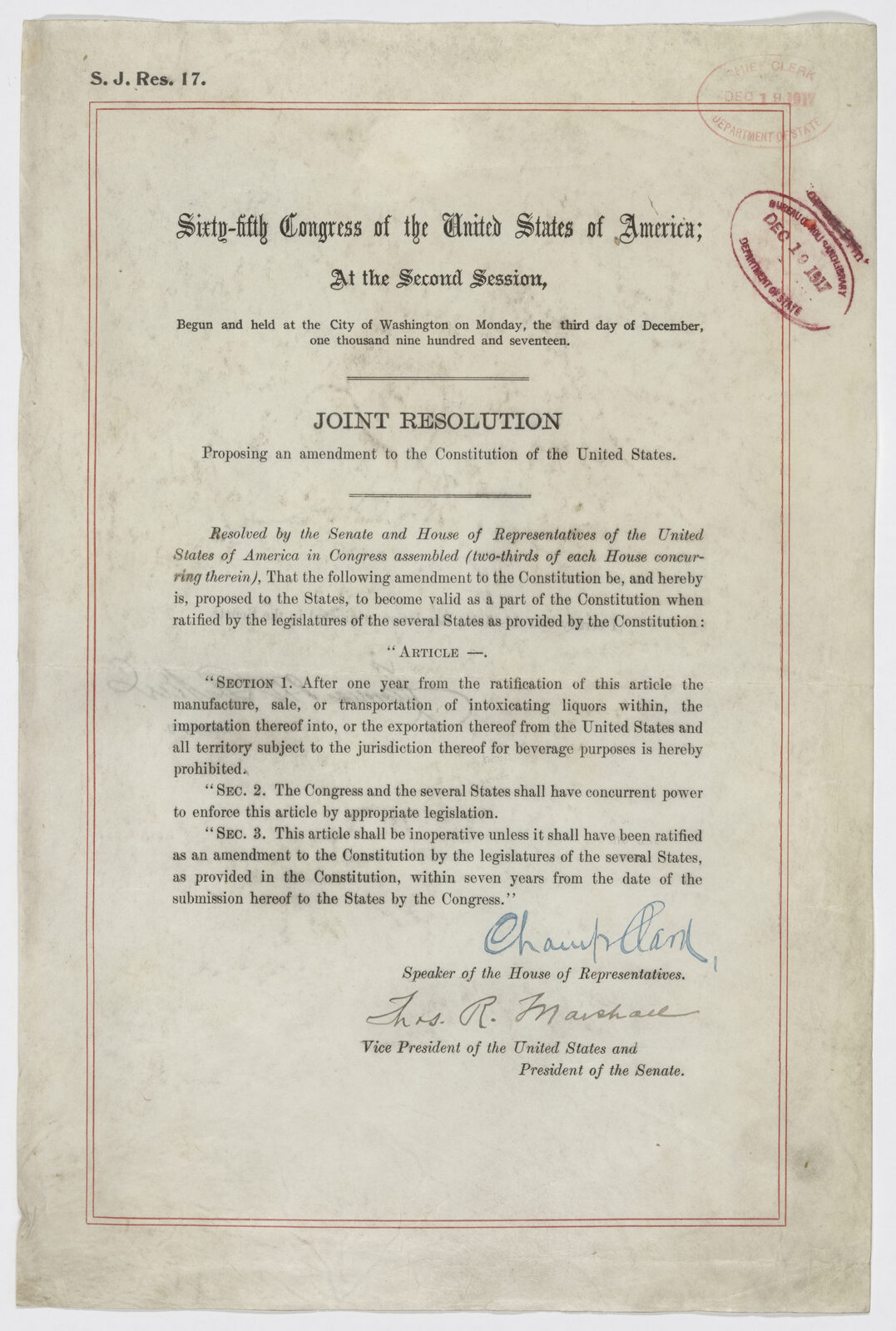
The records here begin with the text. The Eighteenth Amendment was proposed by S.J. Res. 17 of the 65th Congress; the enrolled copy at the National Archives carries Department of State stamps dated December 19, 1917, and NARA’s scope note says the amendment “was ratified January 16, 1919.” The ATF timeline gives January 19, 1919, and says Congress ratified it; the two federal pages differ and are kept apart here. The National Prohibition Act, H.R. 6810, is dated October 28, 1919 and is printed at 41 Stat. 305. The ATF timeline says the Act and the Amendment both became effective on January 16, 1920.
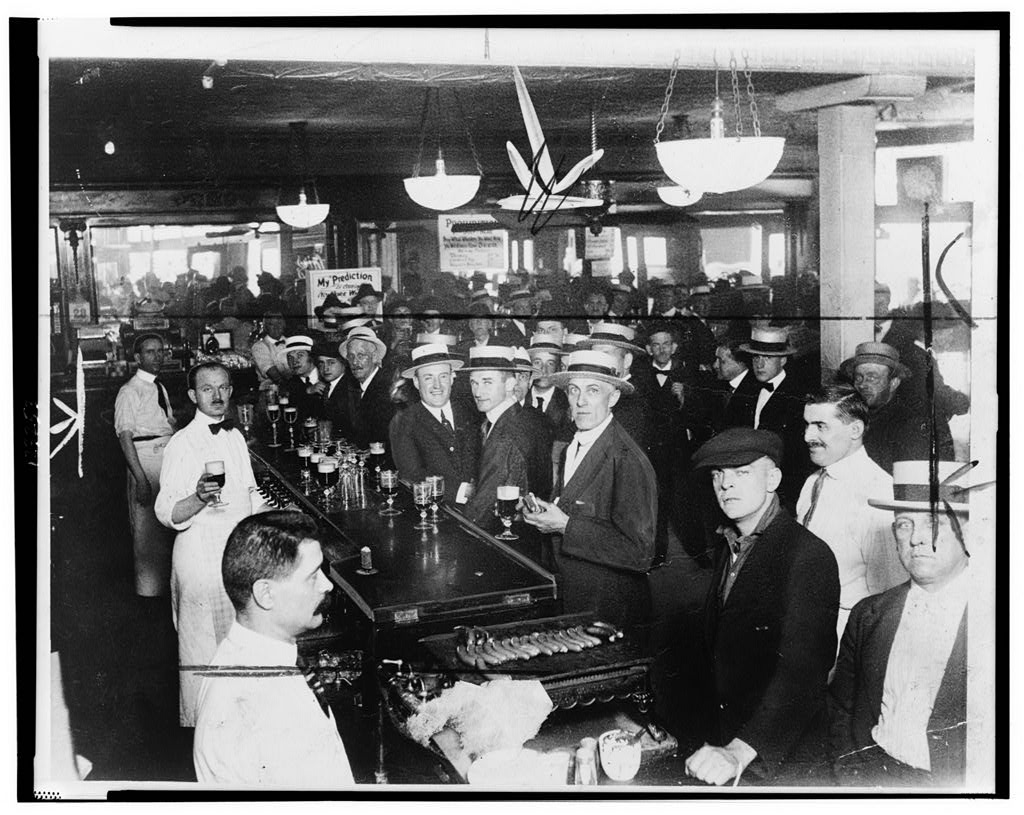
Page 305 defines the term at the center of the Act: “beer, wine, or other intoxicating malt or vinous liquors” means beverages containing “one-half of 1 per centum or more of alcohol by volume.” The Library of Congress photograph of a crowded bar on the night of 30 June 1919 shows wartime prohibition, which came before the Act.
- National Prohibition Act, 41 Stat. 305 (Chapter 85, 28 October 1919)
- Enrolled National Prohibition Act (Volstead Act), 28 October 1919
- Joint Resolution proposing the Eighteenth Amendment (S.J. Res. 17, 1917)
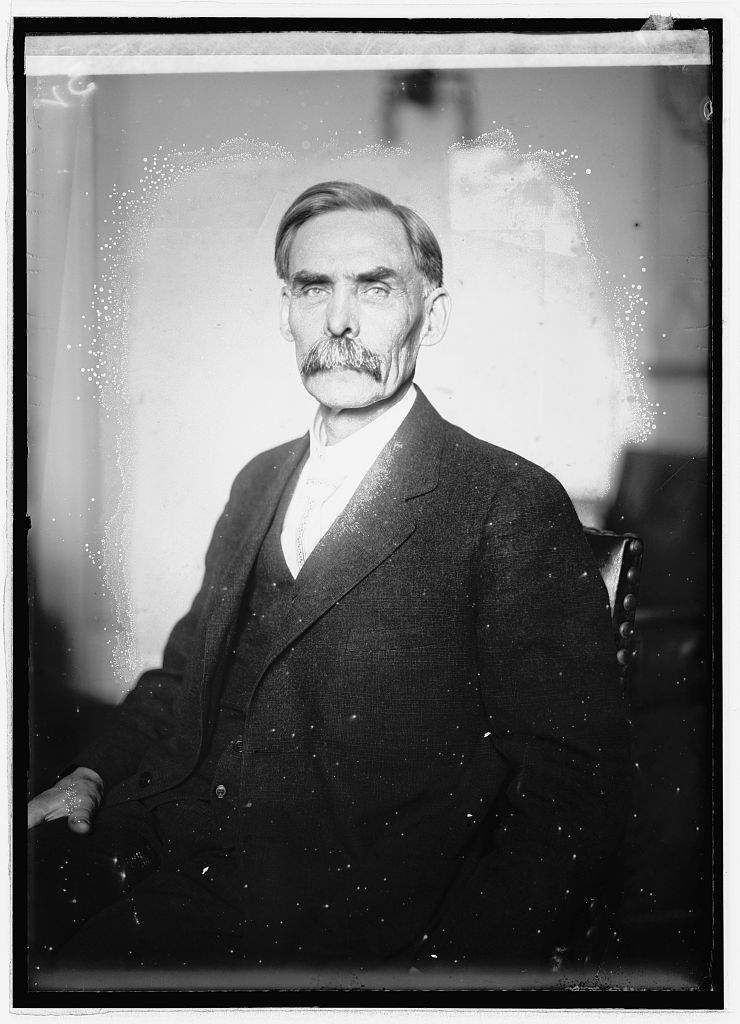
- Andrew J. Volstead of Minnesota, portrait (1921-1922)
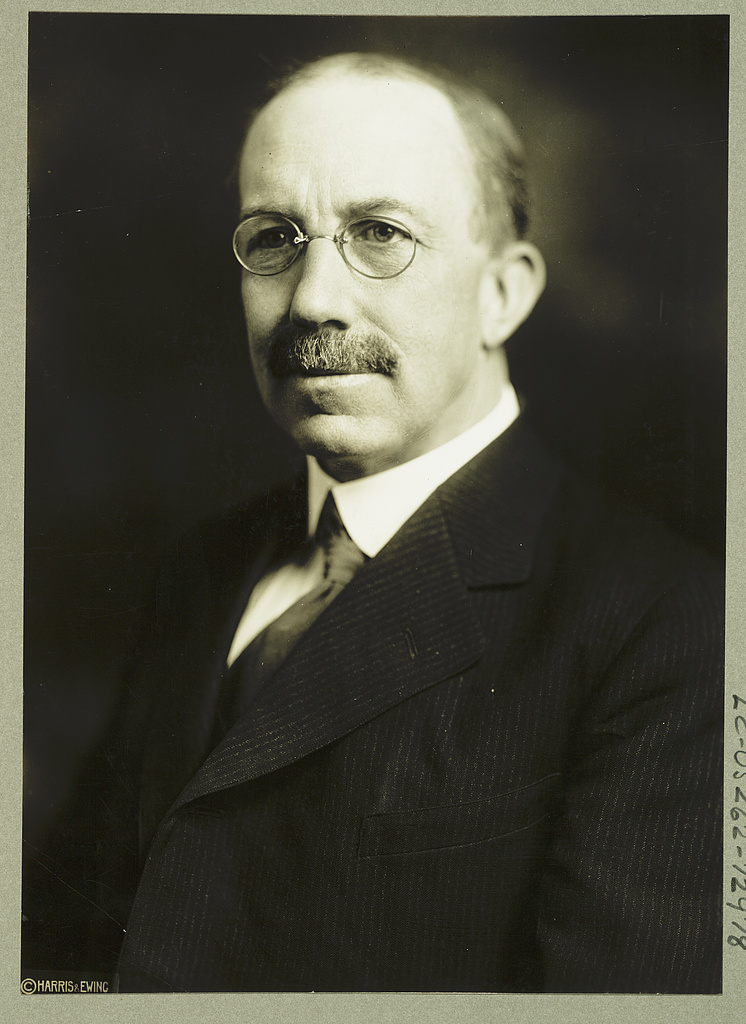
- Wayne Bidwell Wheeler, portrait (5 January 1920)
- Crowded New York bar before midnight, 30 June 1919
- Prologue article, “Spirited Republic: Alcohol’s Evolving Role in U.S. History” (Winter 2014)
- National Archives lesson, “The Volstead Act” (Educator Resources)
Enforcement
The ATF timeline says the Act delegated enforcement to the Commissioner of Internal Revenue, that a Prohibition Unit was created, that it became the Bureau of Prohibition in March 1927, that the Bureau moved from Treasury to the Department of Justice under an Act of May 27, 1930, and that its functions returned to Treasury after repeal. The FBI’s history article places the move to Justice in 1927. Those two federal accounts conflict, and the statutes have not been read here to settle it. The FBI article says the Bureau of Investigation supported Internal Revenue’s enforcement, and the IRS paragraph filed here says its Intelligence Unit dated from 1919.
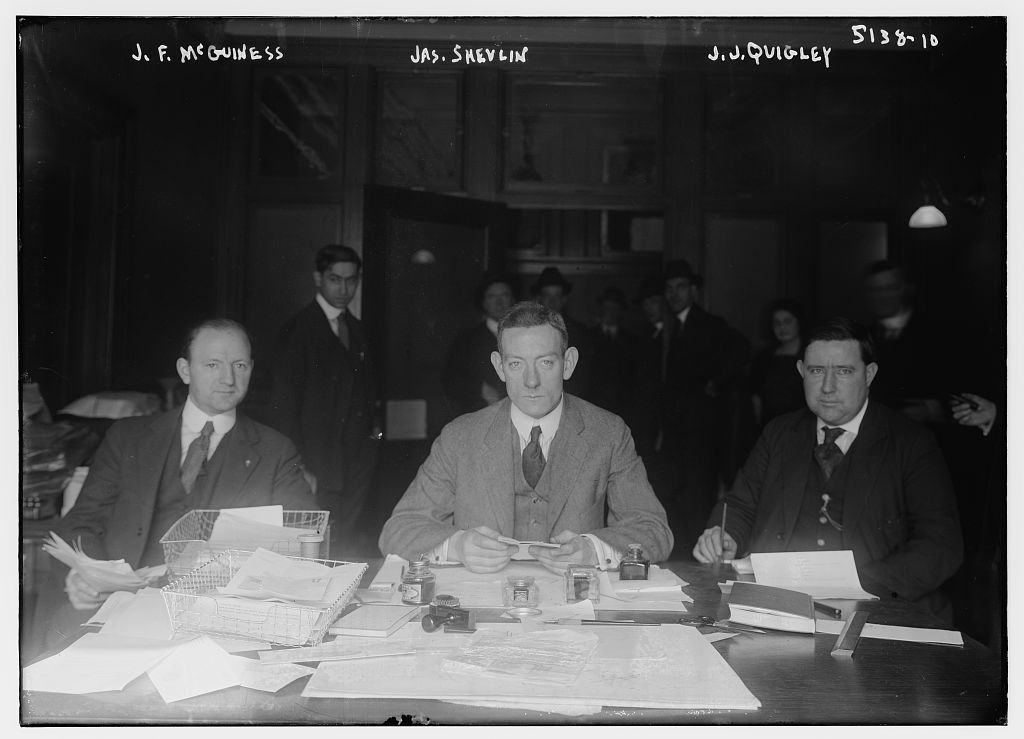
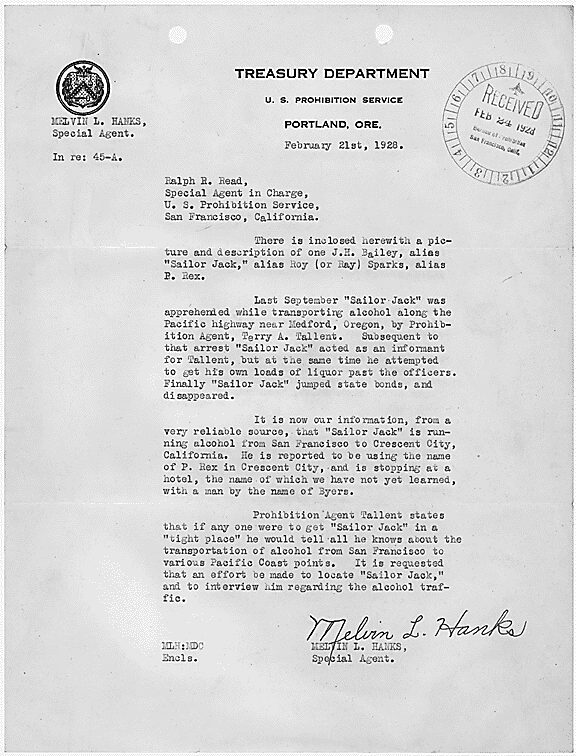
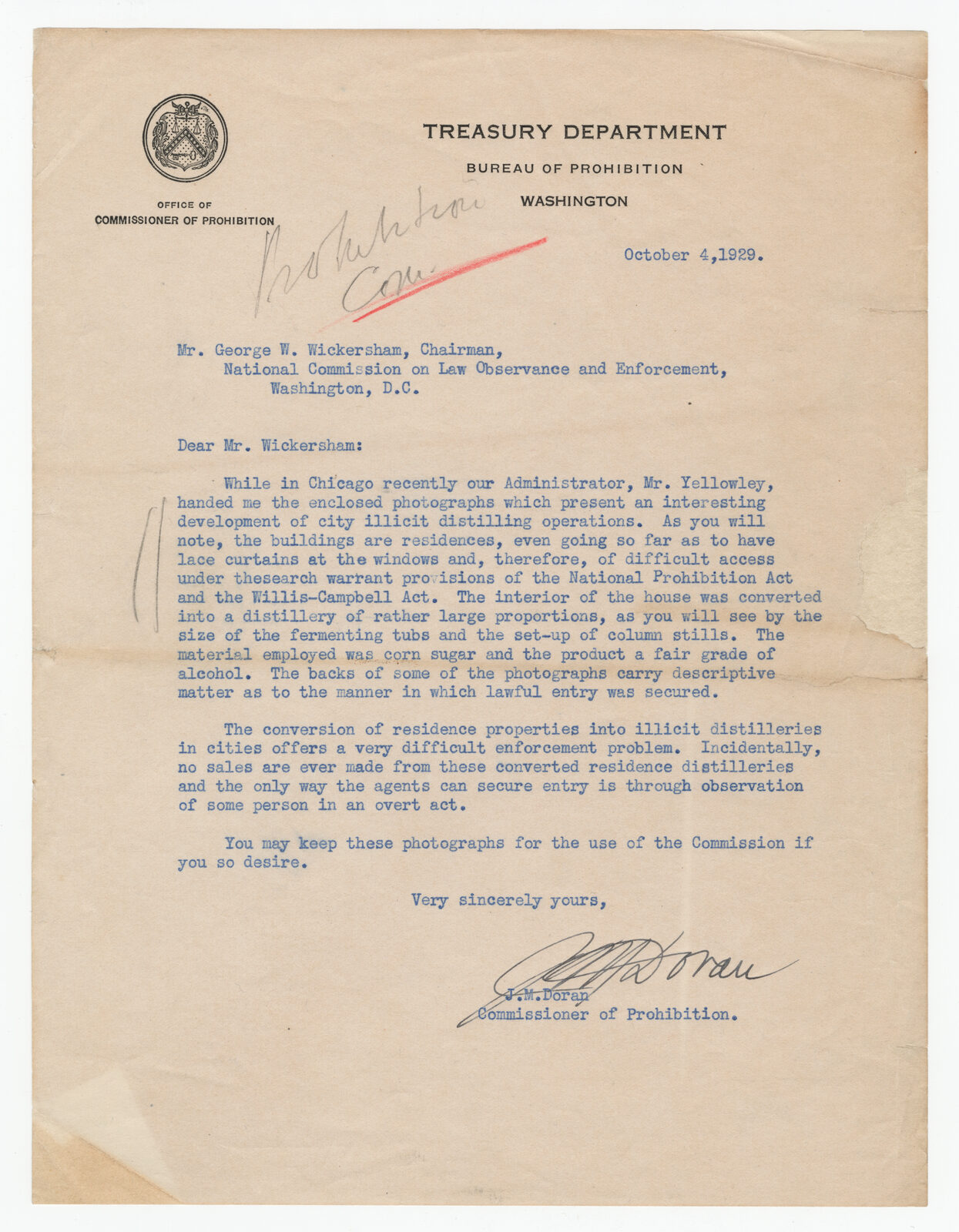
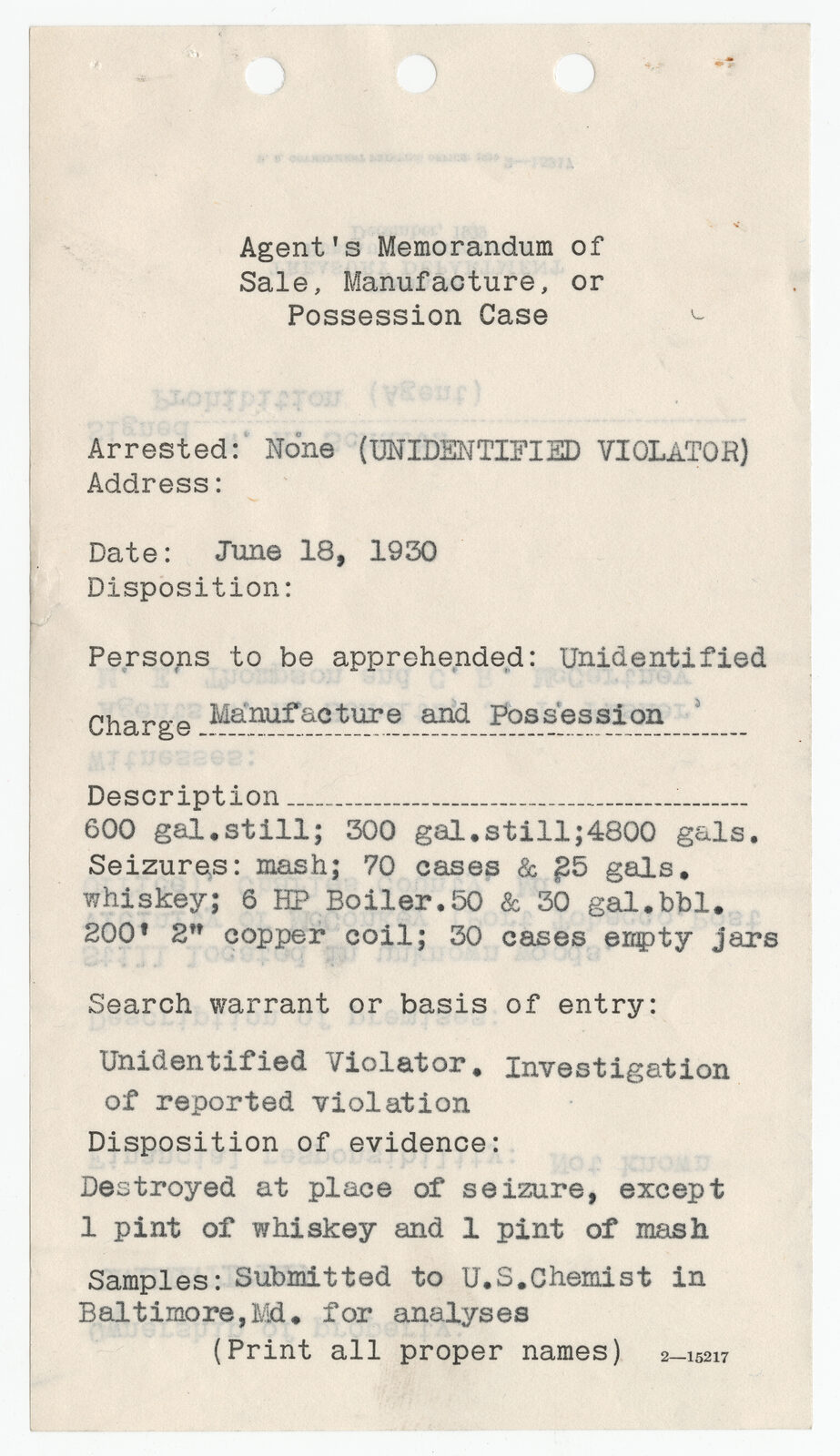
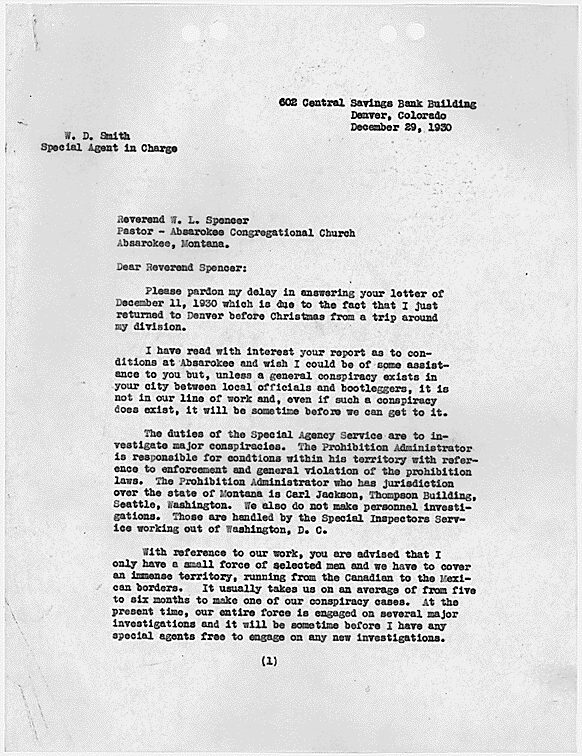
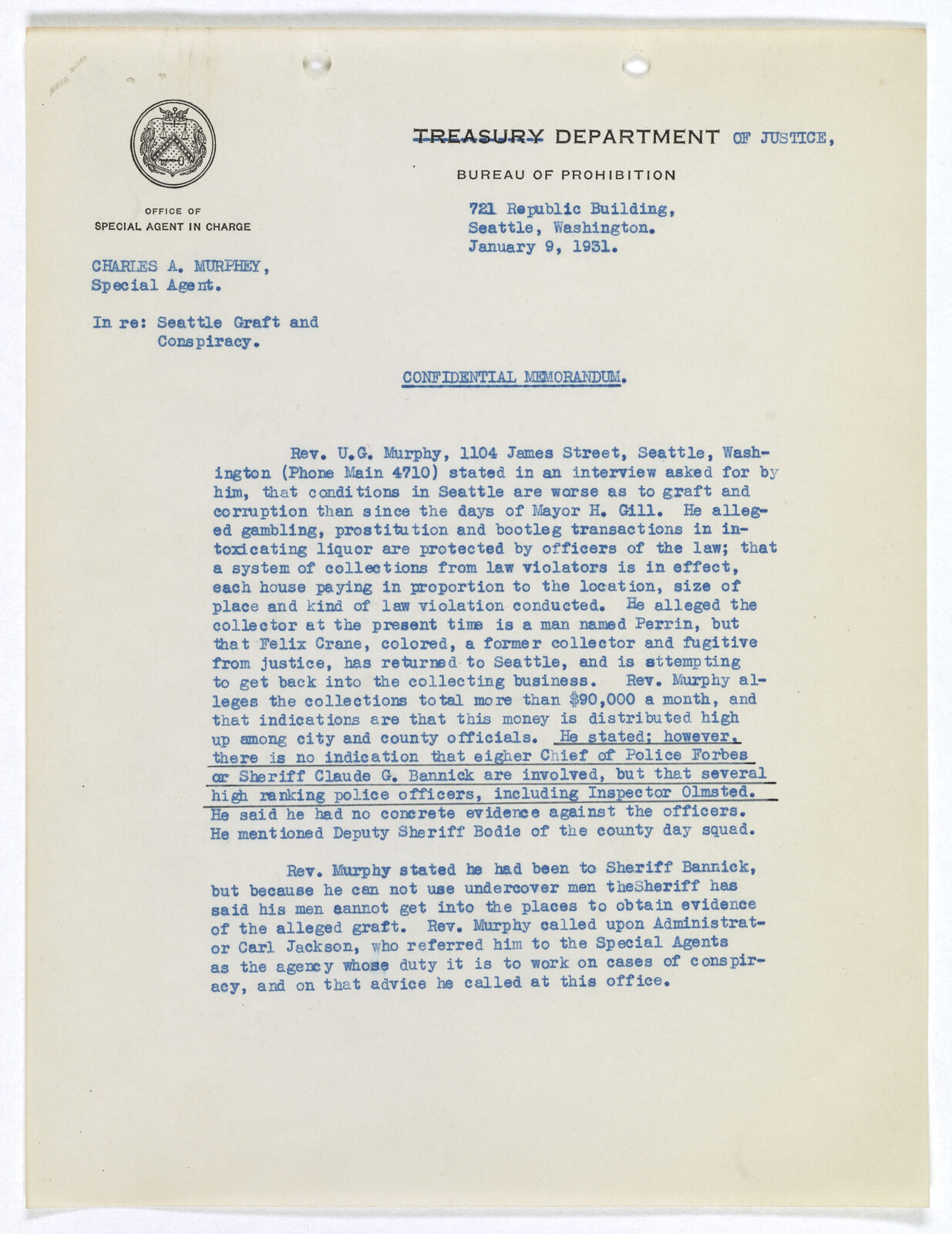
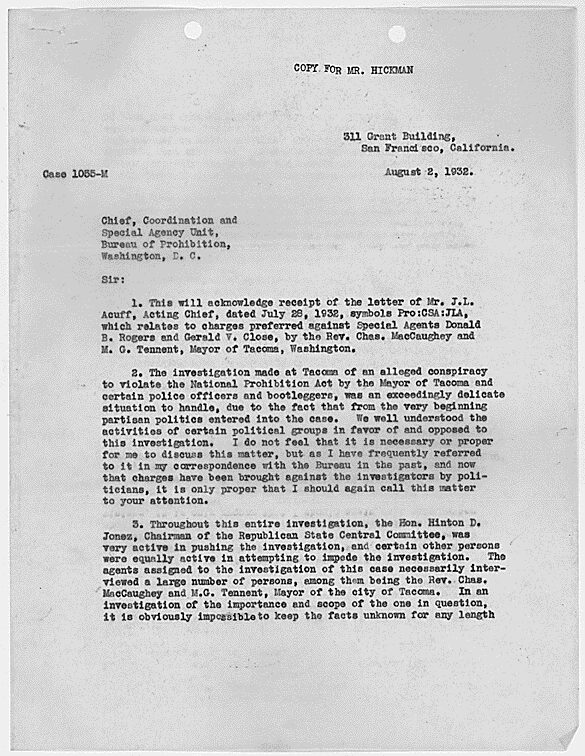
The Bureau of Prohibition’s own papers in the National Archives, 1928 to 1932, are letters and forms rather than prosecutions: a Commissioner’s letter to the Wickersham Commission about a Chicago residence converted to a distillery, an agent’s memorandum listing a seized 600-gallon still, a Denver office’s reply to a Montana pastor, and memoranda recording allegations and counter-charges in Seattle and Tacoma. The allegations are unproved on these records, and the names in them are omitted. The Library of Congress photographs show the officials and the staged and actual enforcement of the period, with identifications that the Library itself marks as unverified or queried.
- ATF history timeline: the Prohibition entries, 1919-1933
- ATF biography of Eliot Ness, Prohibition agent
- FBI history article, “The Bureau and the Great Experiment” (24 January 2020)
- FBI history essay, “The FBI and the American Gangster, 1924-1938”
- IRS Congressional Update: 100th anniversary of IRS Criminal Investigation (2019)
- Portrait labeled “R.S. [i.e. A.] Haynes” (about 1920-1925)
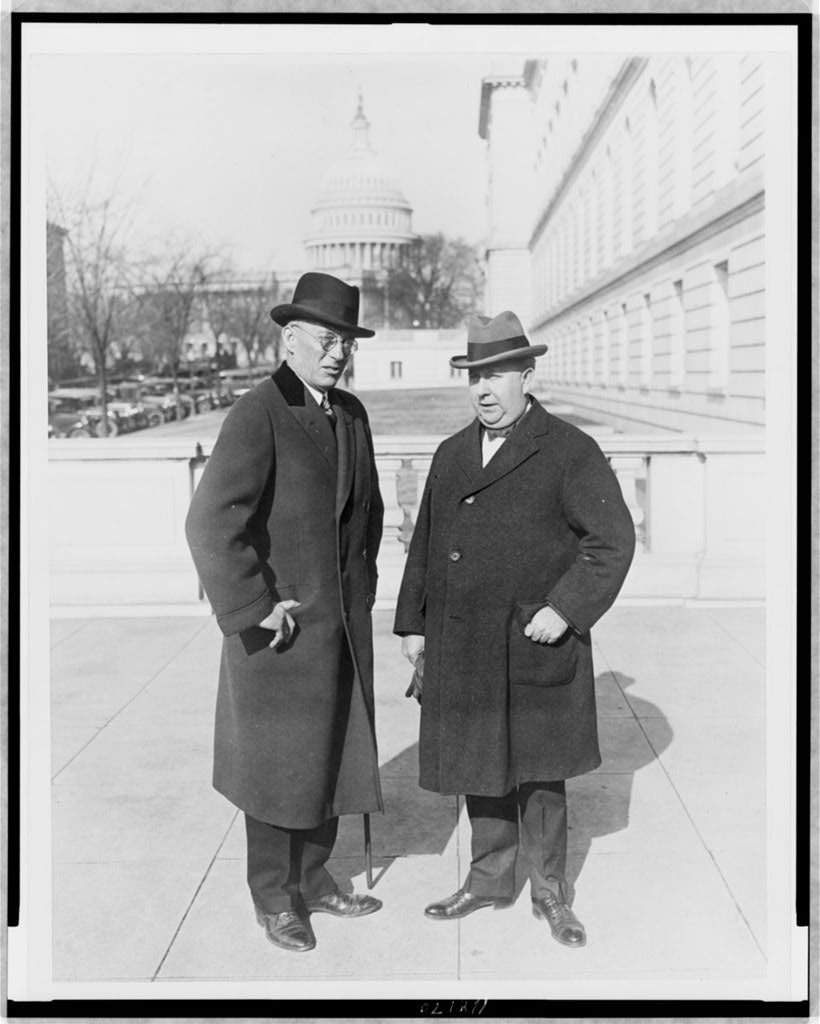
- Lincoln C. Andrews and Roy C. Haynes outside the House of Representatives (1925-1927)
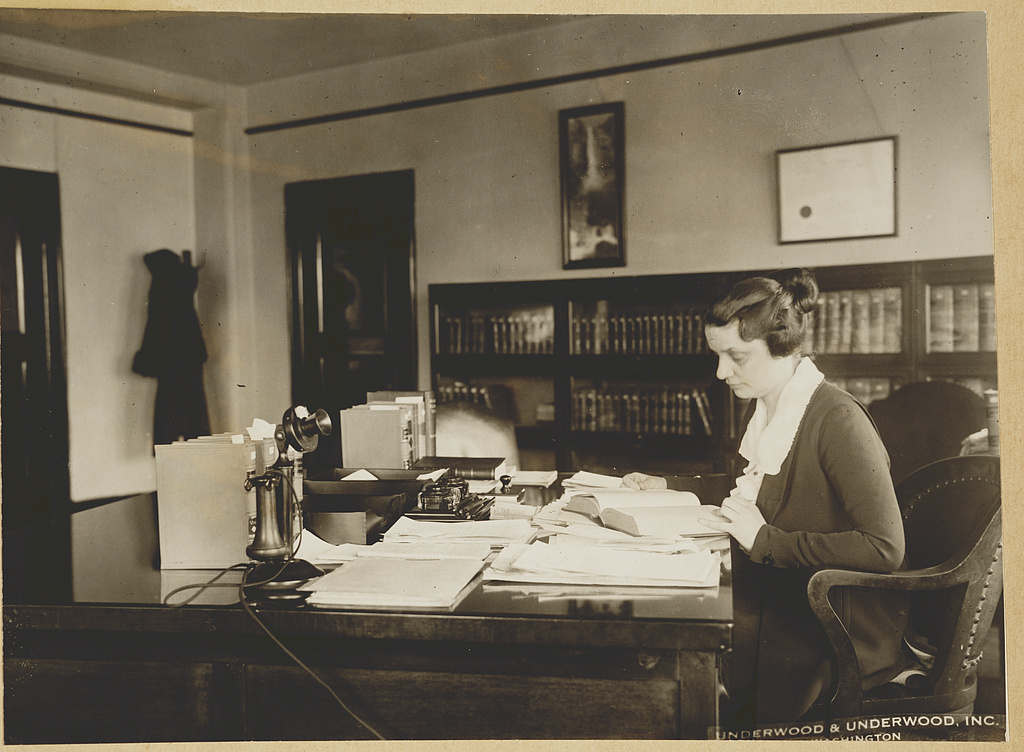
- Mabel Willebrandt, half-length portrait (1920-1940)
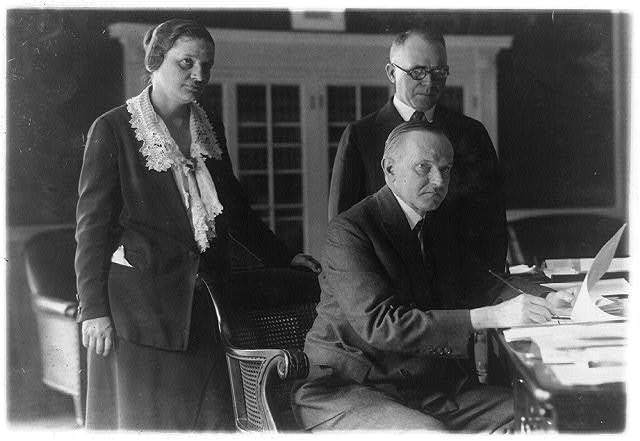
- President Coolidge at his desk with Mabel Willebrandt and a congressman (7 June 1924)
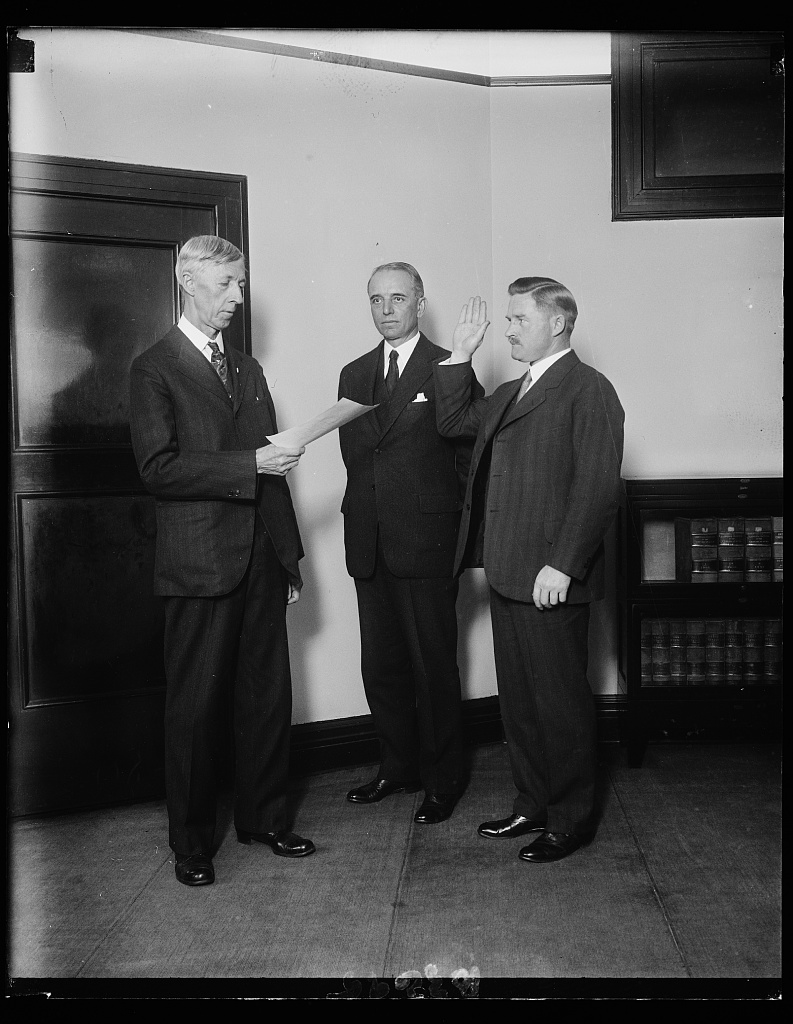
- G.A. Youngquist sworn in to succeed Mabel Walker Willebrandt (22 November 1929)
- Three men at a table of papers, identified from a Library summary as federal prohibition agents (1919-1920)
- Bureau of Prohibition letter on transporting liquor from California to Washington (21 February 1928)
- Commissioner of Prohibition Doran to the Wickersham Commission on a Chicago residence converted to a distillery (4 October 1929)
- Bureau of Prohibition agent’s memorandum of a manufacture and possession case (18 June 1930)
- Bureau of Prohibition reply to a Montana pastor about conditions in Absarokee (29 December 1930)
- Bureau of Prohibition memorandum recording a minister’s allegations about Seattle (9 January 1931)
- Bureau of Prohibition letter on charges against agents investigating the Tacoma case (2 August 1932)
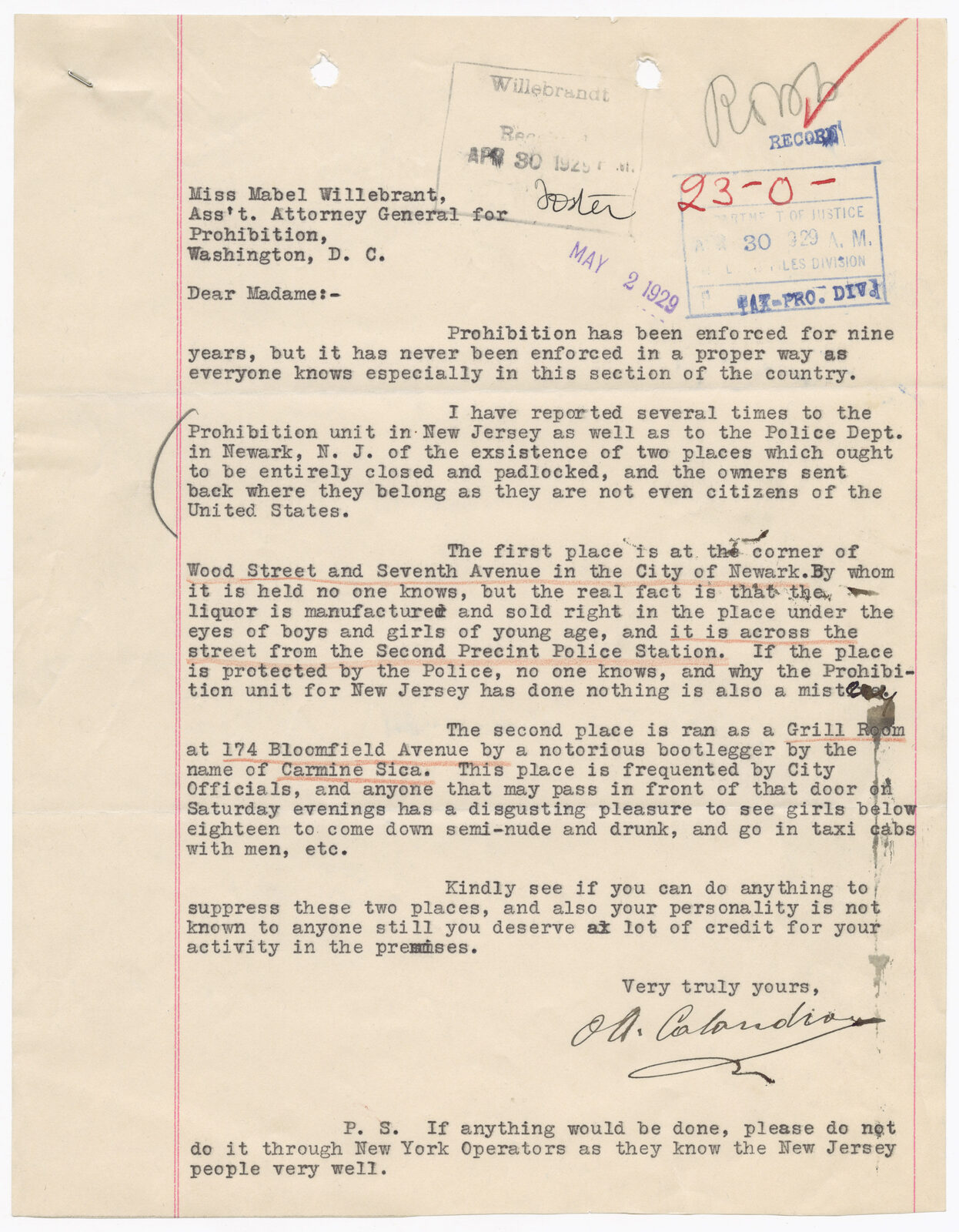
- Private citizen’s letter to Assistant Attorney General Willebrandt about two New Jersey establishments (April 1929)
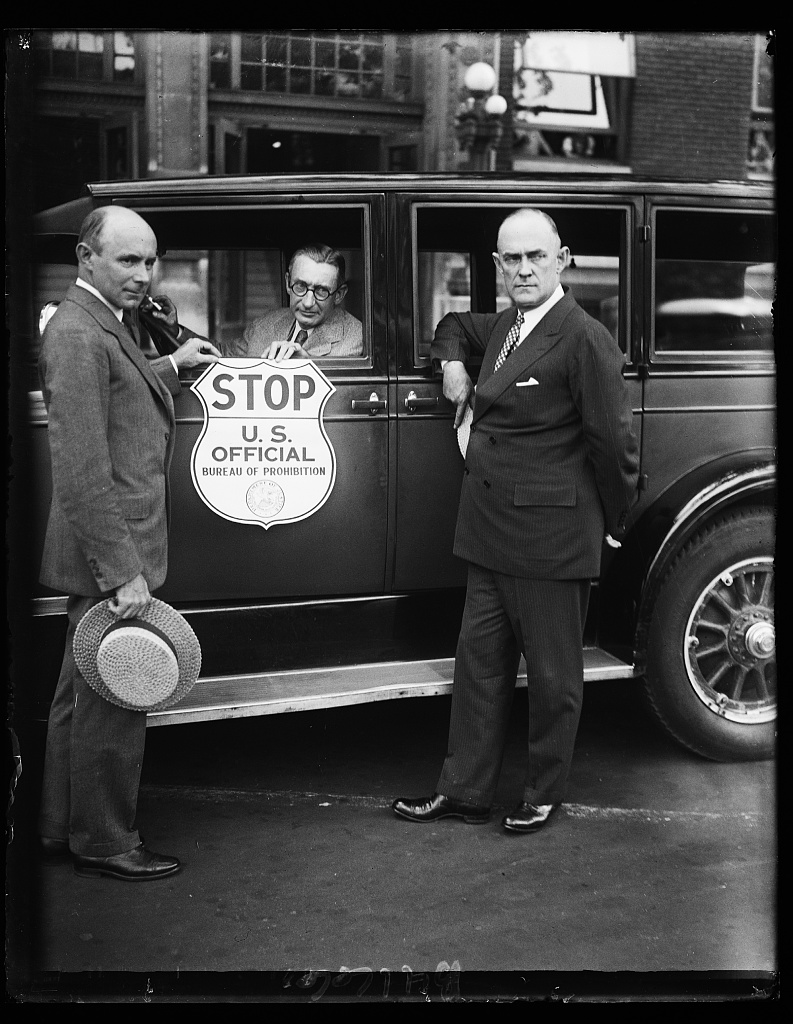
- Bureau of Prohibition insignia plate for stopping suspected automobiles (25 August 1930)
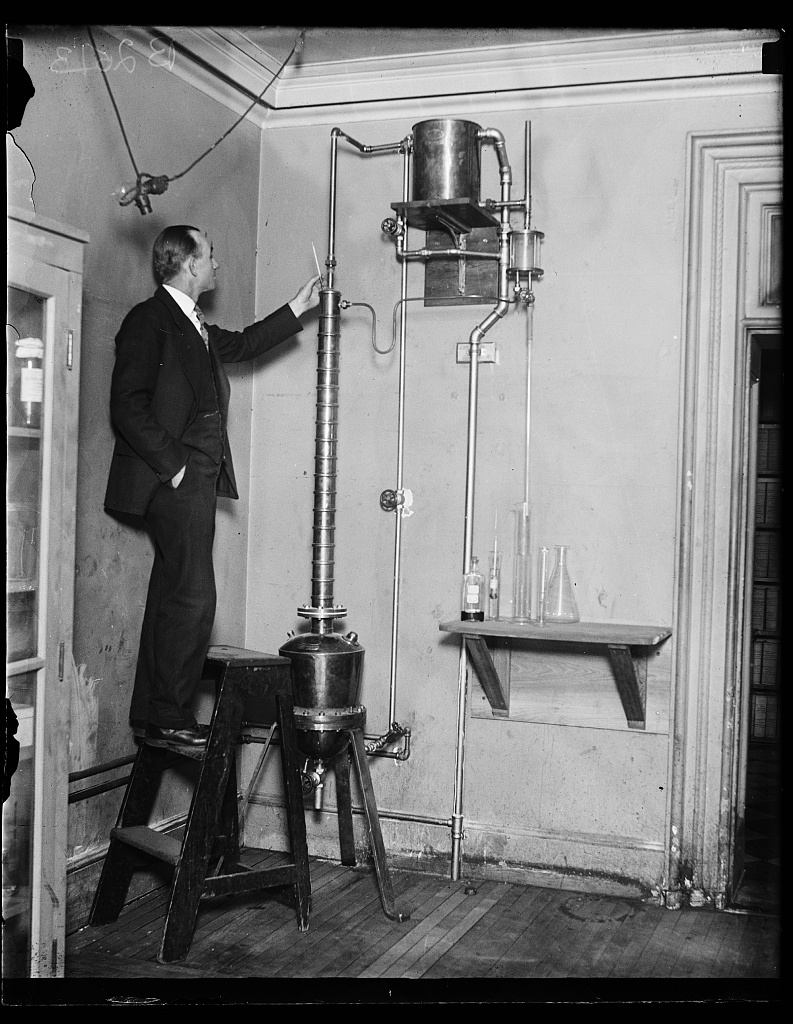
- Prohibition Bureau laboratory still atop the Treasury building (1927 or 1928)
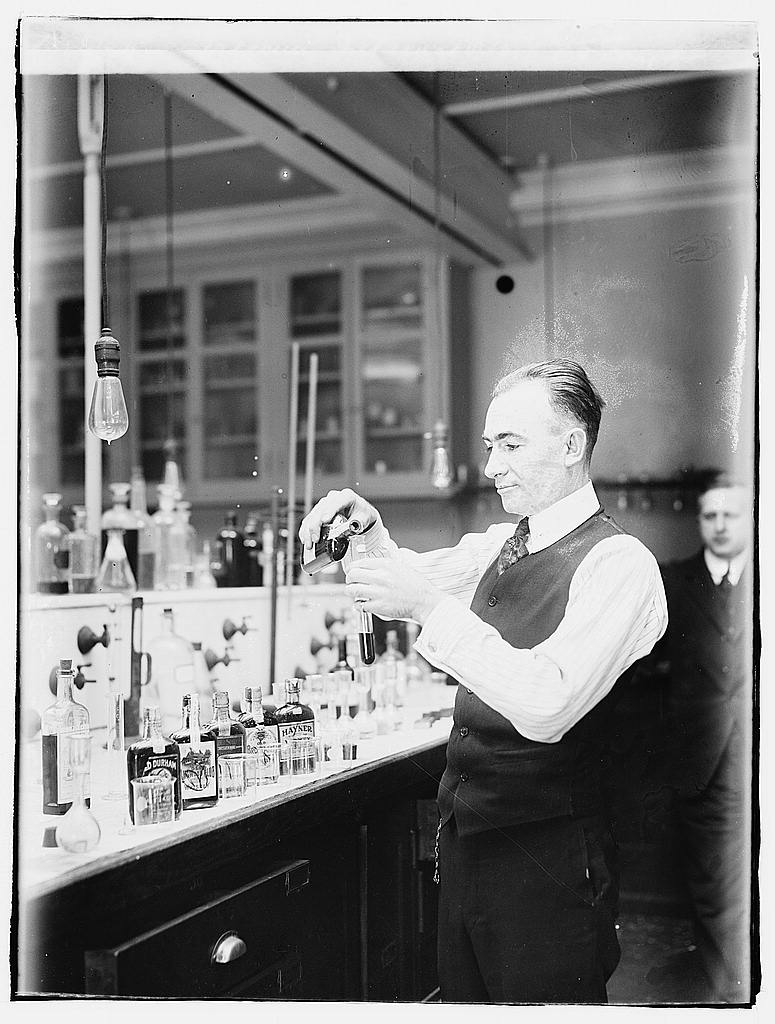
- Treasury Internal Revenue chemist G.F. Beyer (14 January 1920)
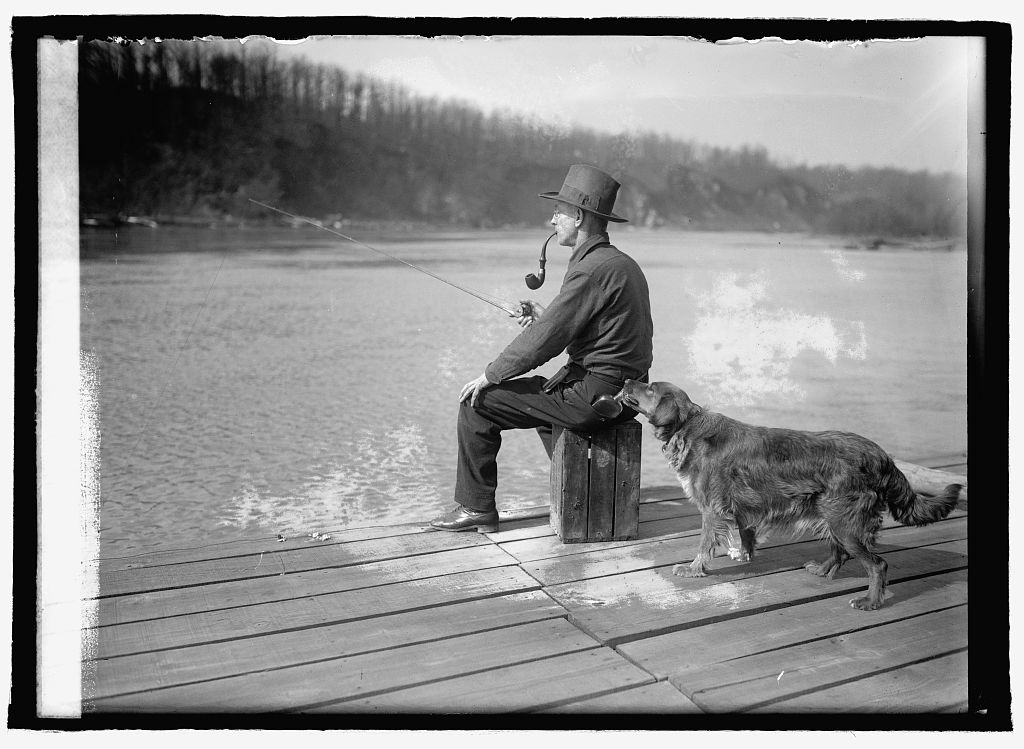
- “Hooch Hound” sniffs a flask on a Potomac pier (23 February 1922)
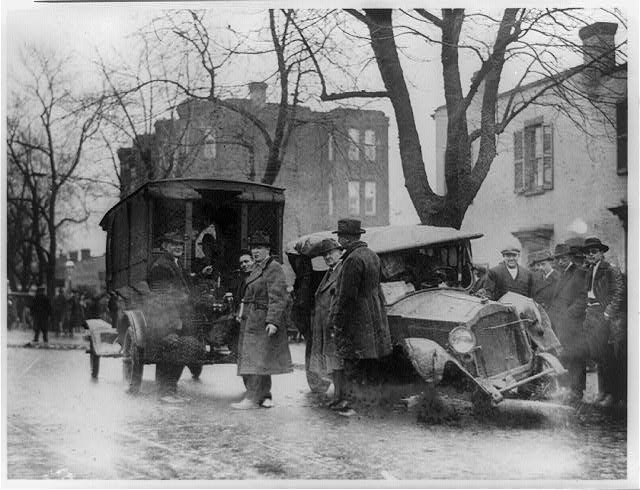
- Bootleggers’ wrecked car after a chase by Capitol police, Washington (21 January 1922)
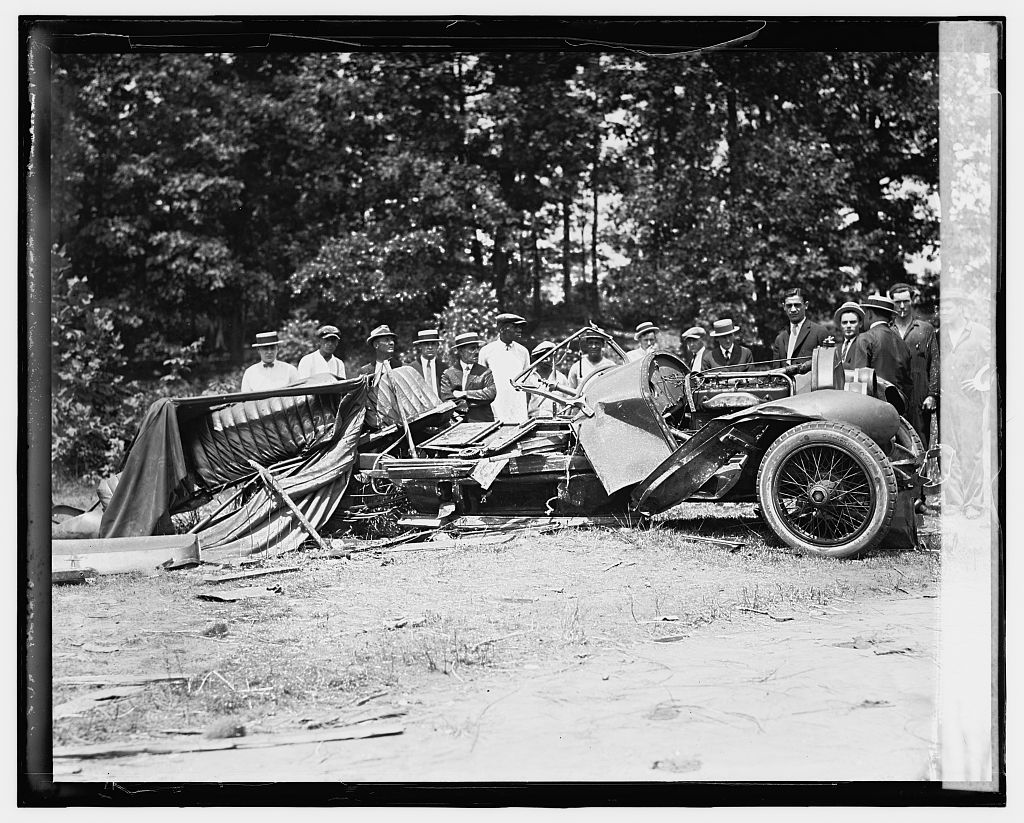
- Wreck of a Stutz car “with bootleggers” (29 July 1924)
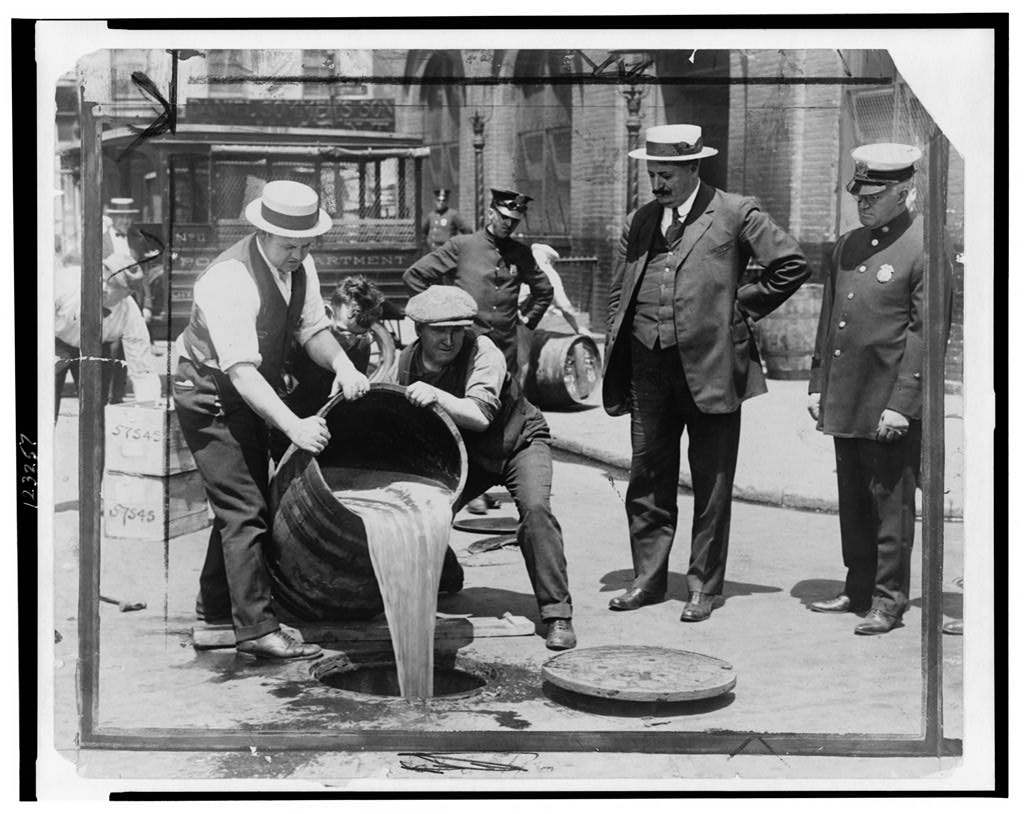
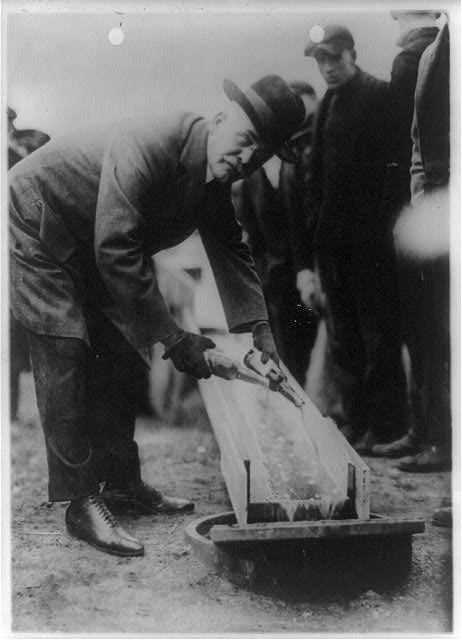
- Deputy Police Commissioner Leach watches liquor poured into a sewer, New York (about 1921)
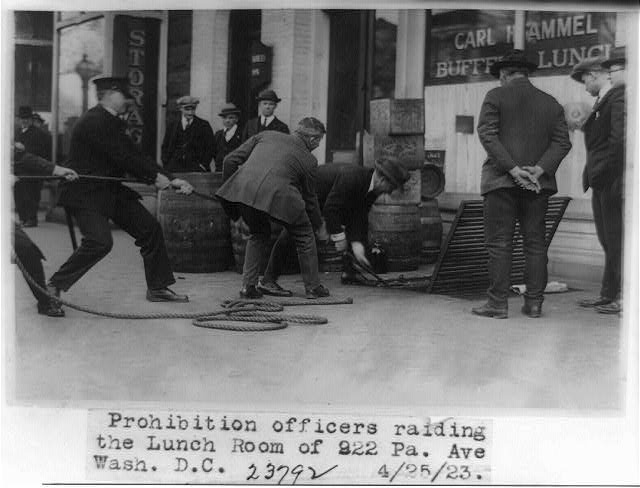
- Prohibition officers raiding a lunch room at 922 Pennsylvania Avenue, Washington (25 April 1923)
Seizures and rum-runners
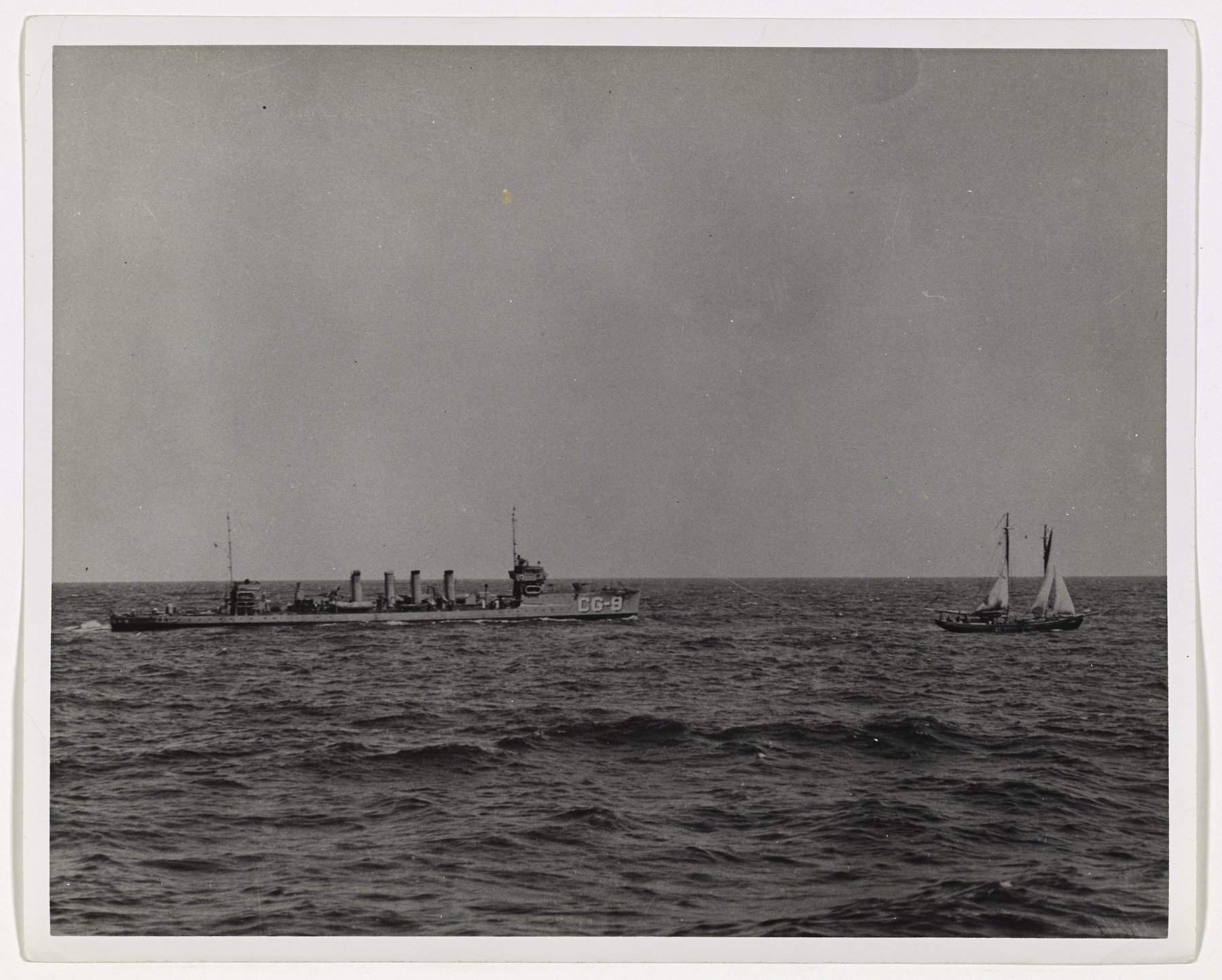
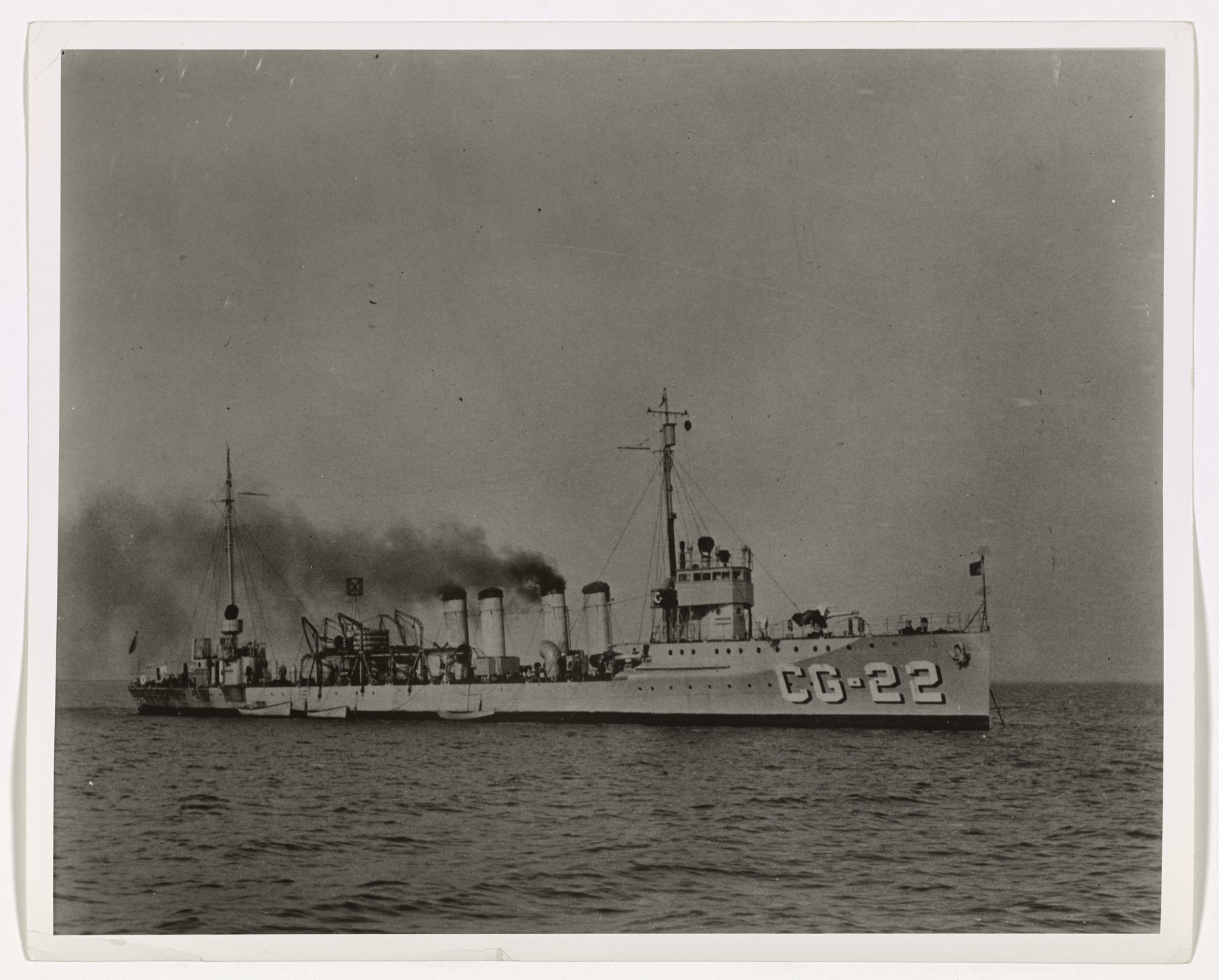
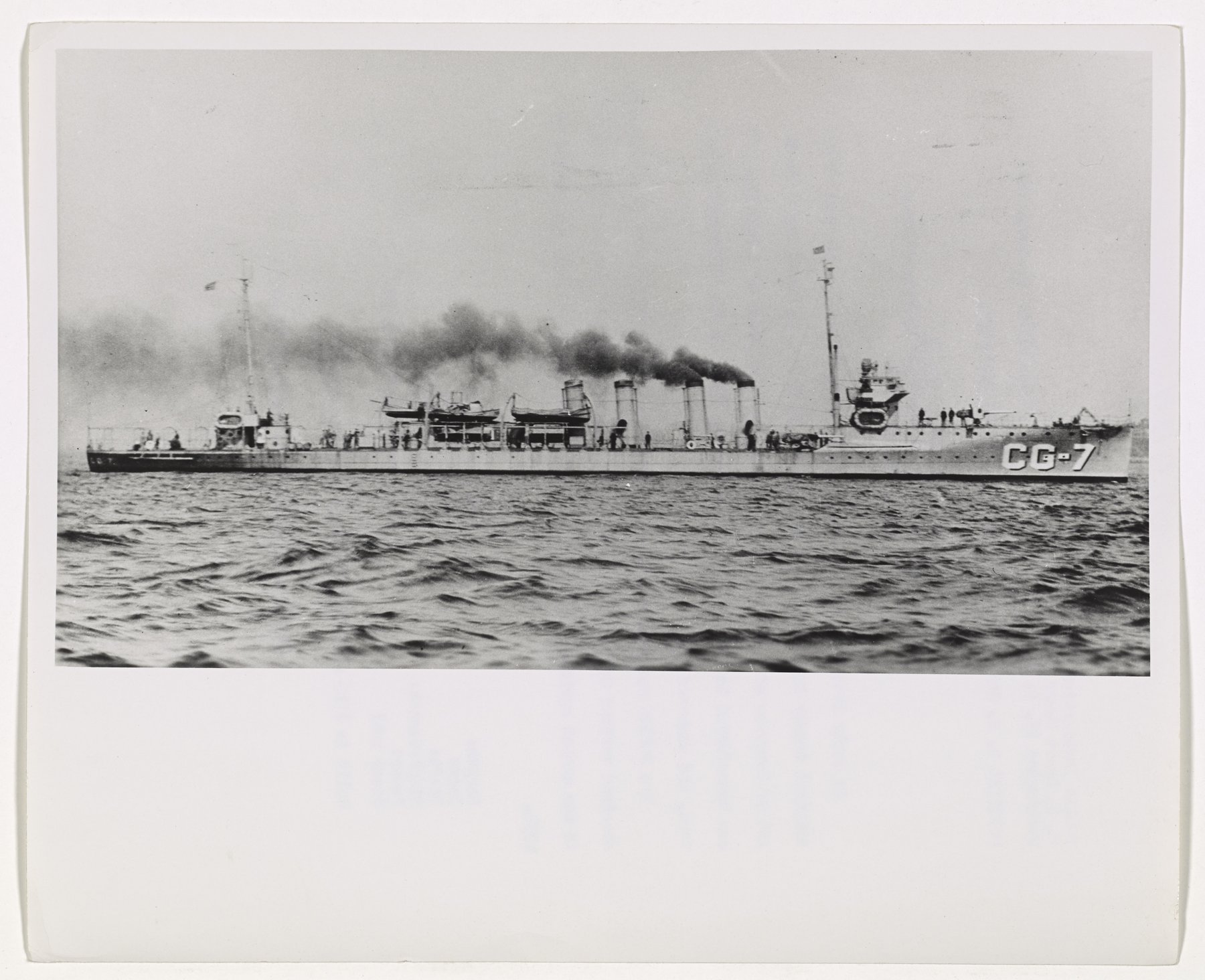
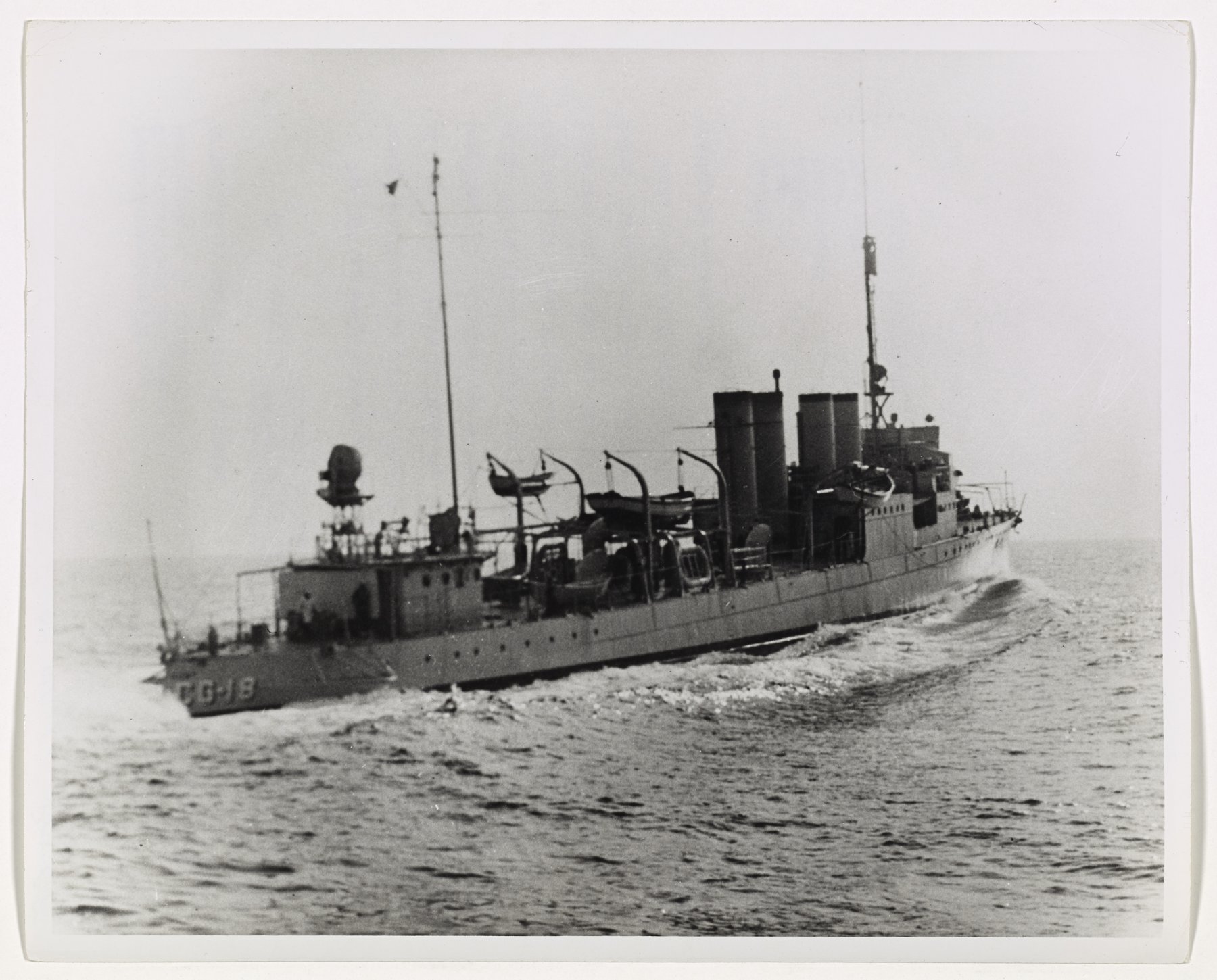
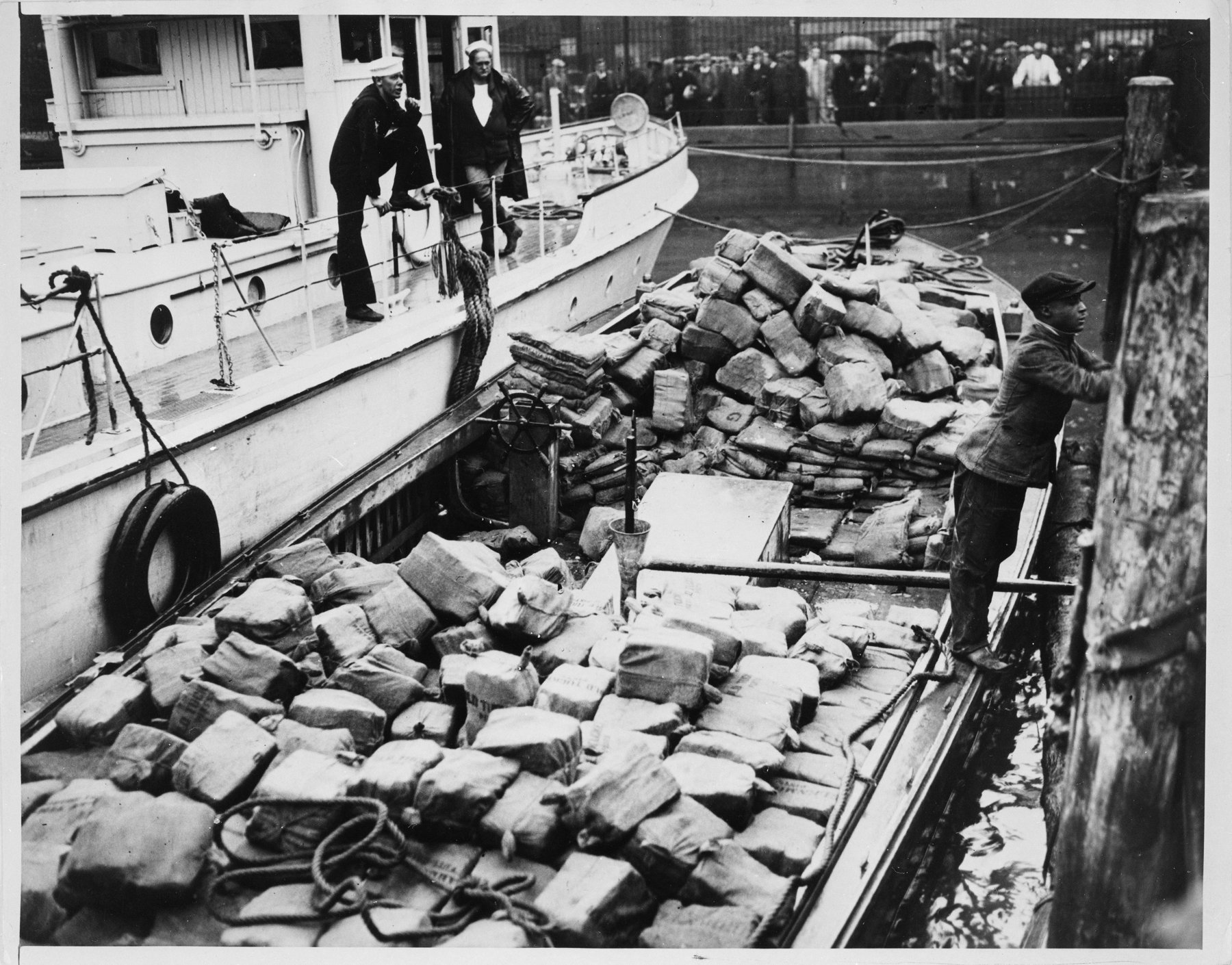
The Coast Guard Historian’s article says that by 1922 the Federal Prohibition Commission counted hundreds of mother ships on “Rum Row,” that Congress funded a large expansion in 1924, and that the service had 320 cutters and destroyers by the end of Prohibition; its figures are the author’s and are not footnoted. The National Archives holds Coast Guard photographs of pursuits and patrols from 1923 to 1927, each described in the catalog’s own words and naming few vessels or people.
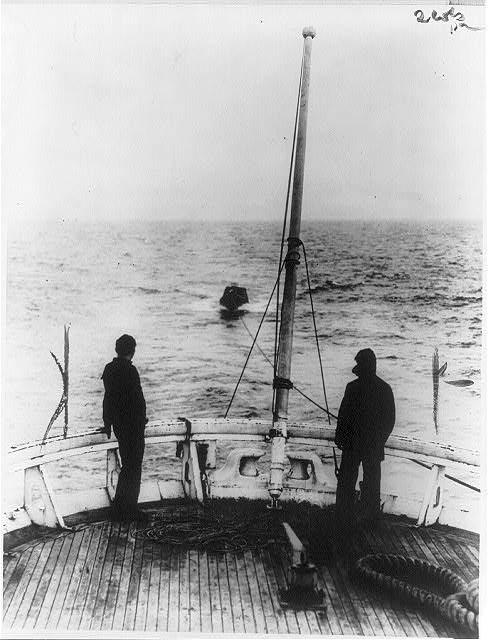
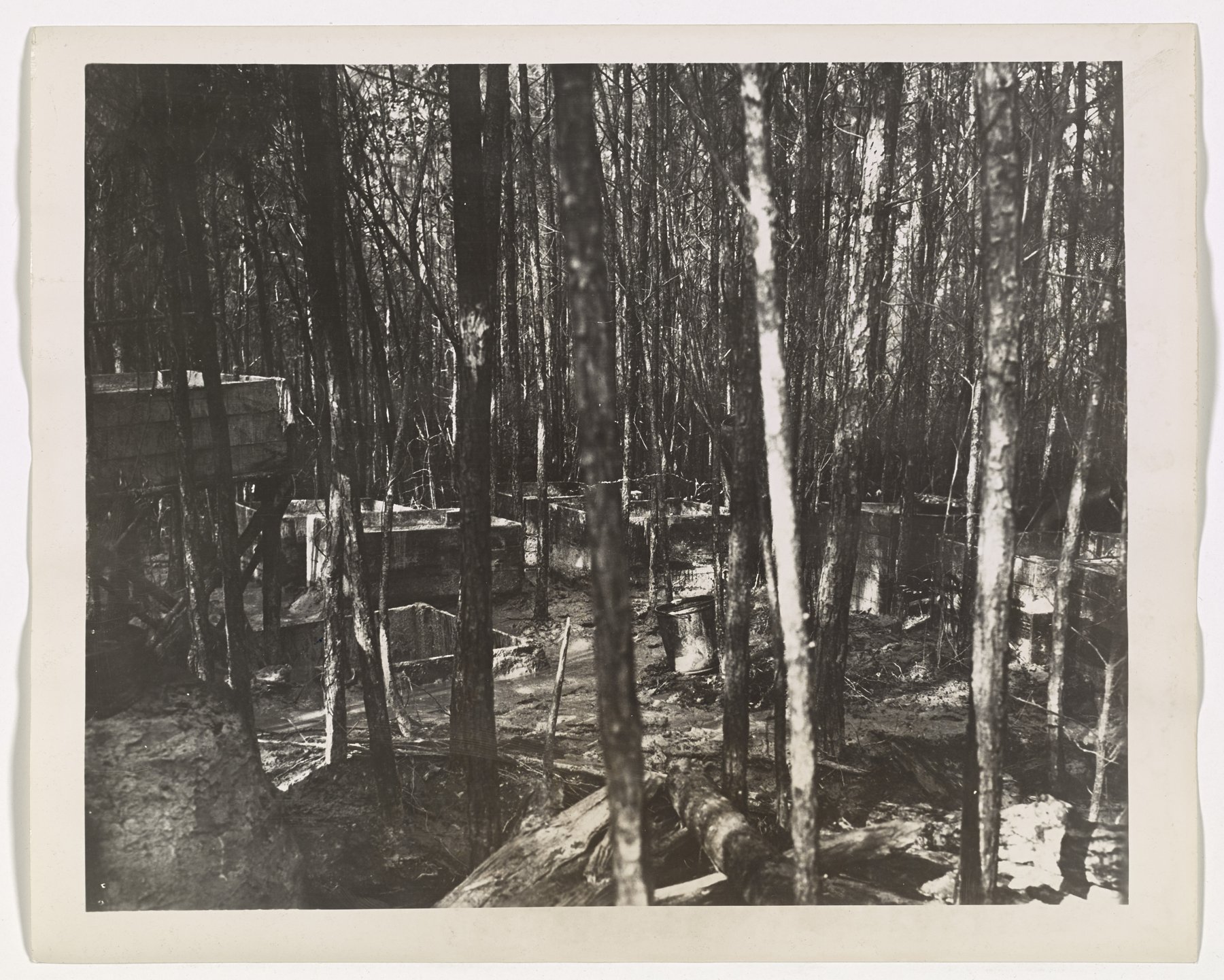
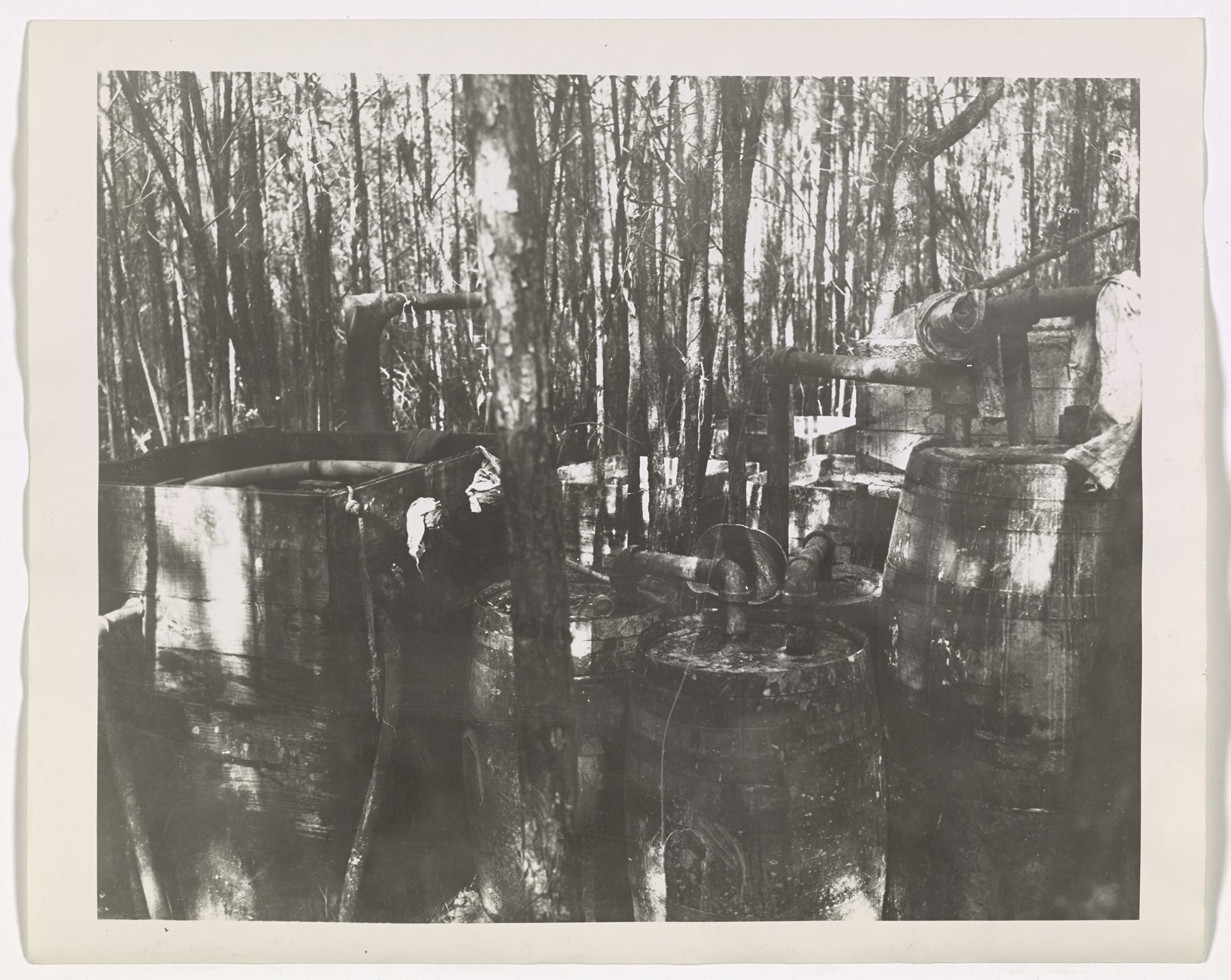
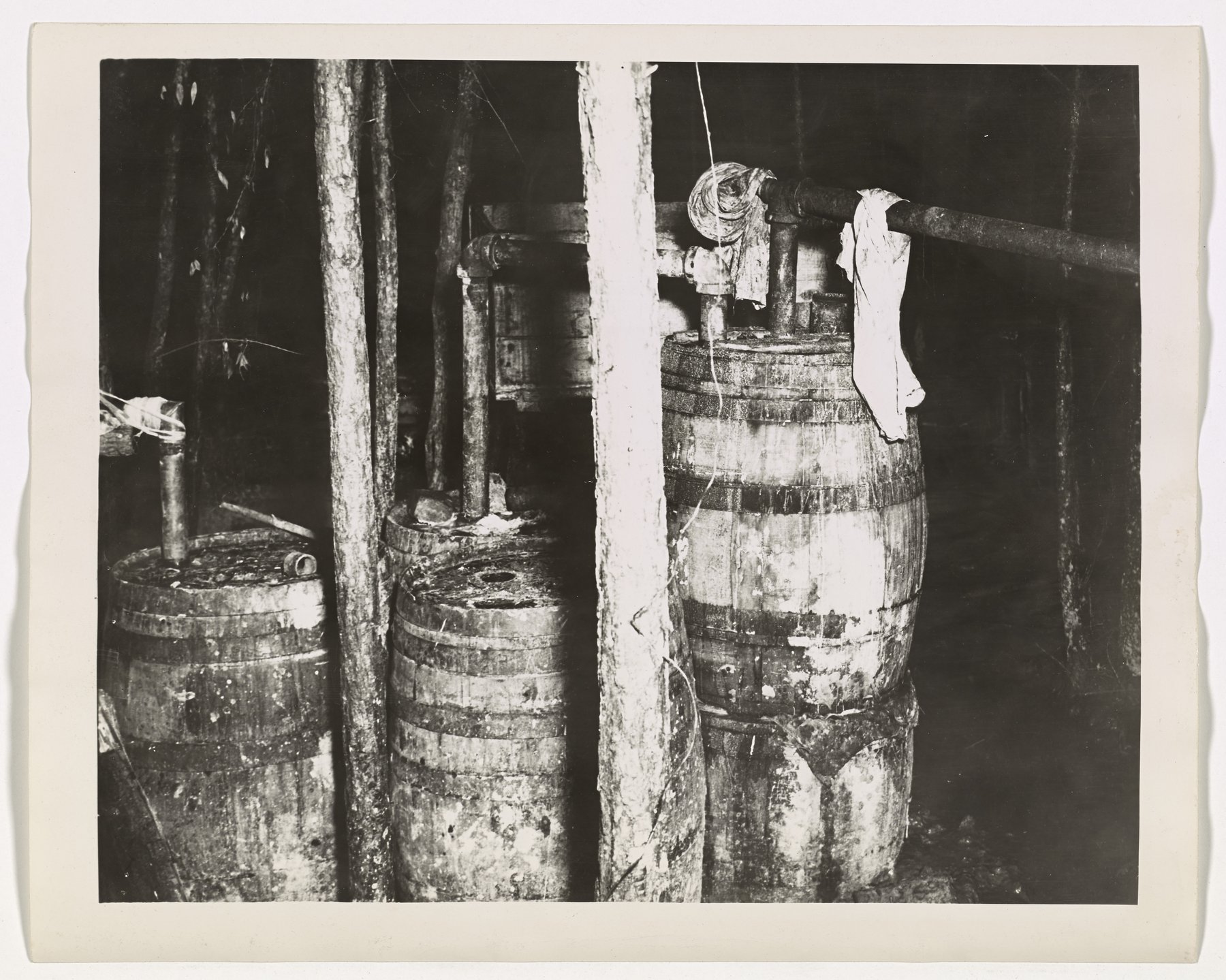
The Library of Congress holds a series of 1924 and 1925 photographs from the cutter Seneca. Its caption data is flagged “unverified,” and one title calls the Seneca a “rum runner,” which the other items in the series contradict. The same collections hold photographs of confiscated stills and whiskey, and of beer destroyed in Zion City, Washington and Philadelphia; most carry date ranges or inferred places, and each page says which.
- Coast Guard Historian’s article on catching rum-runners during Prohibition (19 November 2021)
- Coast Guard Historian’s bibliography on Prohibition and the “Rum War”
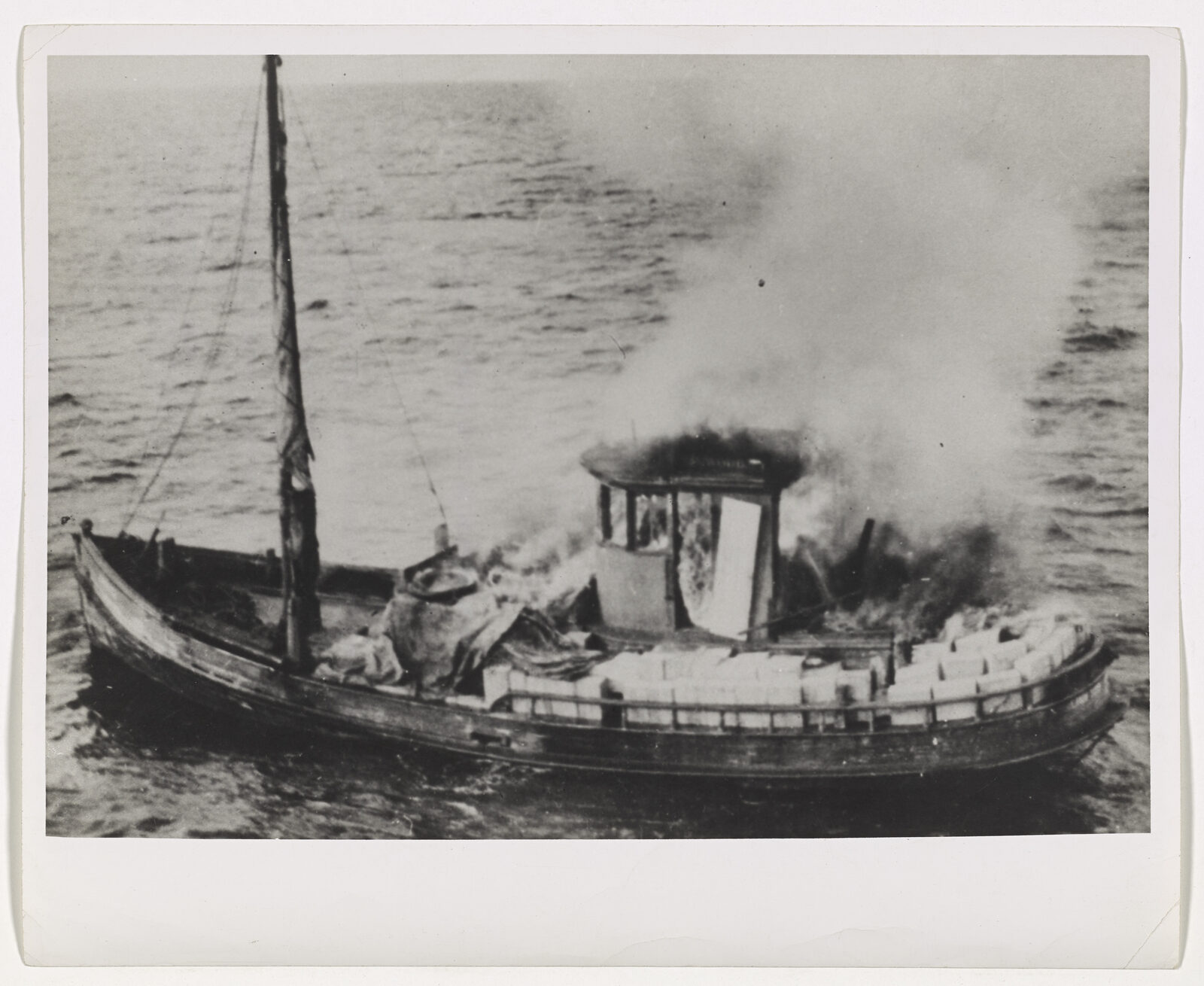
- Rum-running vessel LINWOOD set afire by her crew (4 May 1923)
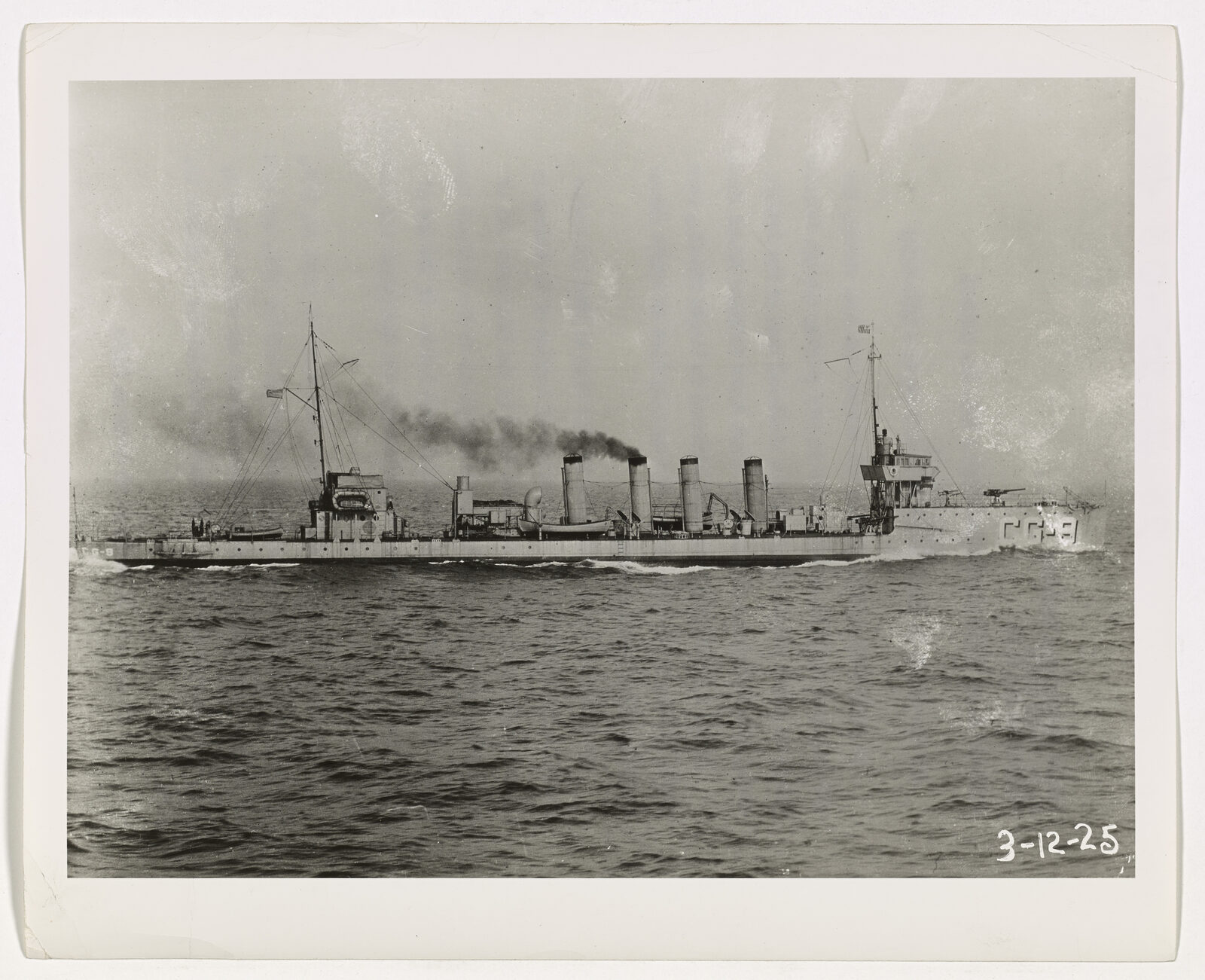
- Coast Guard destroyer BEALE on patrol for rum-running vessels (12 March 1925)
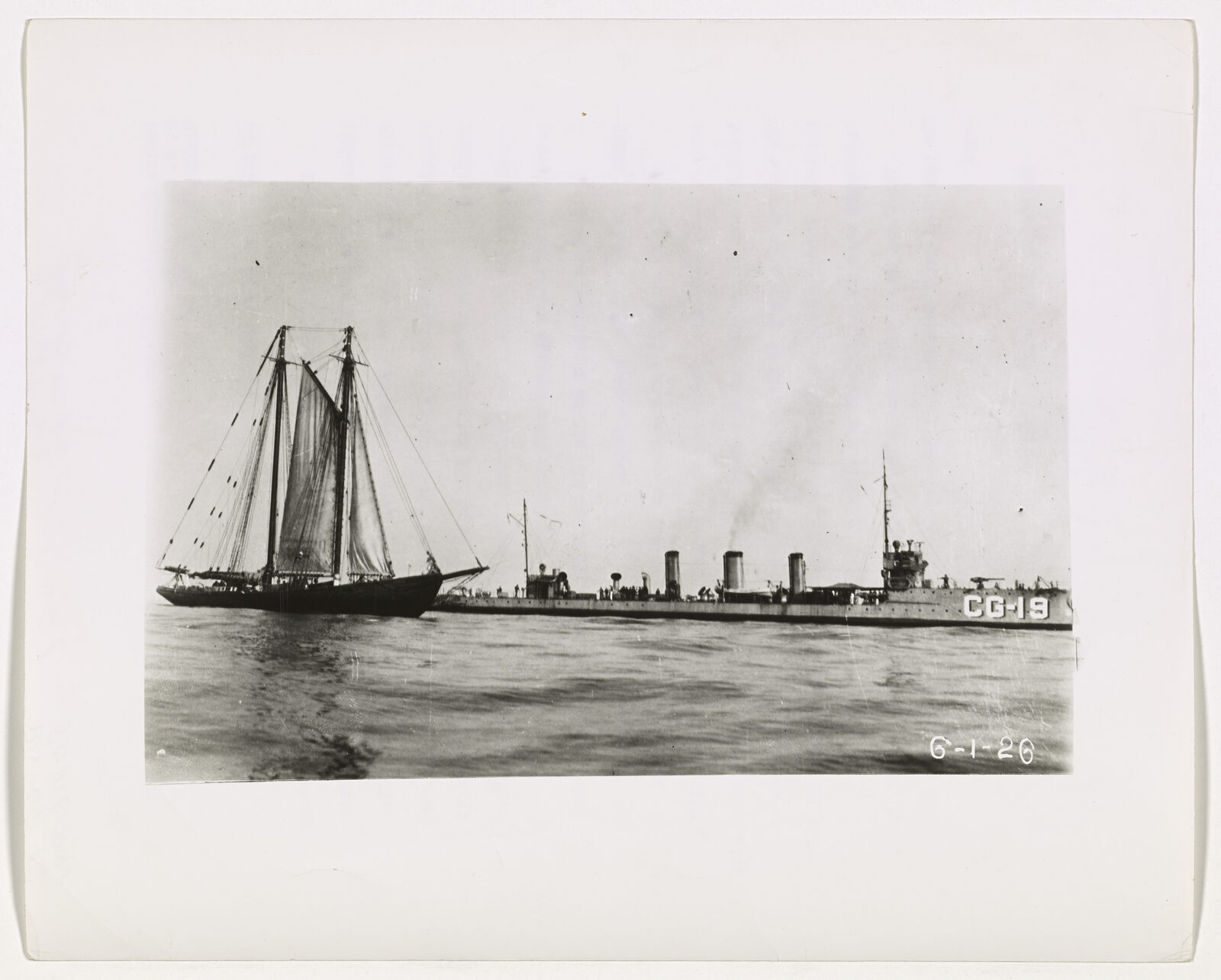
- Coast Guard destroyer TERRY pursues the French rum-runner MISTINGUETT (1 June 1926)
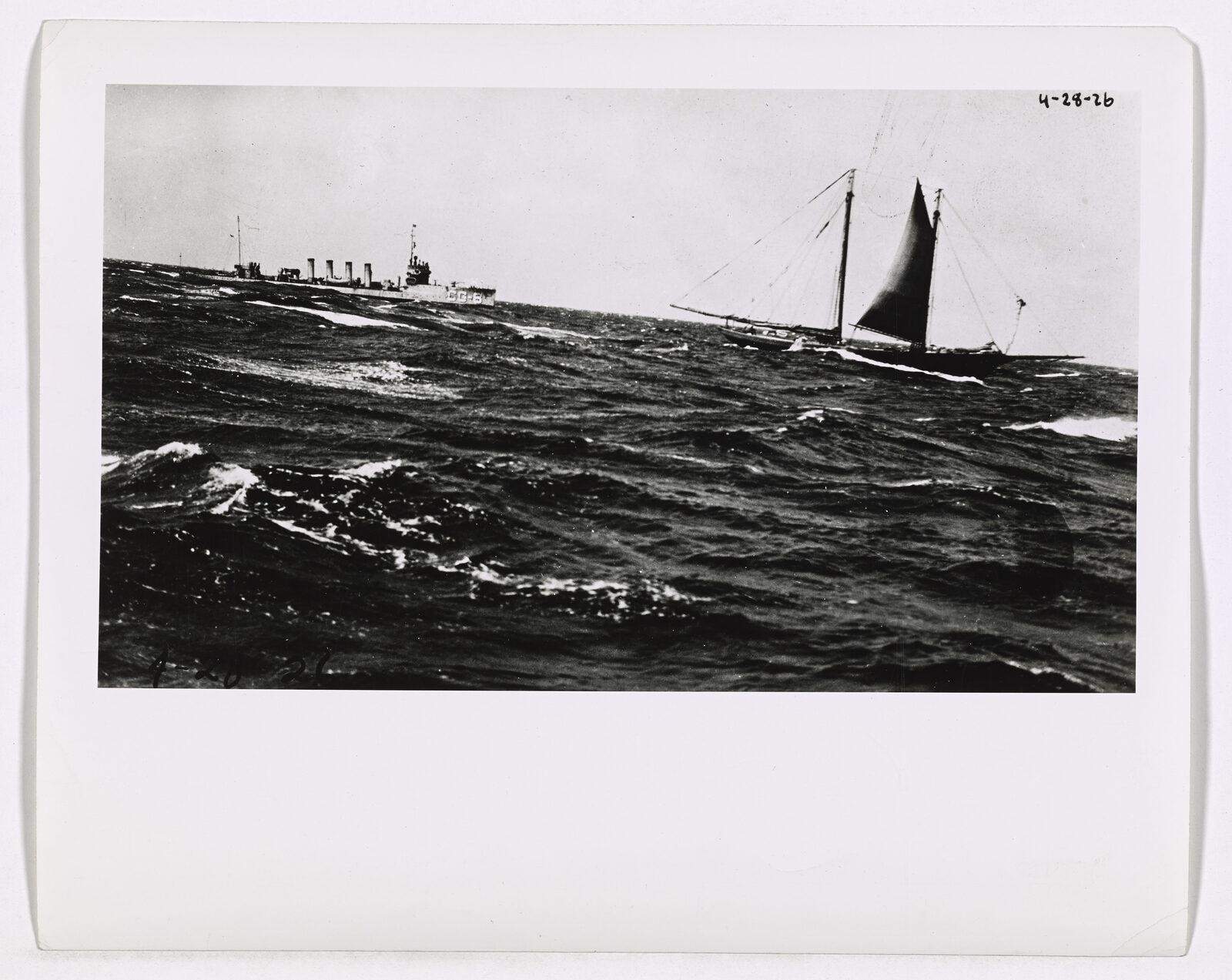
- Coast Guard destroyer AMMEN (CG-8) picketing a rum-runner off New Jersey (28 April 1926)
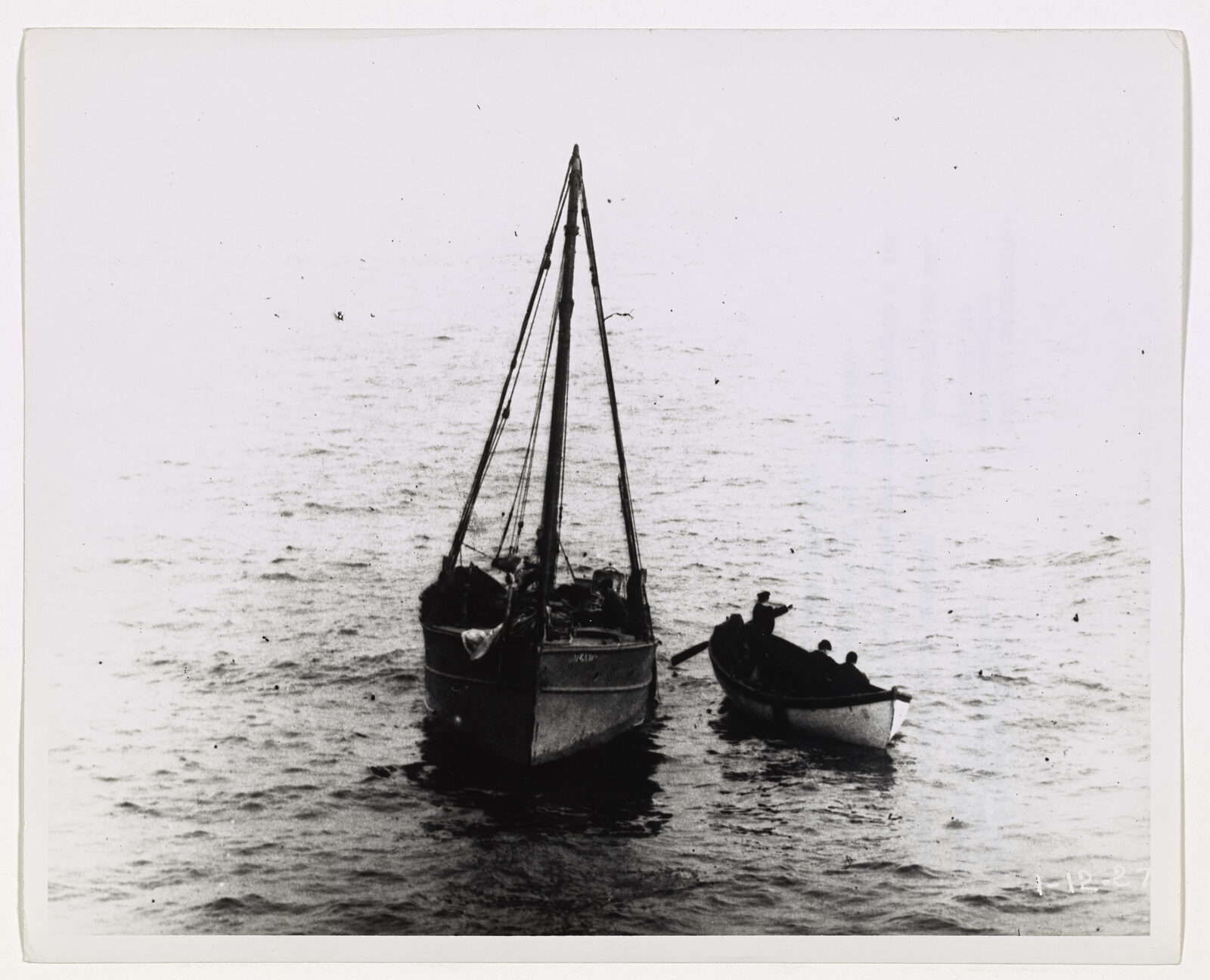
- Coast Guard vessel inspecting a rum-running vessel off New Jersey (12 January 1927)
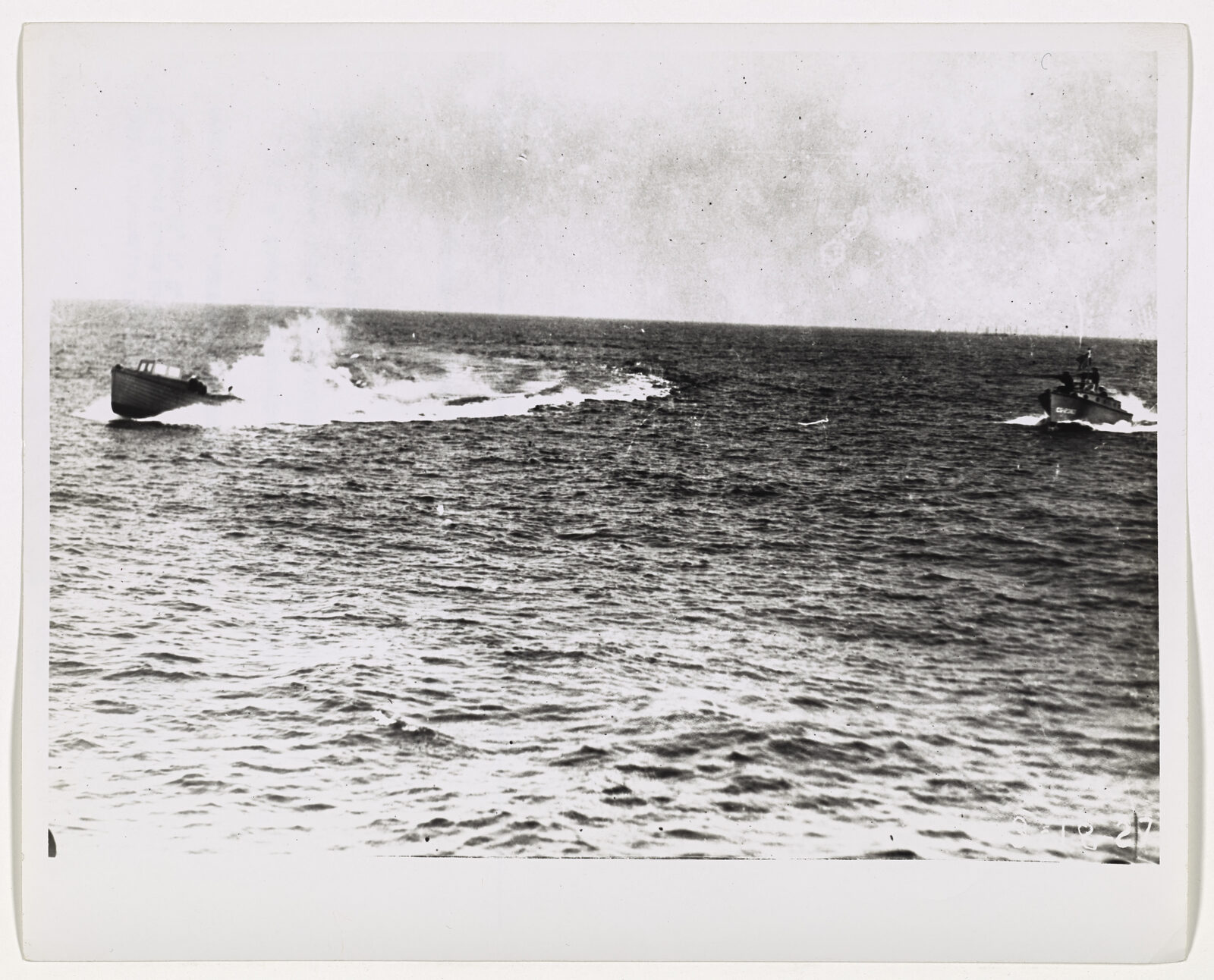
- Coast Guard picketboat firing on a rum-running vessel, Atlantic coast (18 March 1927)
- Coast Guard cutter Seneca with a captured rum-runner in tow (1924)
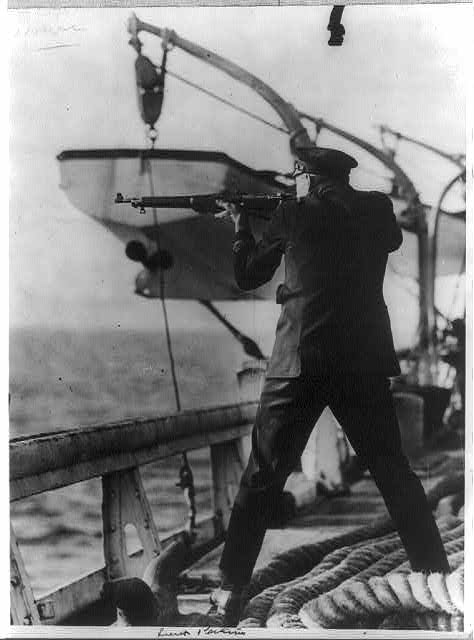
- Lt. L.W. Perkins fires at a fleeing boat from the Coast Guard cutter Seneca (1924)
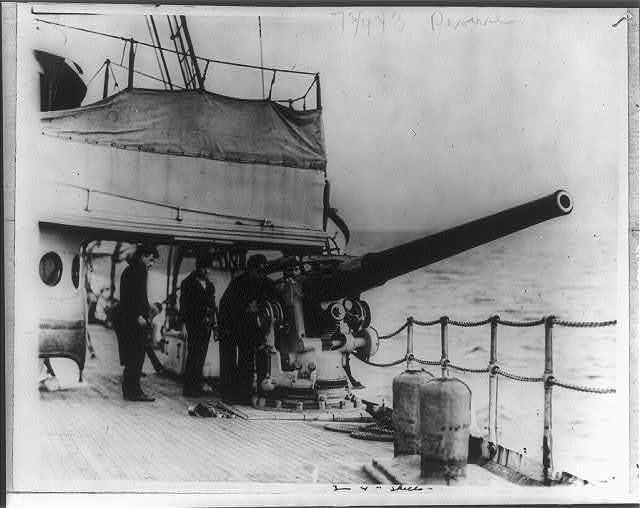
- Four-inch cannon of the Seneca and four Coast Guardsmen (7 March 1924)
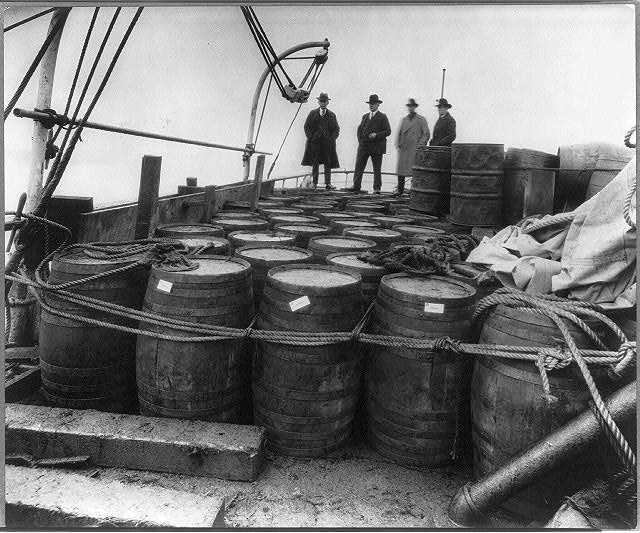
- Prohibition agents examining barrels on a boat captured by the Seneca (1924 or 1925)
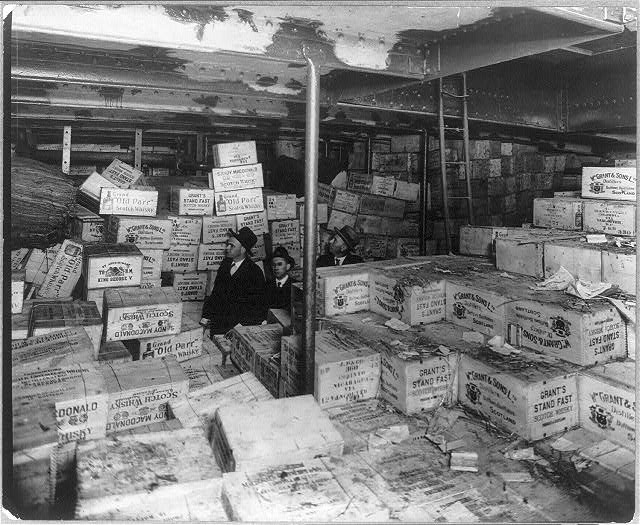
- Prohibition agents among cases of Scotch whiskey in a ship’s hold (1924 or 1925)
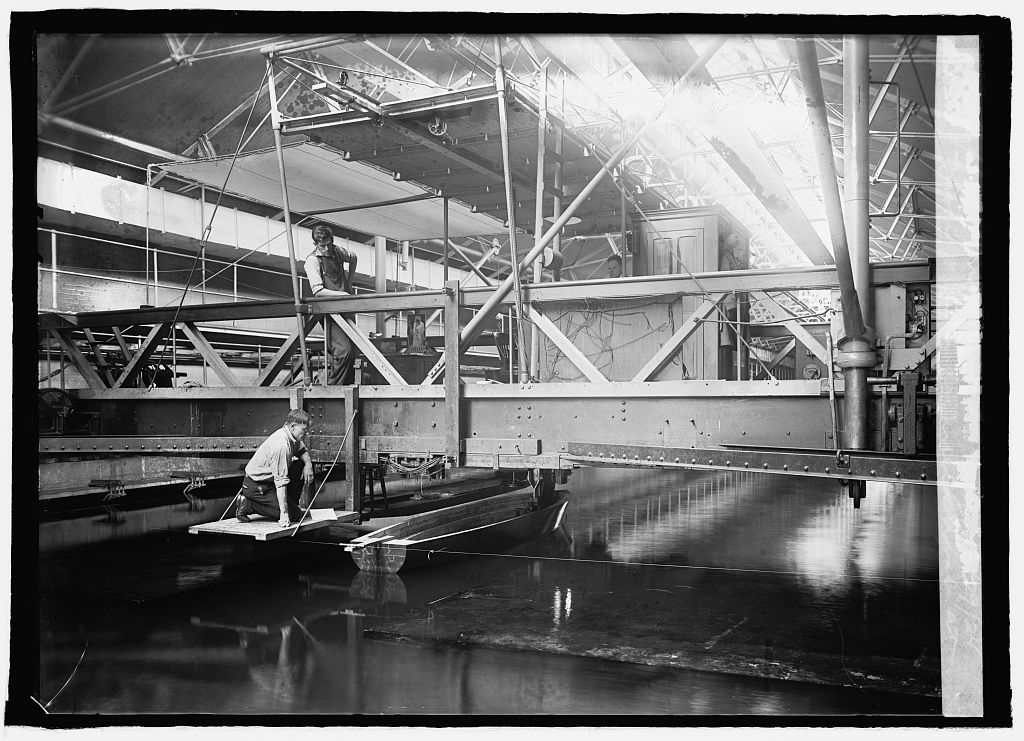
- Model of a rum-runner chaser at the Navy Yard, Washington (29 December 1924)
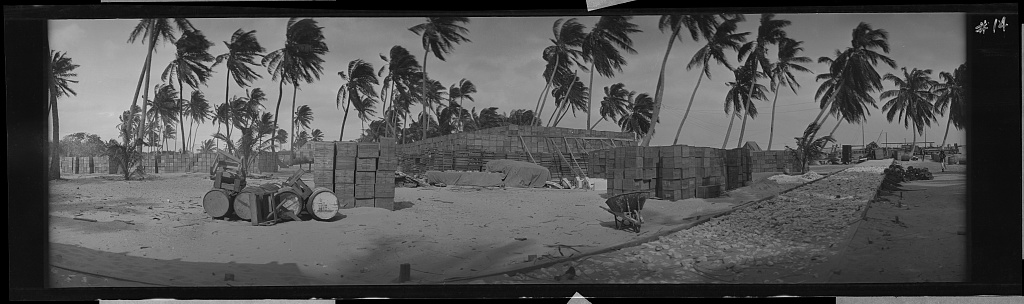
- Whiskey cases stacked on a beach, possibly Bimini, Bahamas
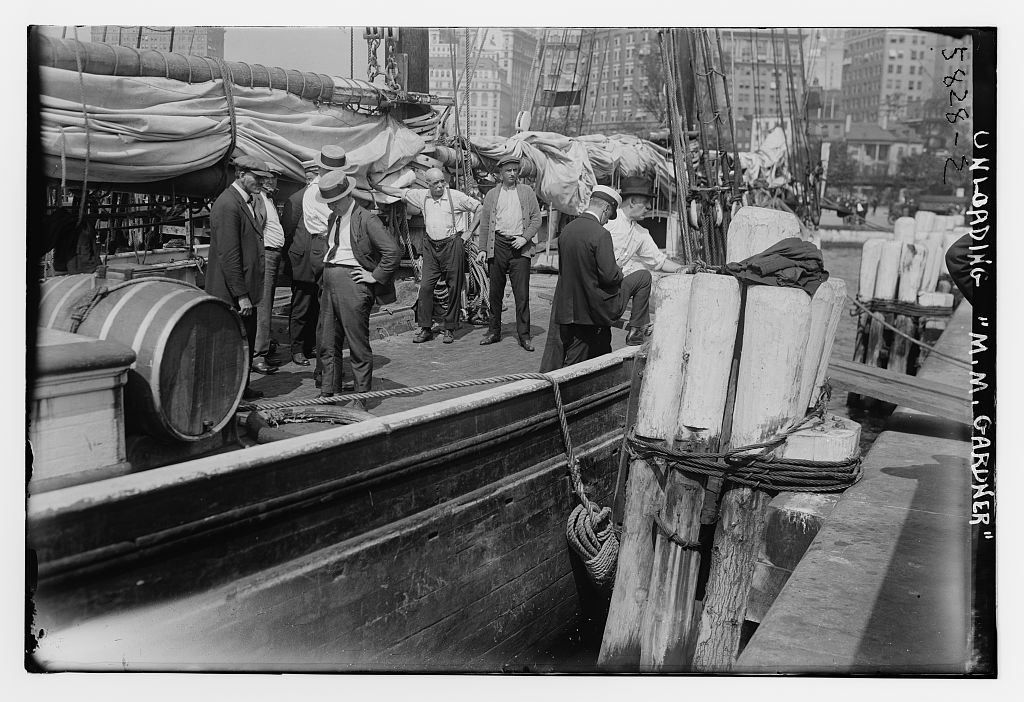
- Unloading the boat M.M. Gardner (about 1920-1925)
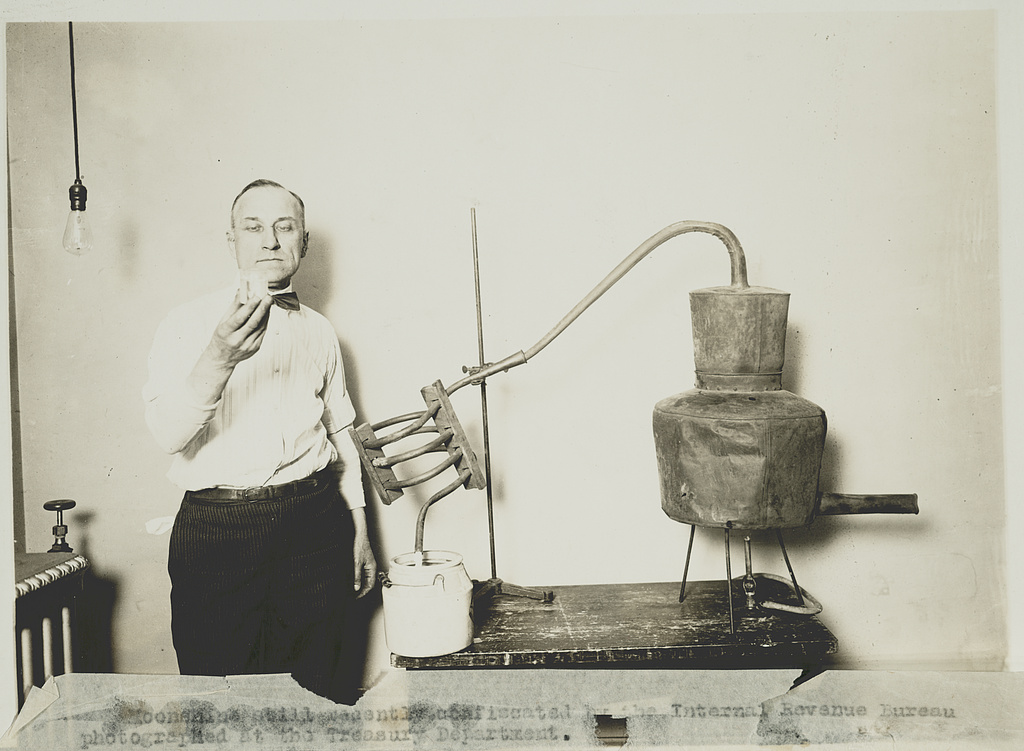
- Moonshine still confiscated by the Internal Revenue Bureau, shown at the Treasury Department
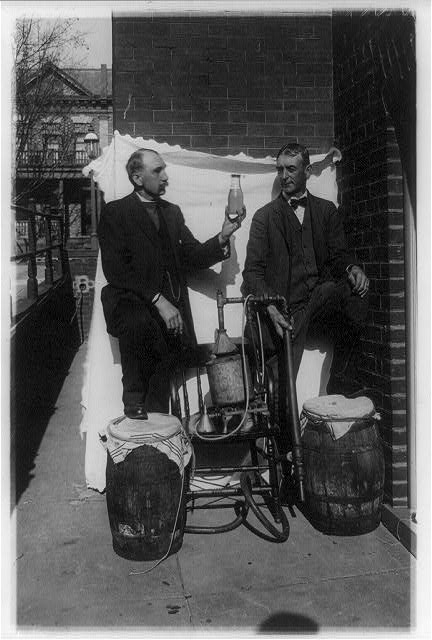
- Two men with a small still, one holding up a bottle of liquor
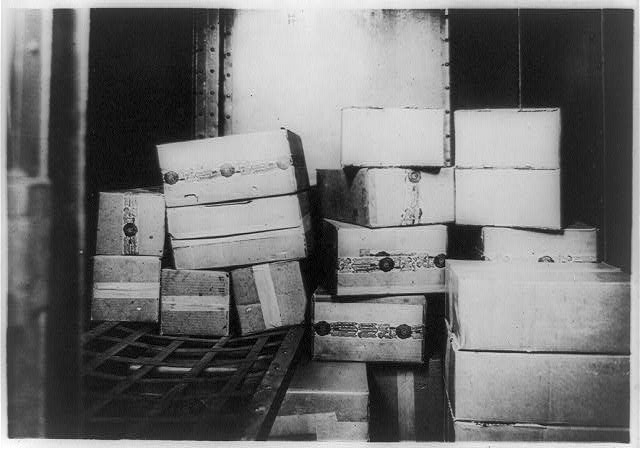
- Cases of whiskey confiscated by the Internal Revenue Bureau
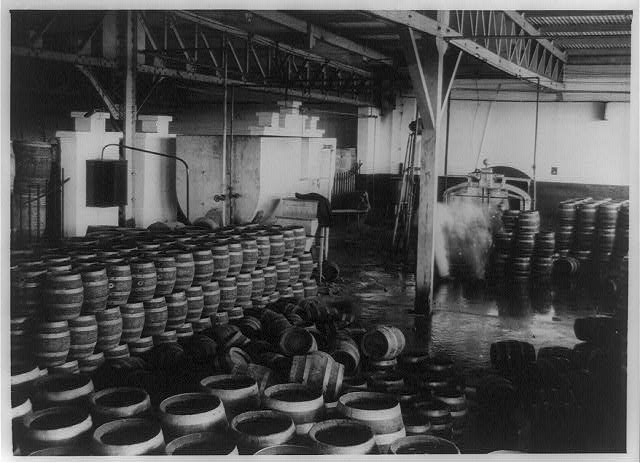
- Barrels of liquor in a building (Library of Congress: “confiscated(?)”)
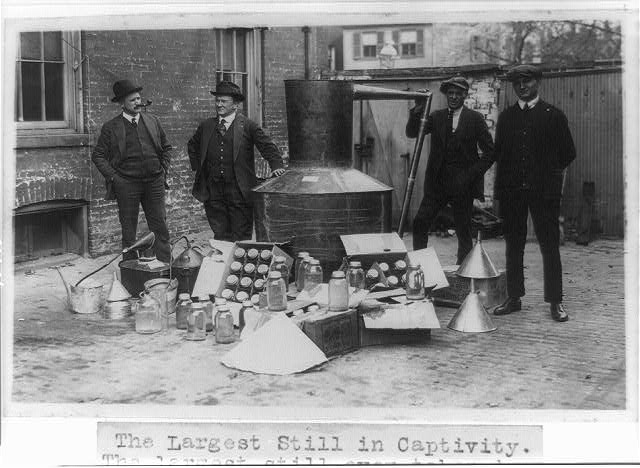
- “The Largest still in captivity”, Washington, D.C. (11 November 1922)
- Zion City, Illinois, destroys 80,000 pint bottles of beer
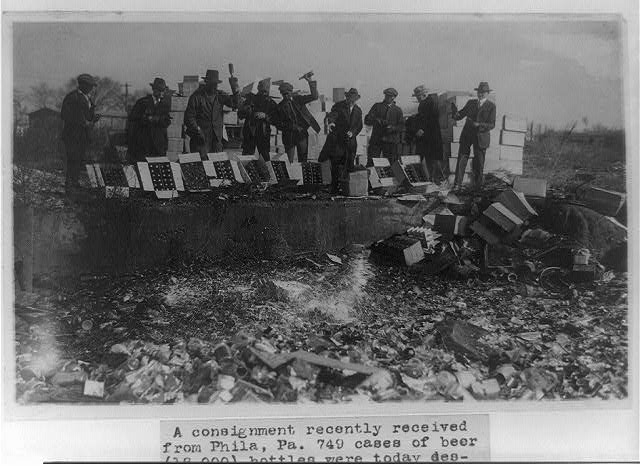
- 749 cases of beer destroyed in the District of Columbia (20 November 1923)
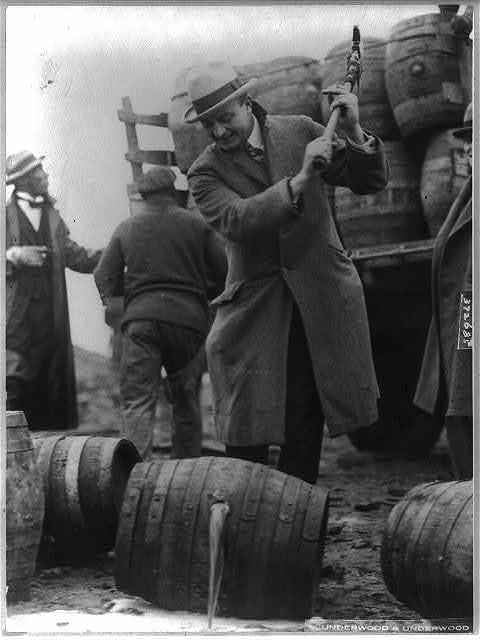
- Barrels of beer emptied into the Schuylkill River, Philadelphia (1924)
The courts
Five Supreme Court opinions from 1922 to 1928 show how the Act reached the courts. Lanza (1922) held that a state and the United States could each punish the same act. Carroll (1925) allowed a warrantless search of an automobile on probable cause. One Ford Coupe (1926) held that the Act did not displace forfeiture under Revised Statutes section 3450. Sullivan (1927) held that gains from an unlawful liquor business are taxable income. Olmstead (1928) held that wiretapping without entering the premises was not a search or seizure. Each page gives the holding in two sentences and one short quotation from the stored text.
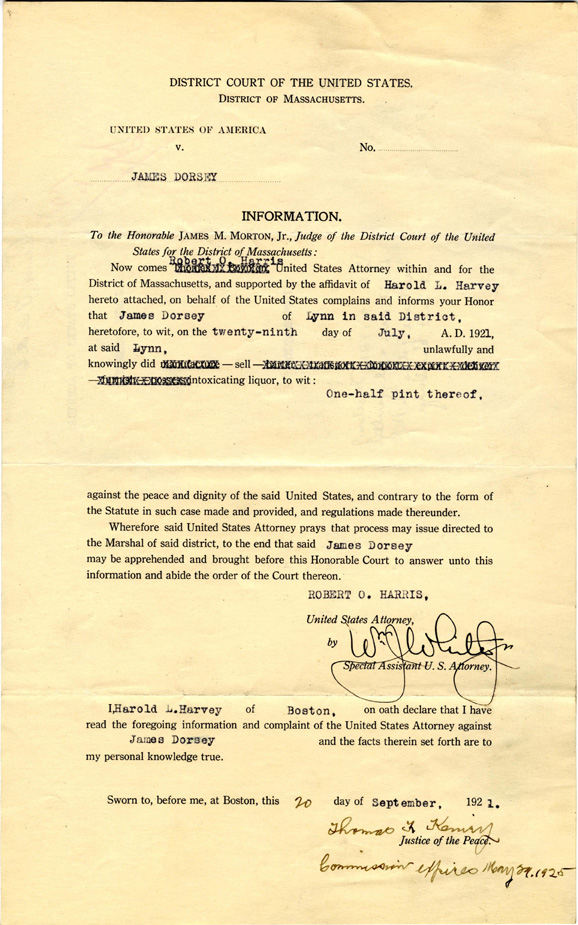
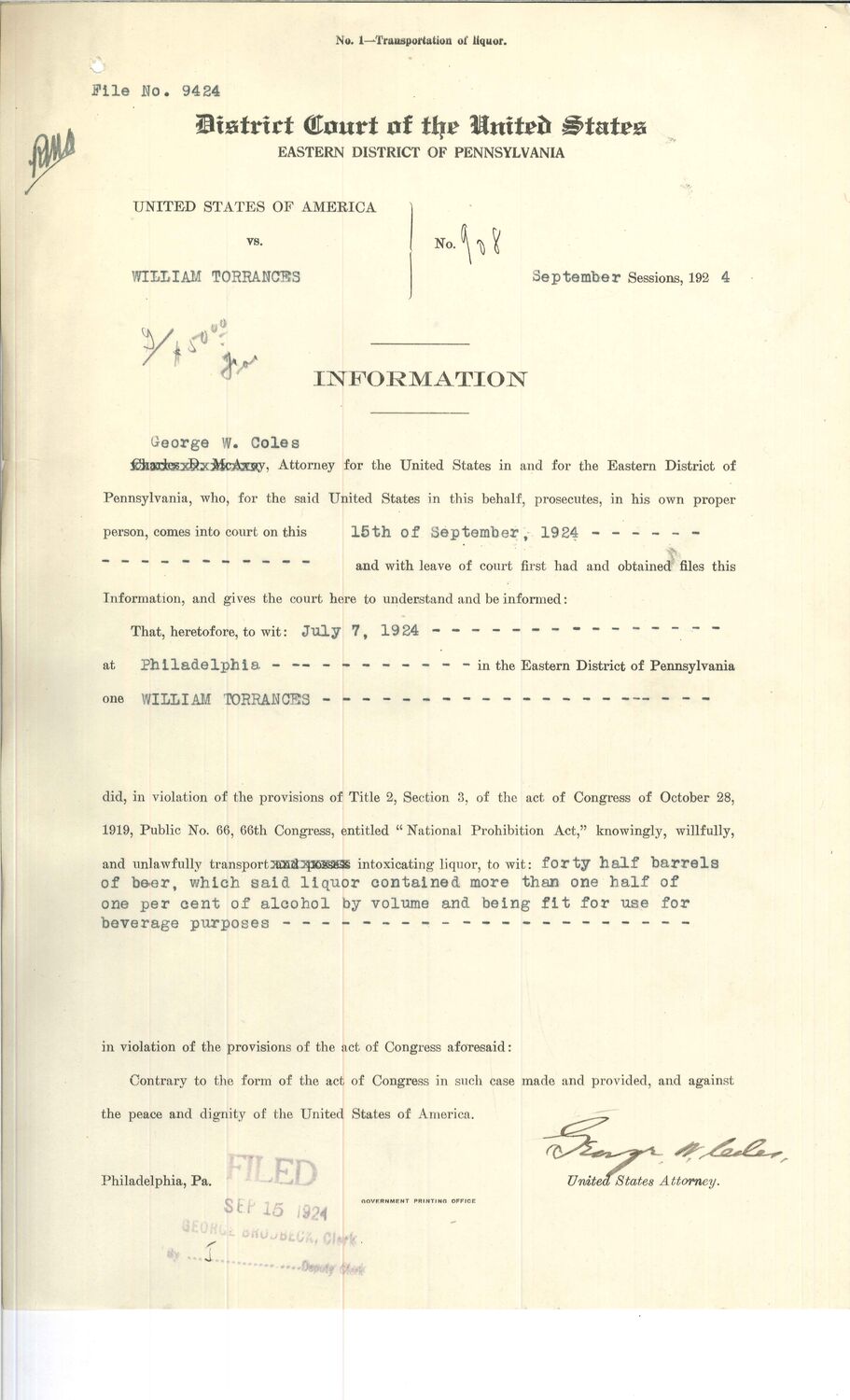
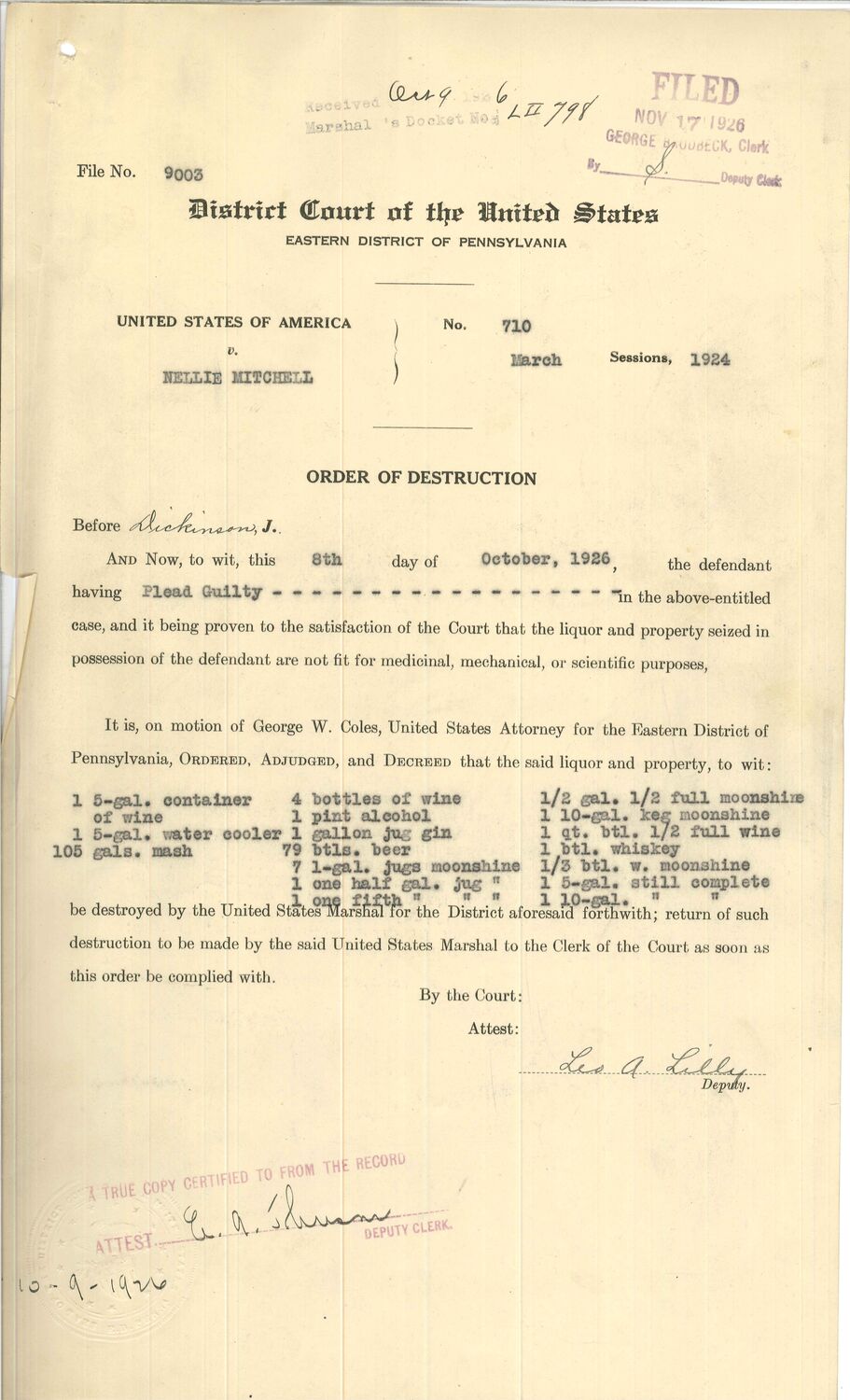
The district-court papers are ordinary case files: a 1921 indictment from Massachusetts for selling one-half pint, and an information and an order of destruction from the Eastern District of Pennsylvania. The defendants are private individuals named only as the court files name them.
- United States v. Lanza, 260 U.S. 377 (1922)
- Carroll v. United States, 267 U.S. 132 (1925)
- United States v. One Ford Coupe Automobile, 272 U.S. 321 (1926)
- United States v. Sullivan, 274 U.S. 259 (1927)
- Olmstead v. United States, 277 U.S. 438 (1928)
- Indictment of James Dorsey, U.S. District Court for Massachusetts, Case #3226 (July 1921)
- Information, E.D. Pennsylvania, No. 908 September Sessions 1924 (15 September 1924)
- Order of Destruction, E.D. Pennsylvania, No. 710 March Sessions 1924 (8 October 1926)
Repeal
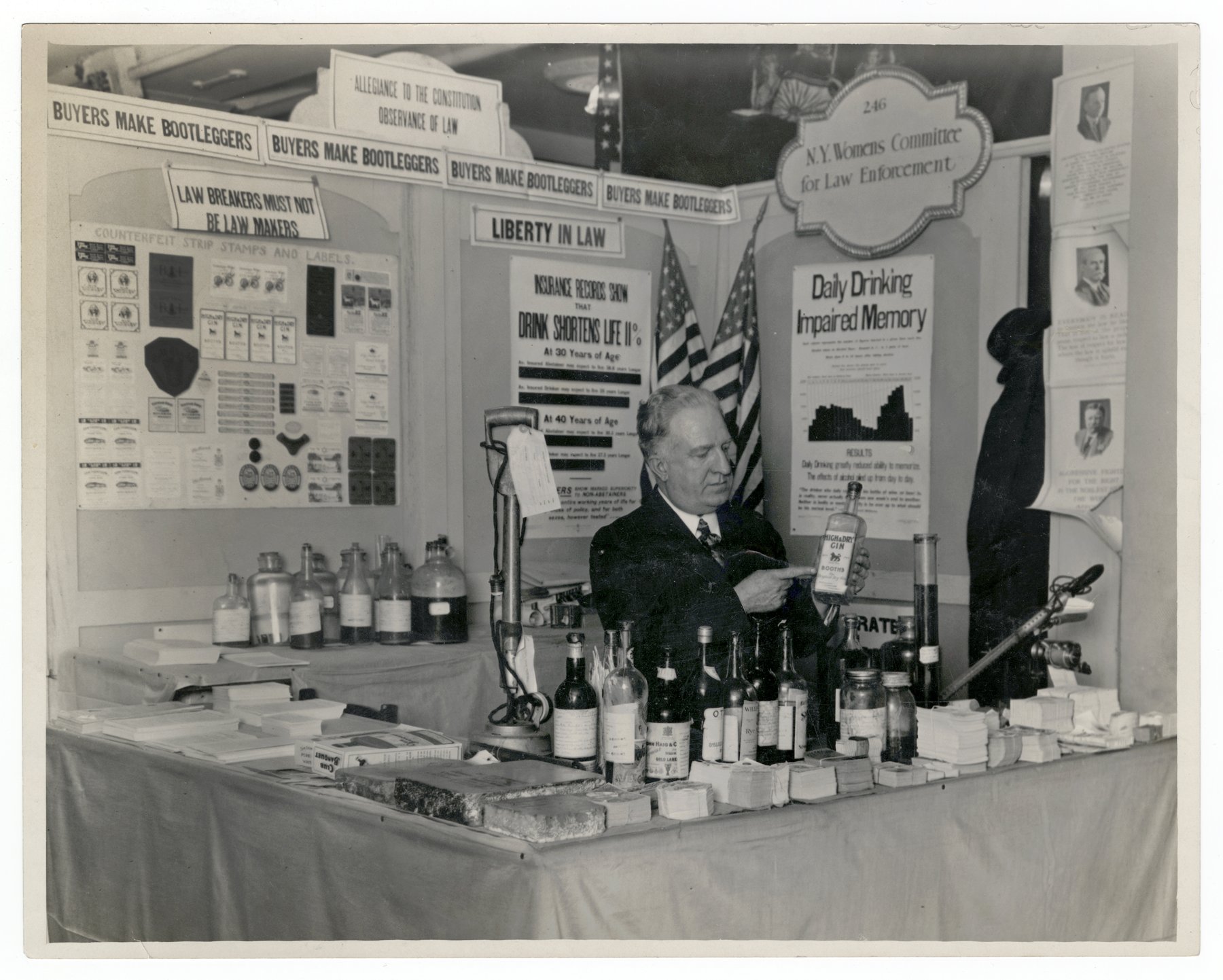
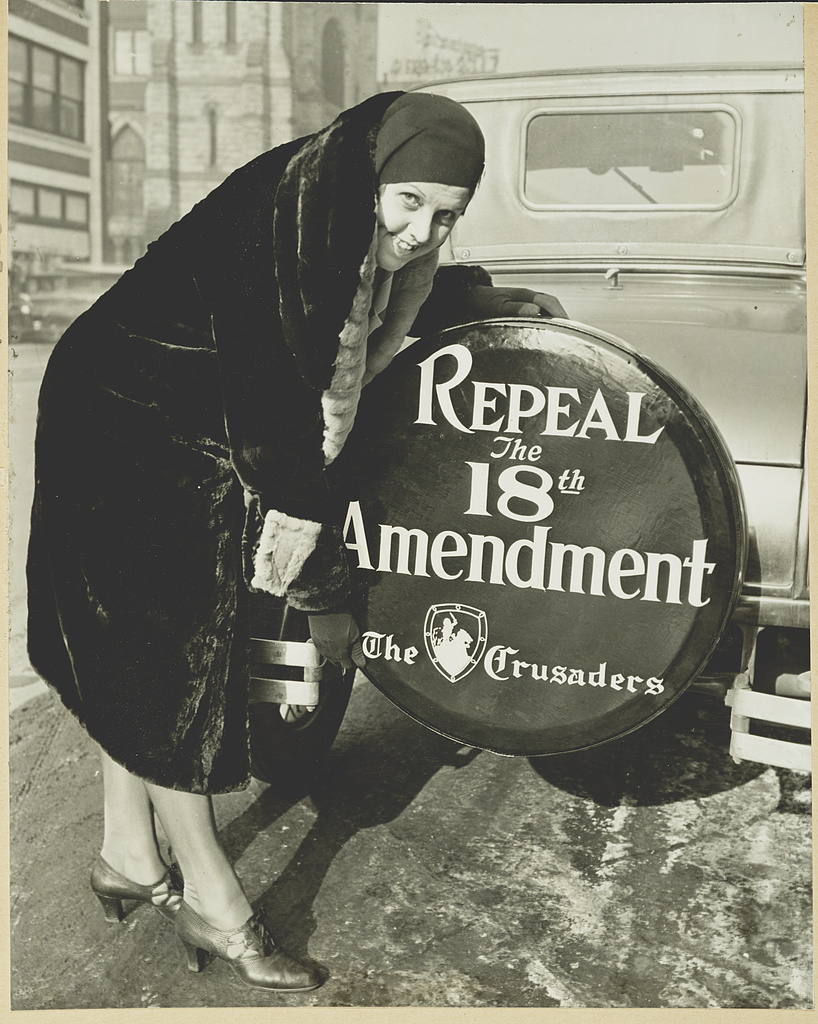
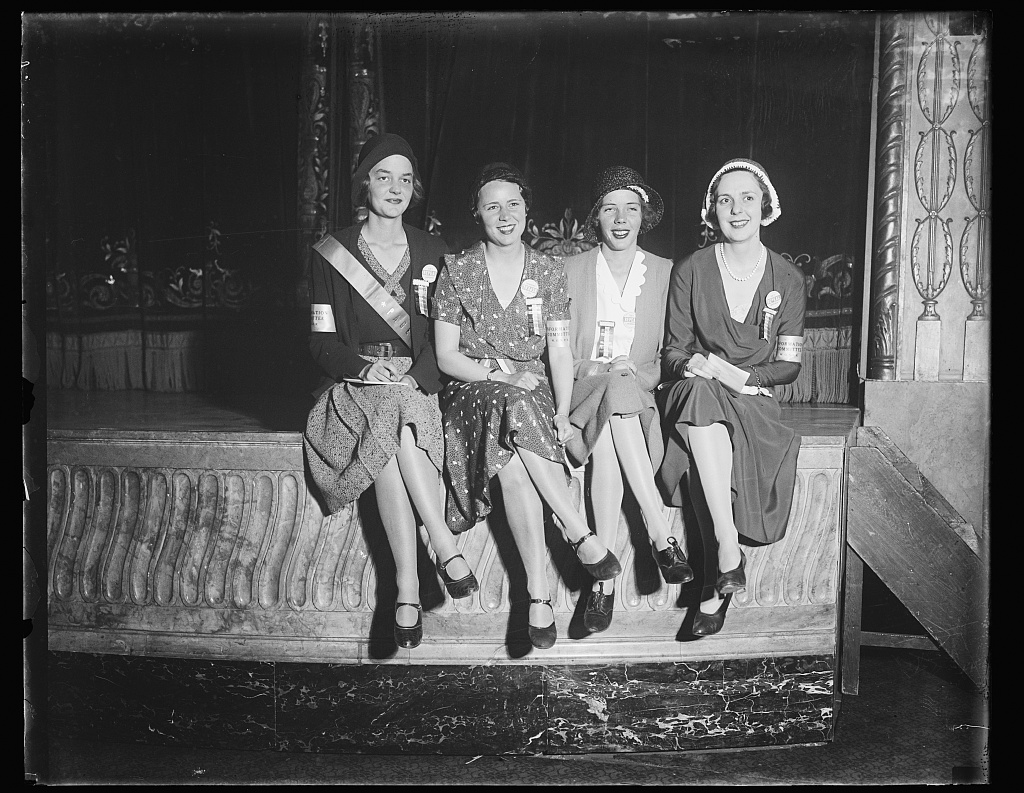
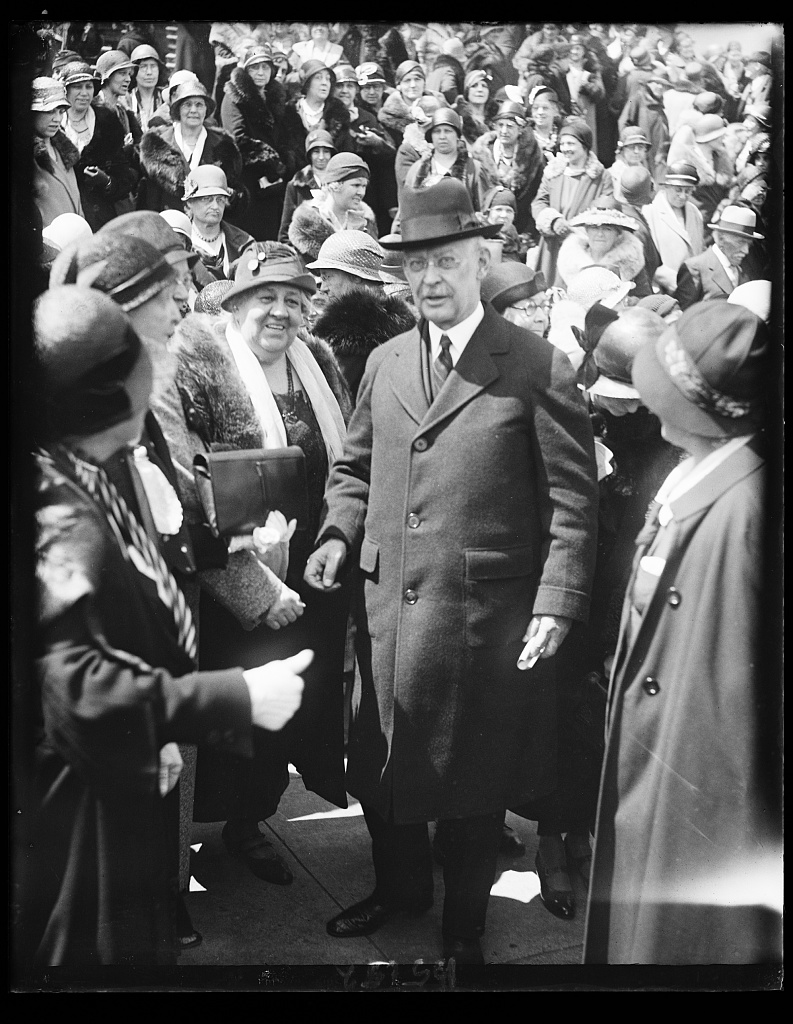
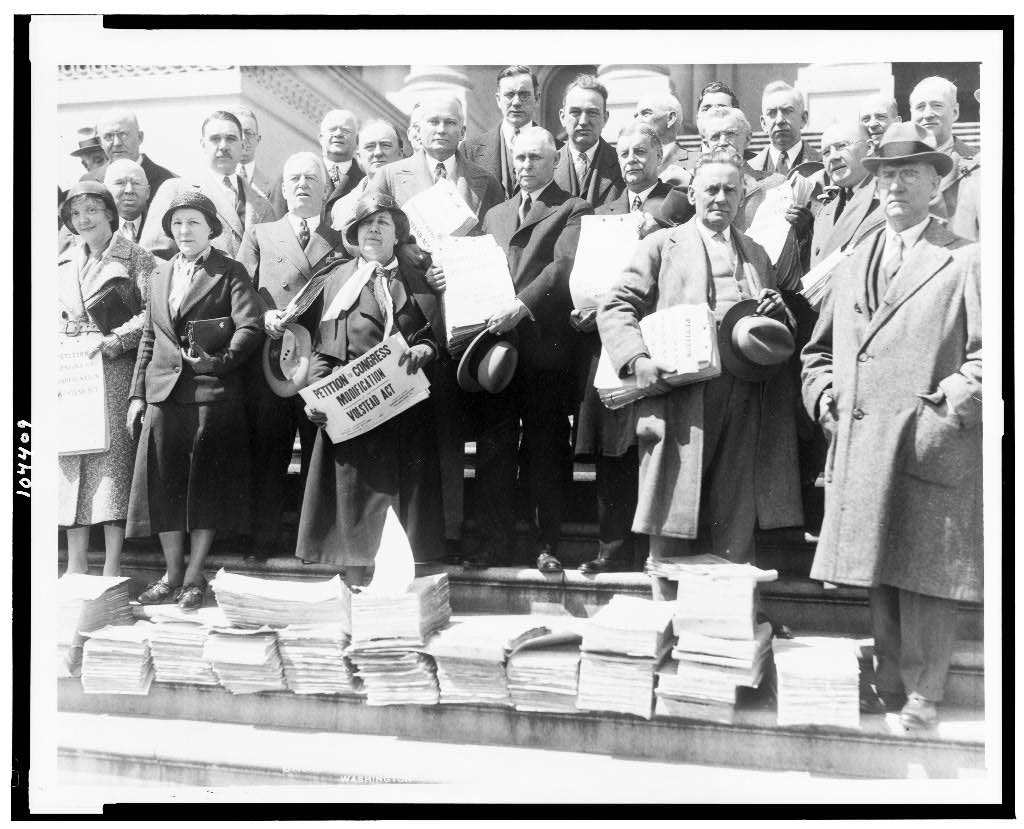
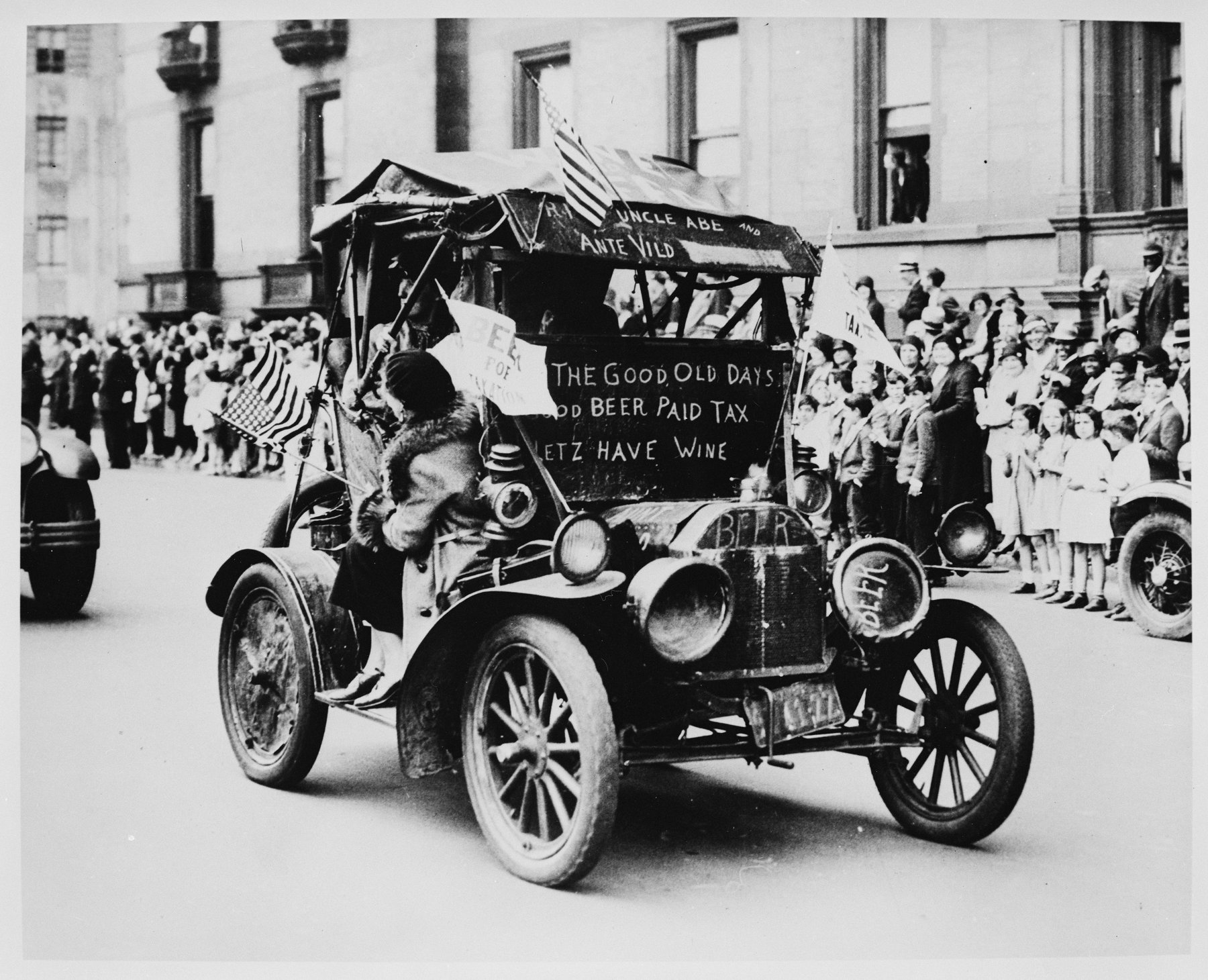
The wet side and the dry side both appear in photographs from 1930 to 1932: a Chicago “Repeal the 18th Amendment” tire cover, a women’s organization for Prohibition reform, a petition said to carry more than 5,000,000 names, the Women’s National Committee for Law Enforcement at the Capitol, and three witnesses before a Senate subcommittee on amending the Volstead law. Photographers’ captions on some of these are not neutral, and the pages say so.
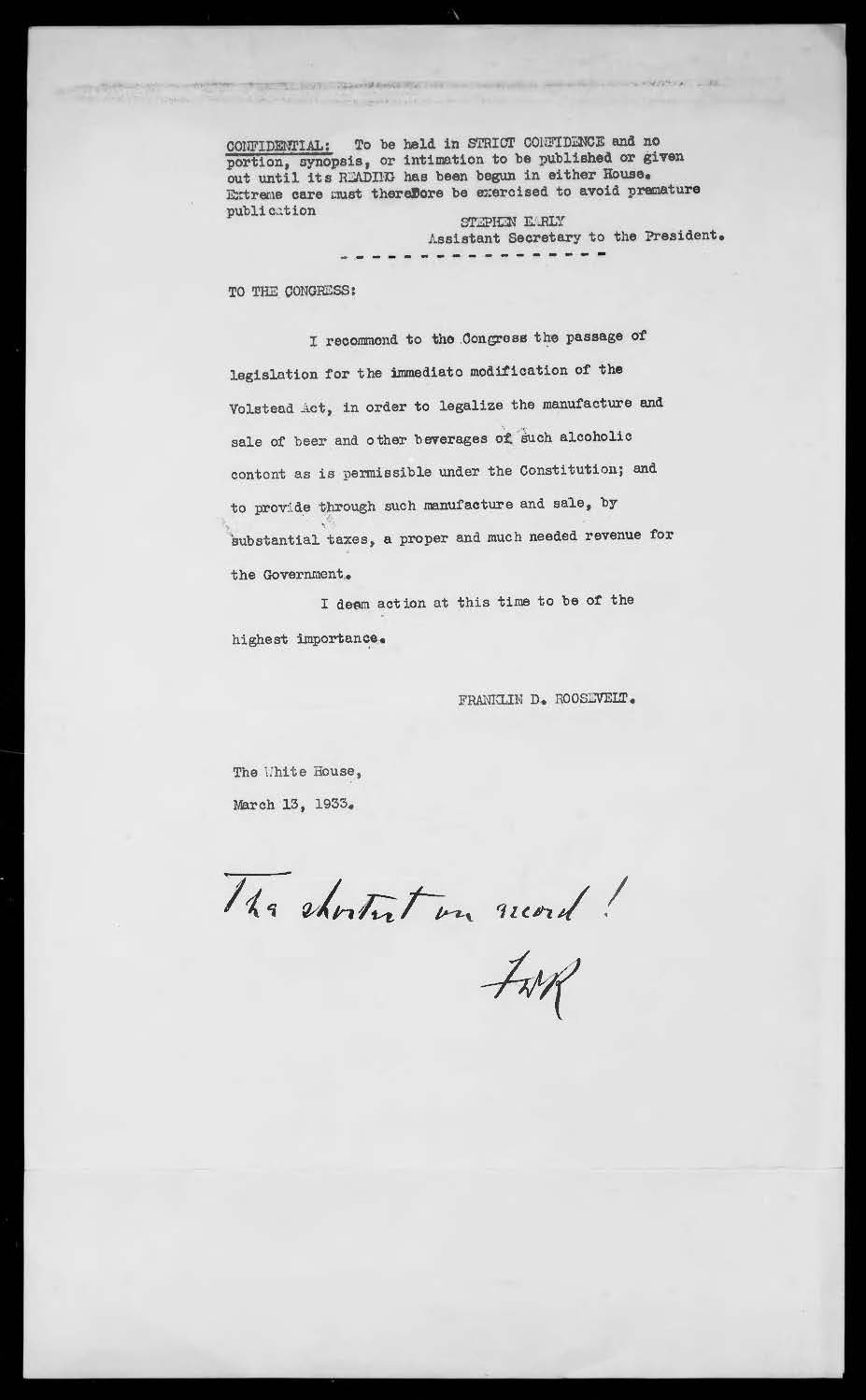
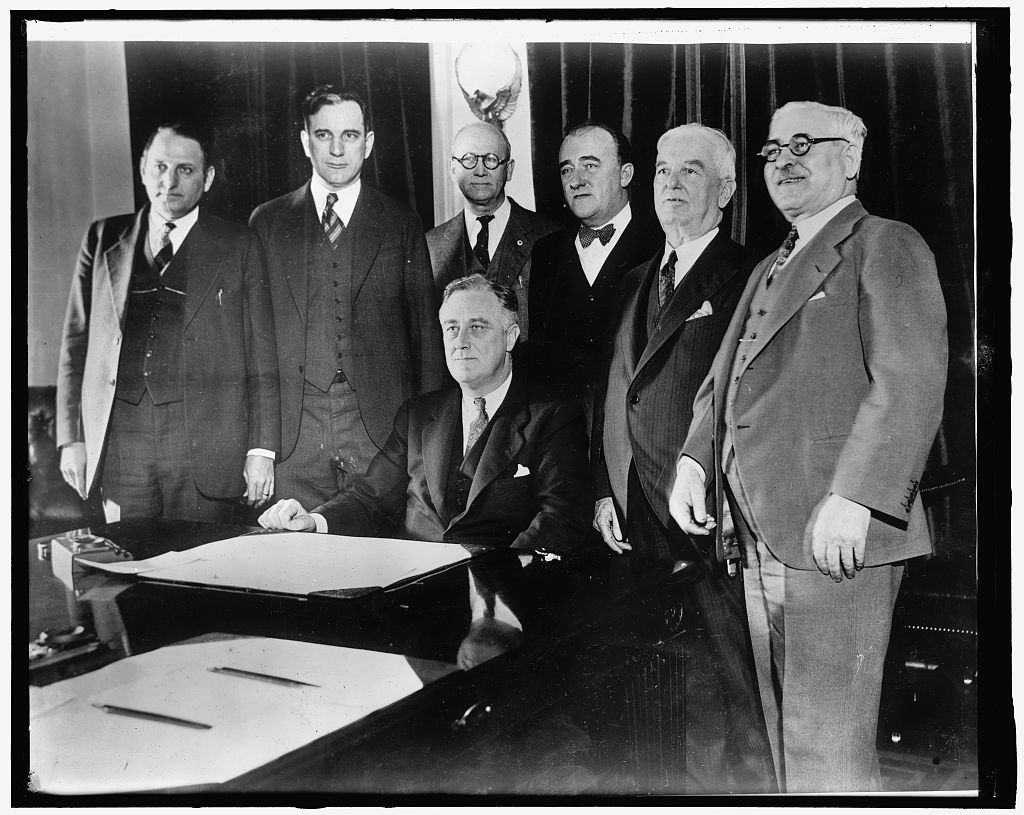
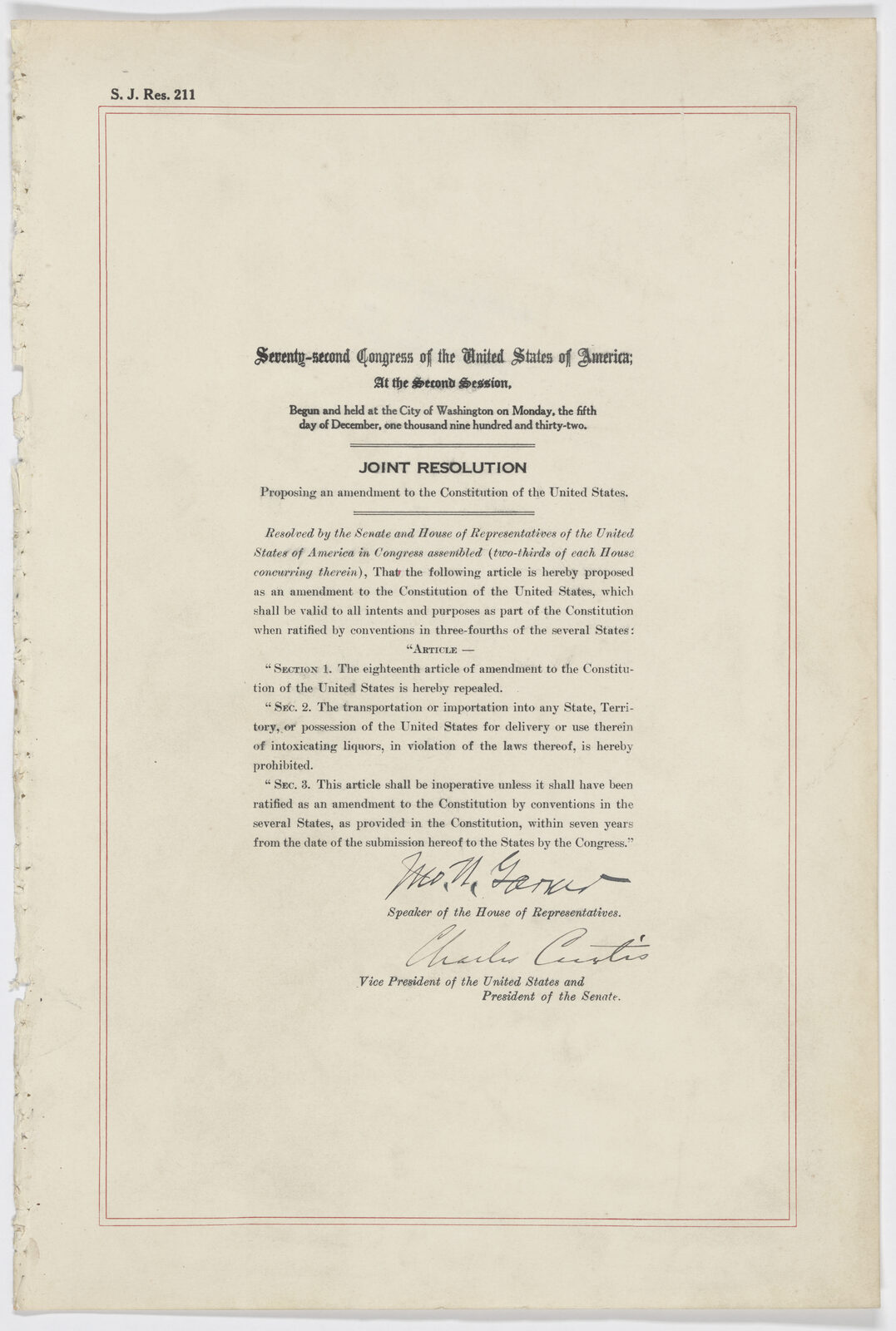
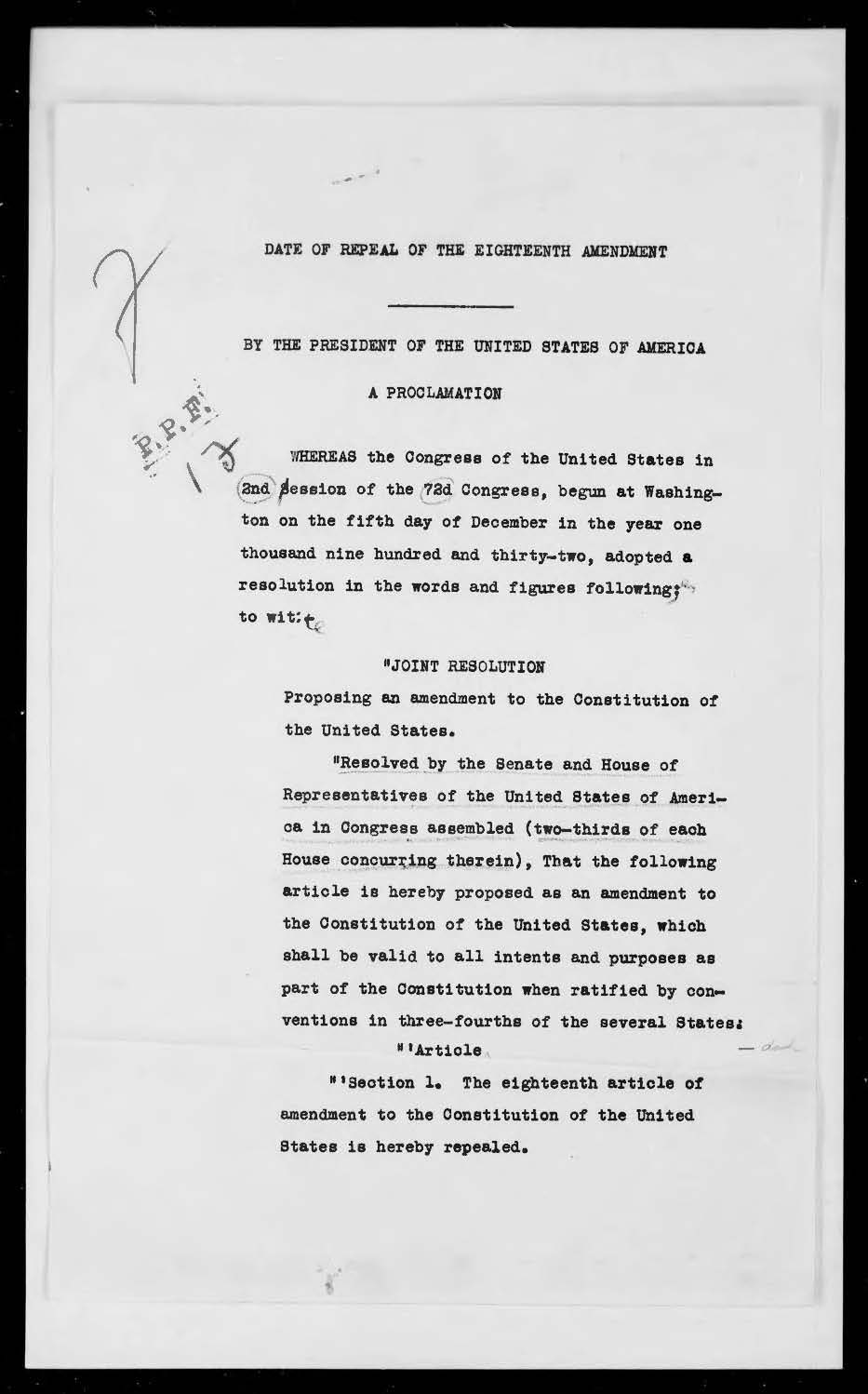
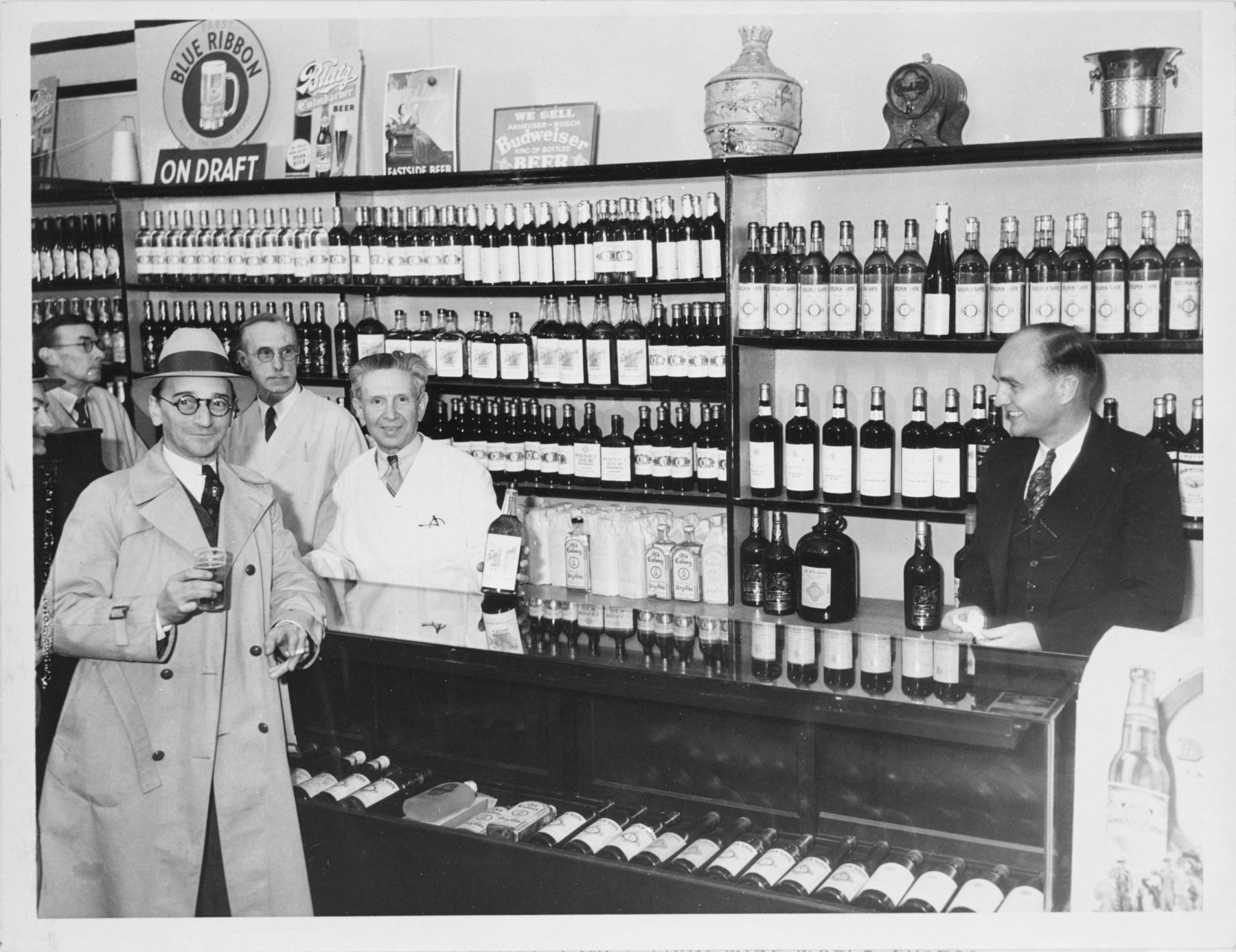
On 13 March 1933 the President’s message to Congress recommended modifying the Volstead Act; the Library of Congress photograph of 22 March 1933 shows the signing of a beer bill, which its record does not name. S.J. Res. 211 of the 72d Congress repeals the eighteenth article in its Section 1, and the Franklin D. Roosevelt Library holds the typescript draft of Proclamation 2065 of December 5, 1933. The ATF timeline says the Bureau of Prohibition’s functions, records and personnel then returned to Treasury as the Alcohol Tax Unit.
- Elizabeth Thompson of Chicago and a “Repeal the 18th Amendment” tire cover (16 December 1930)
- Women’s Organization for National Prohibition Reform, group of four women (1931)
- Bishop James Cannon, Jr., at the Capitol as the Women’s National Committee for Law Enforcement gathers (18 April 1932)
- Modification League presents a petition of more than 5,000,000 names to Congress (15 April 1932)
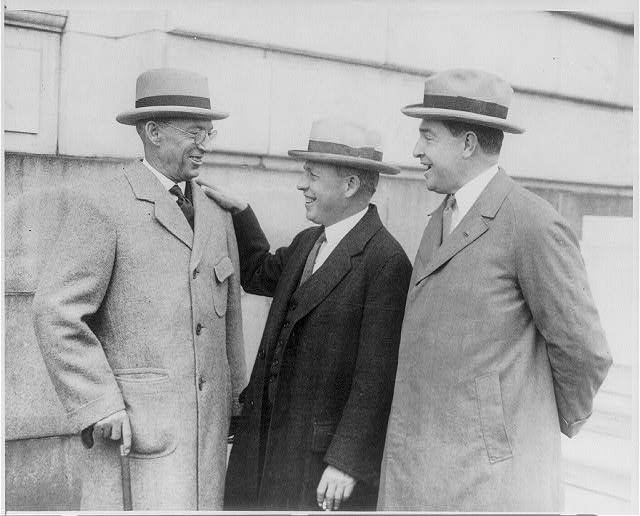
- Lincoln C. Andrews, Emery C. Ruckner and John Philip Hill outside the Capitol (1932)
- Roosevelt’s message to Congress on the Volstead Act (13 March 1933)
- President Roosevelt signs the beer bill with members of Congress (22 March 1933)
- Joint Resolution proposing the Twenty-first Amendment (S.J. Res. 211, 1933)
- Proclamation No. 2065, repeal of the Eighteenth Amendment (draft text, 5 December 1933)
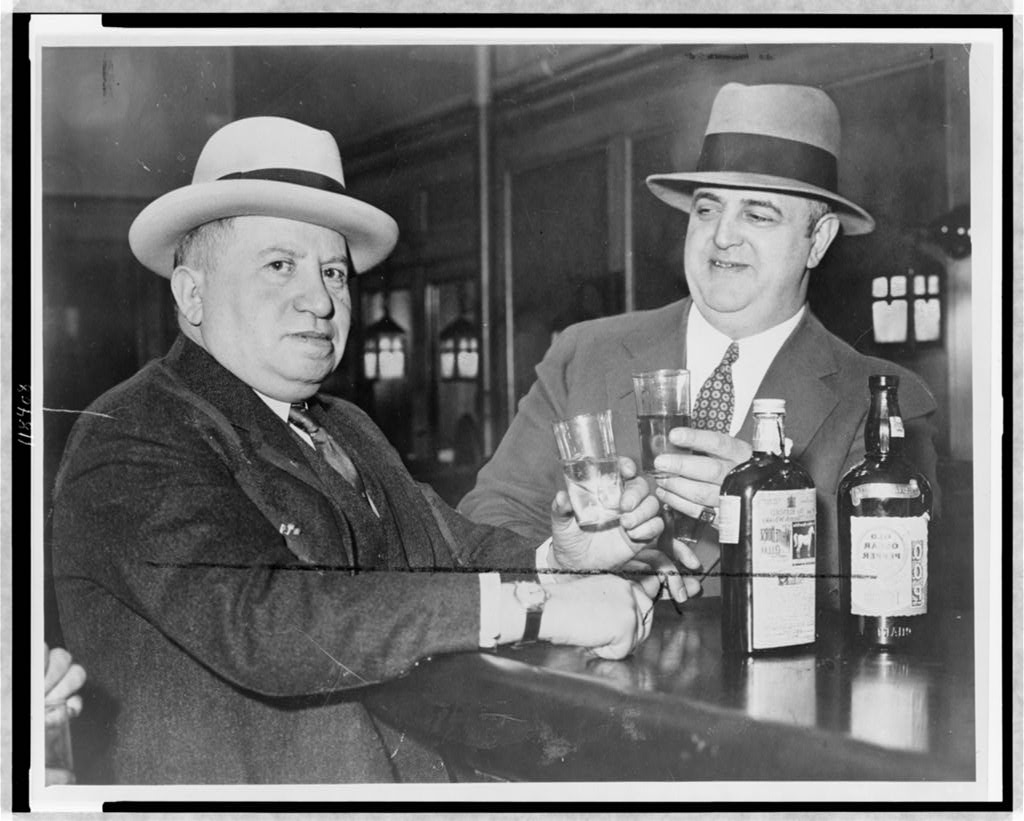
- Izzy Einstein and Moe Smith sharing a toast in a New York bar (1935)
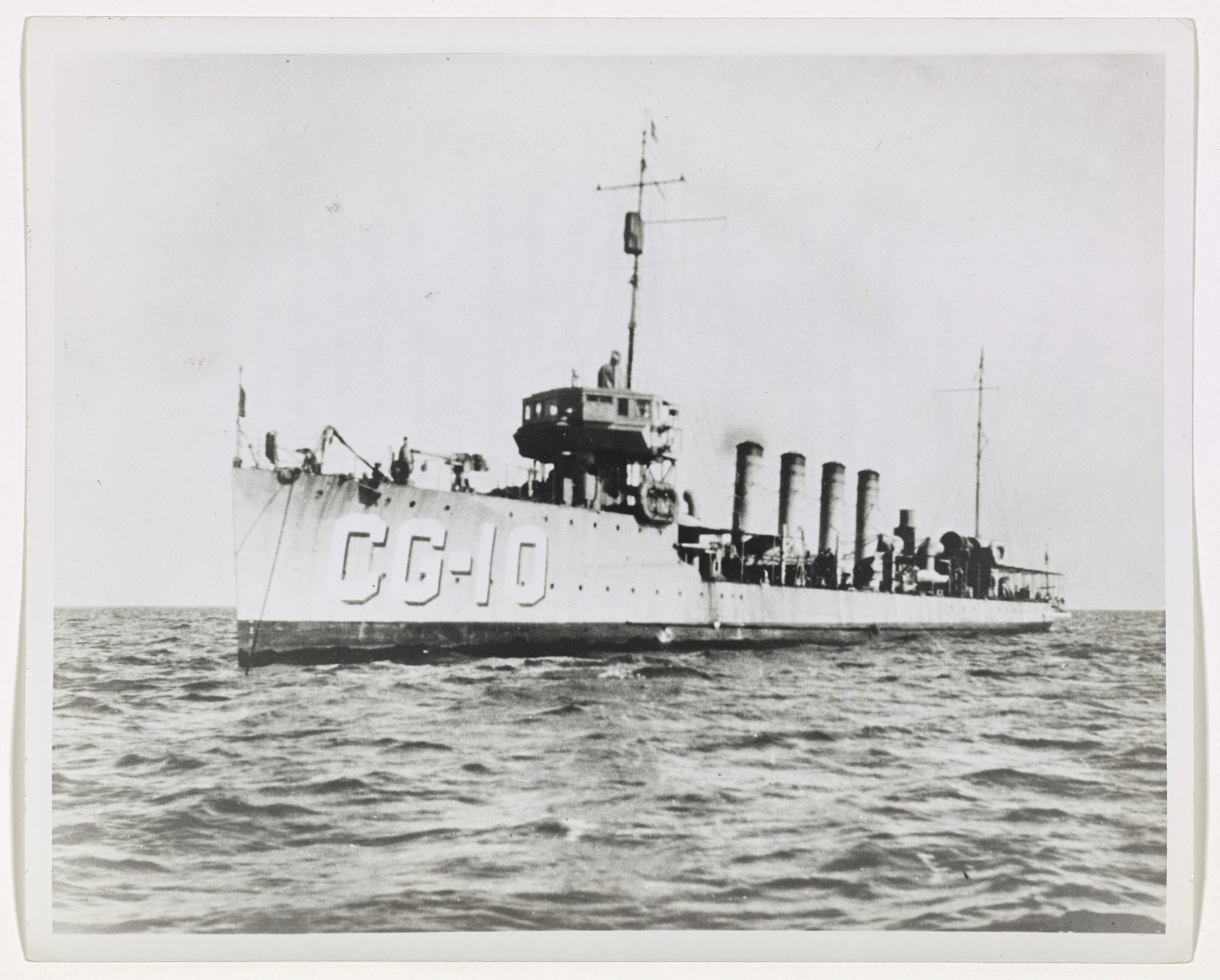
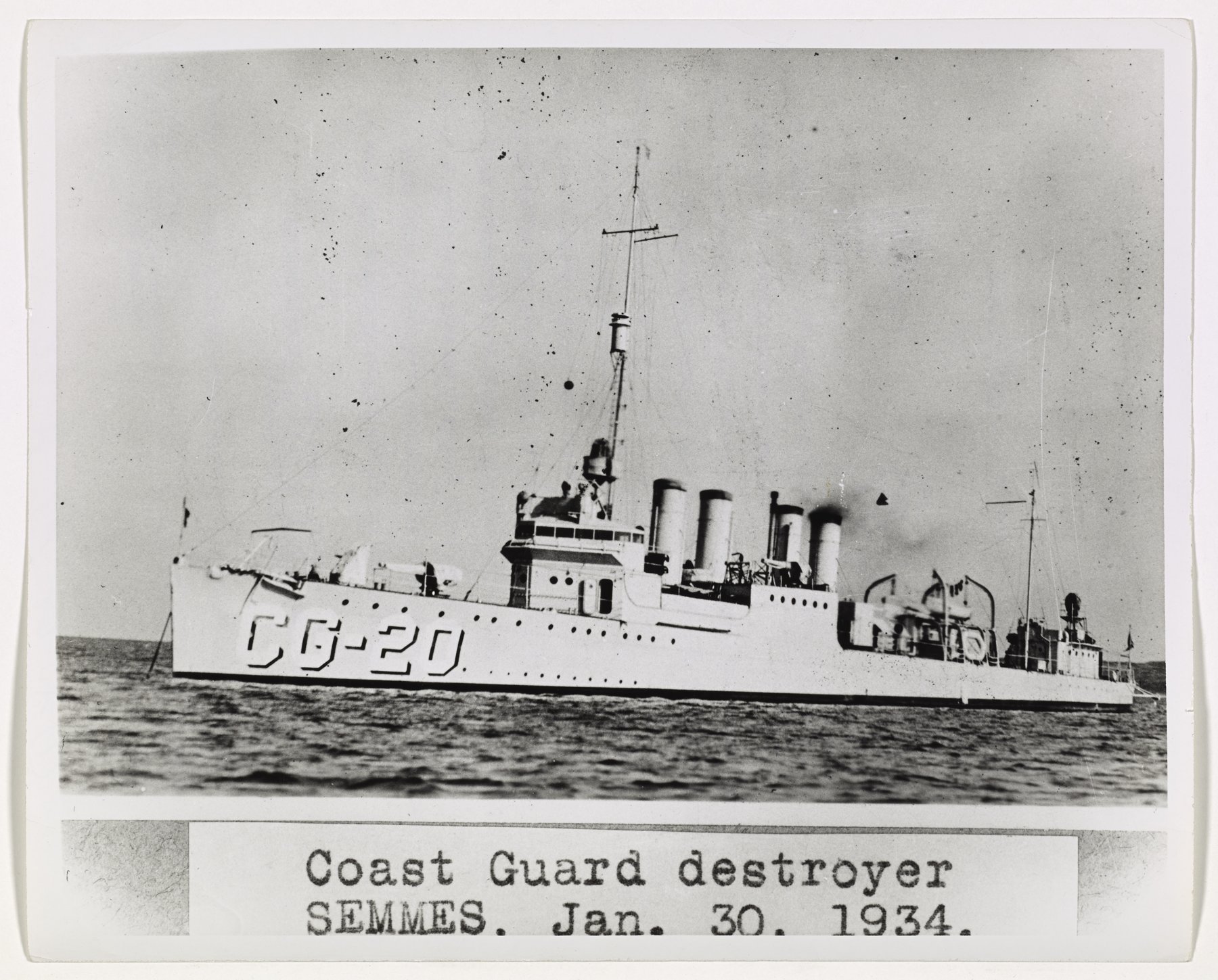
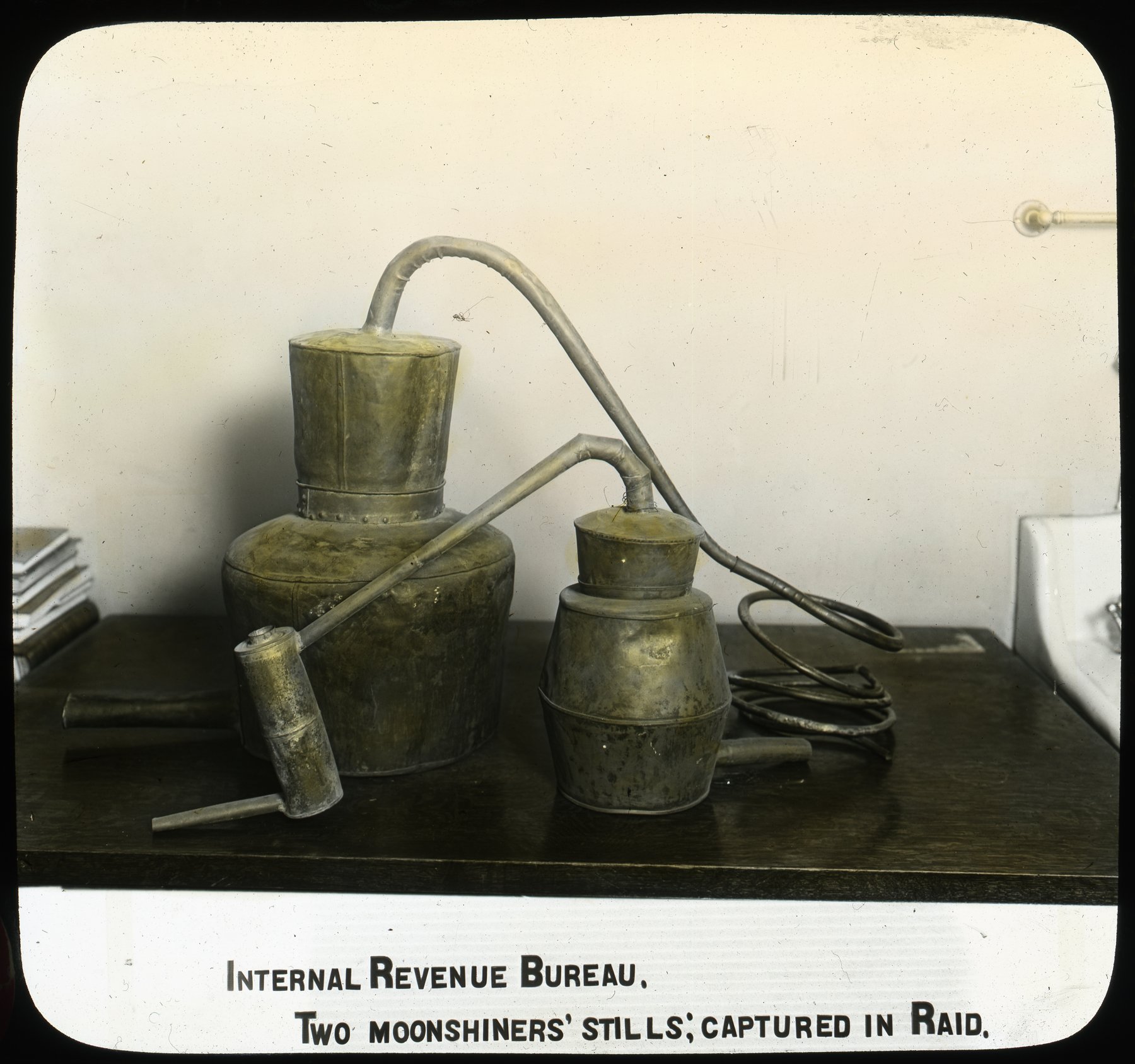
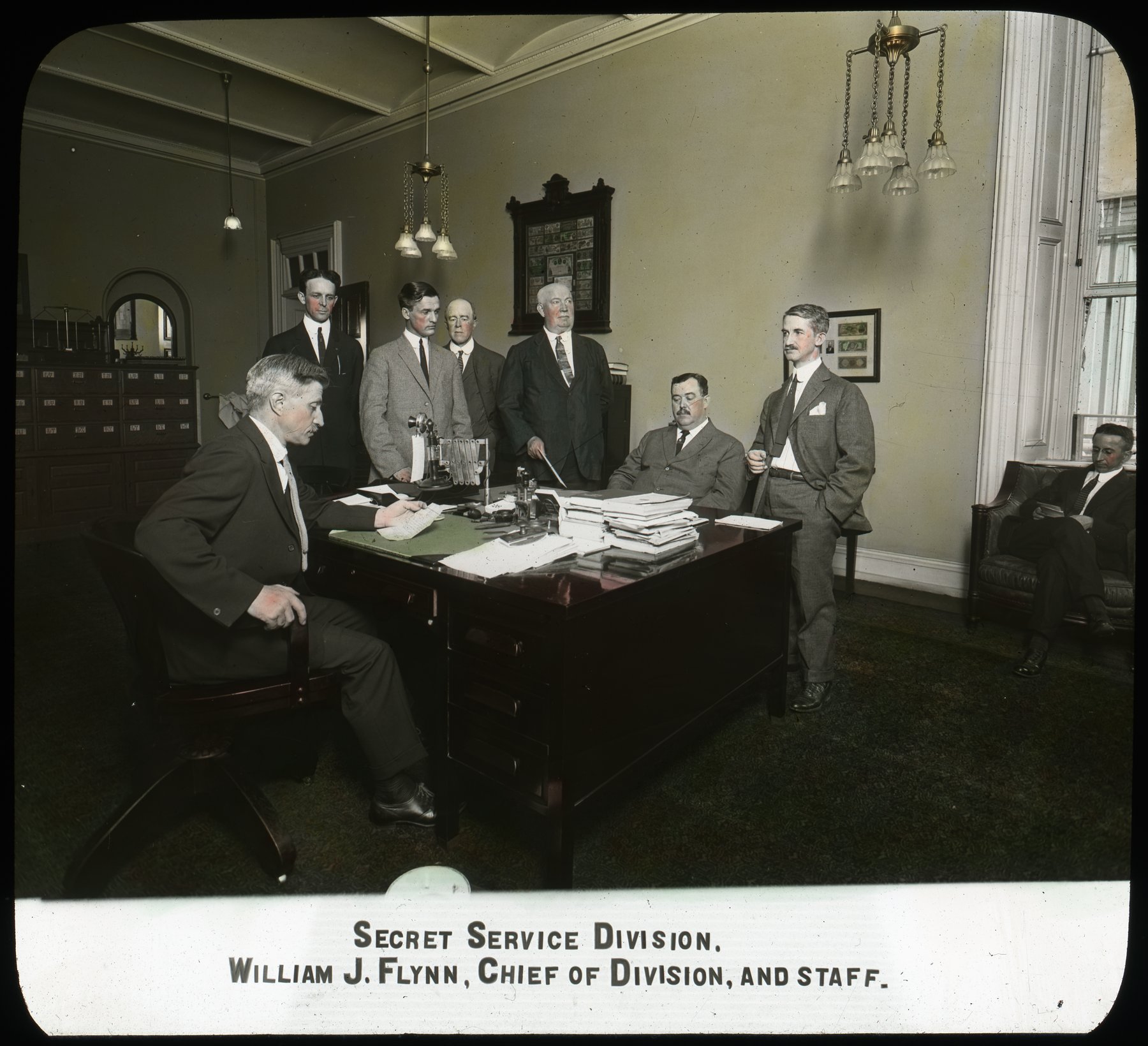
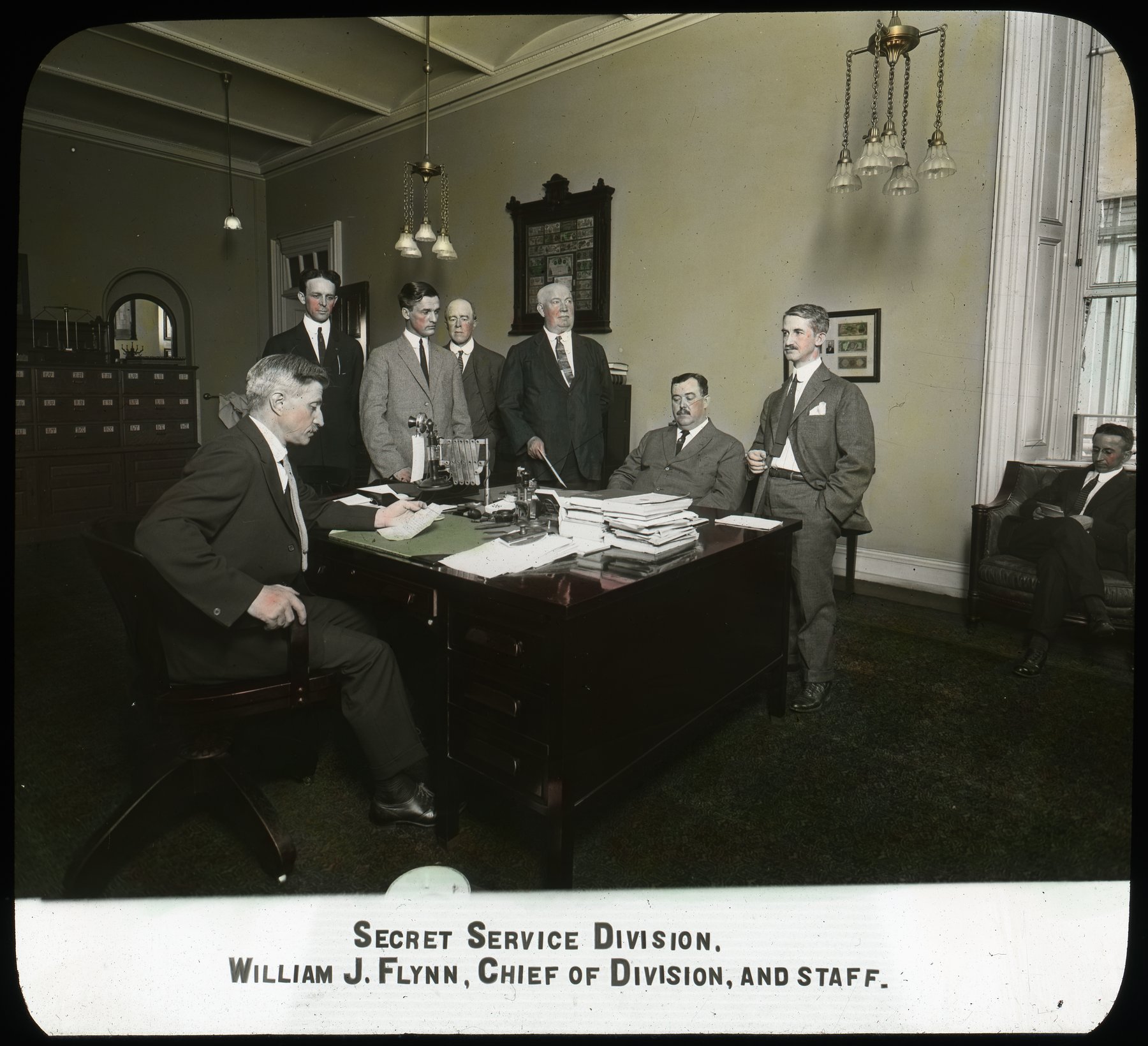
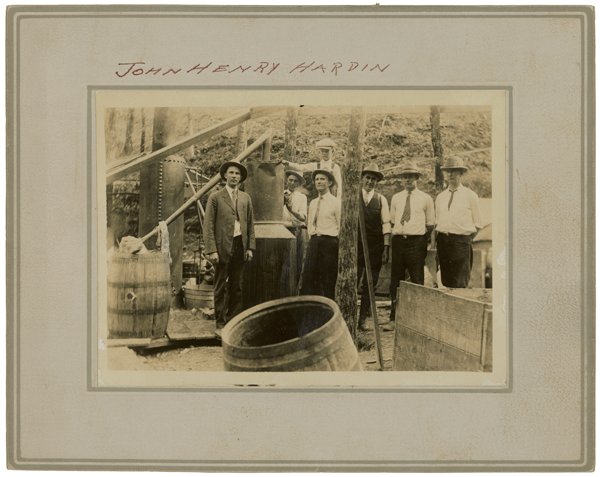
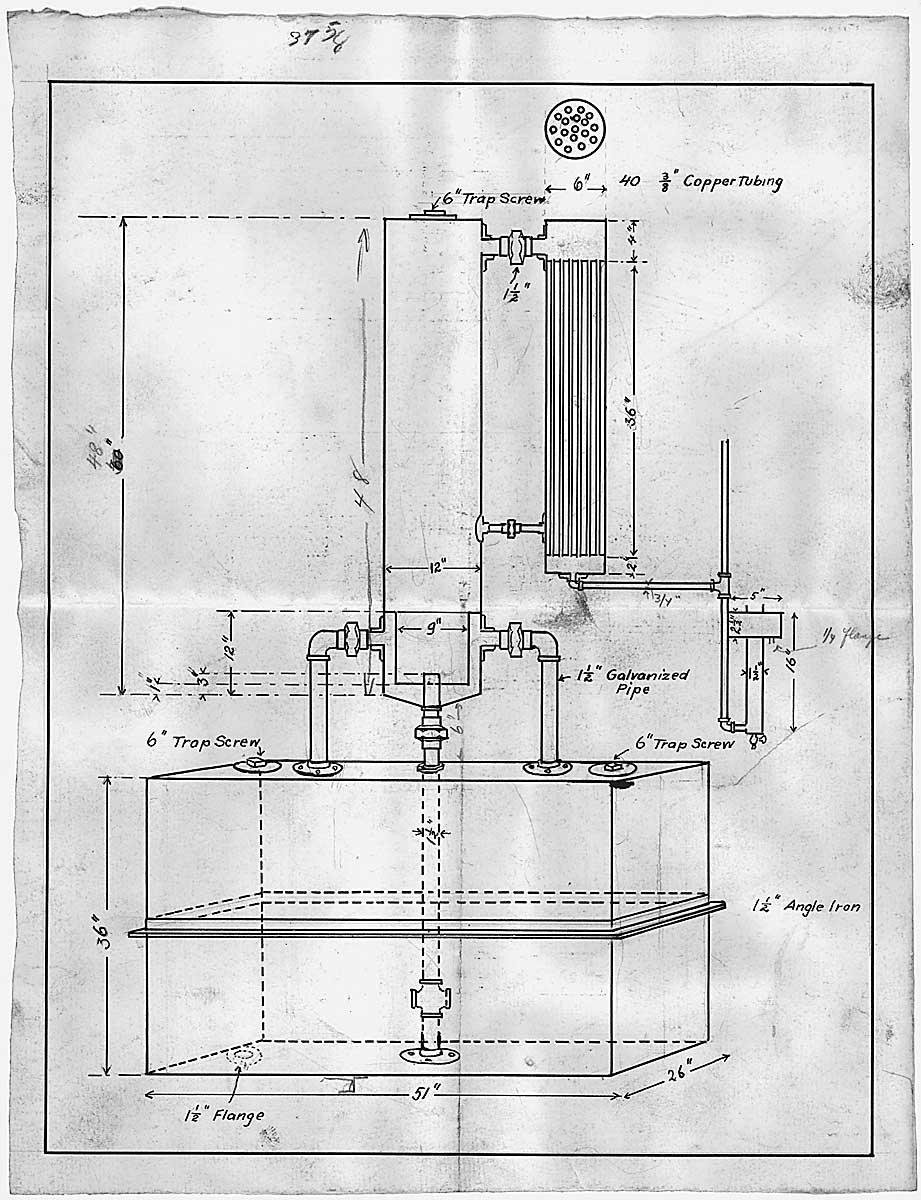
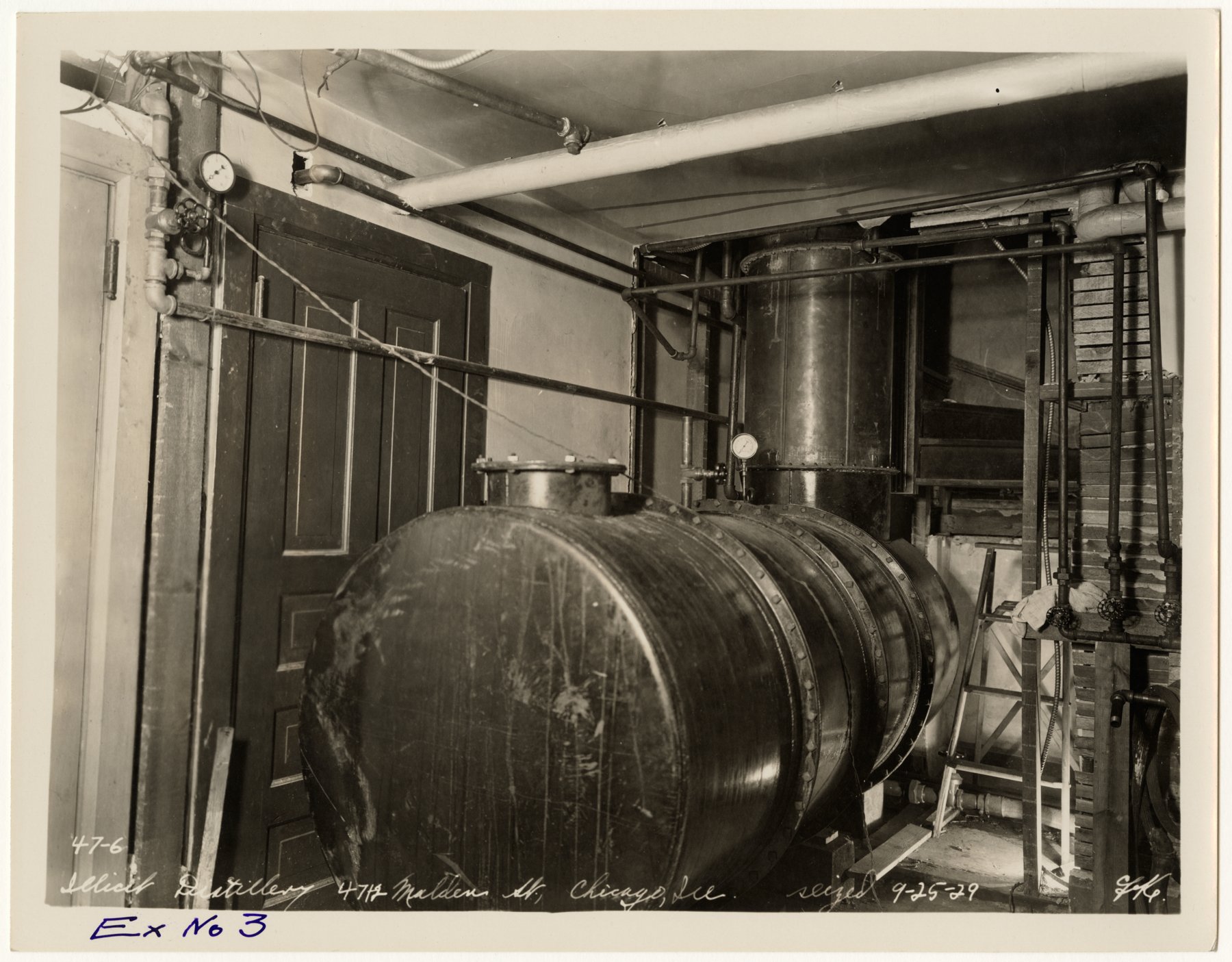
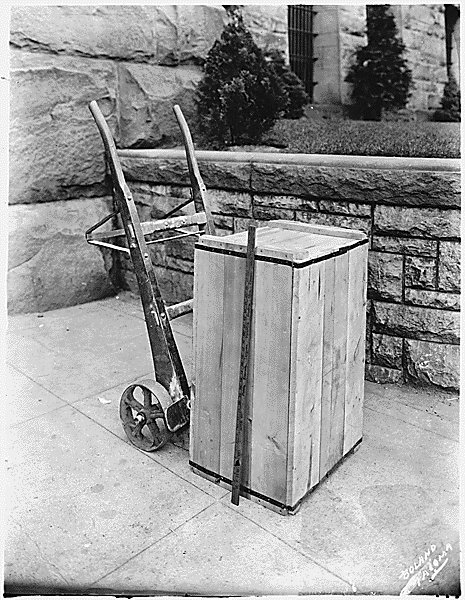
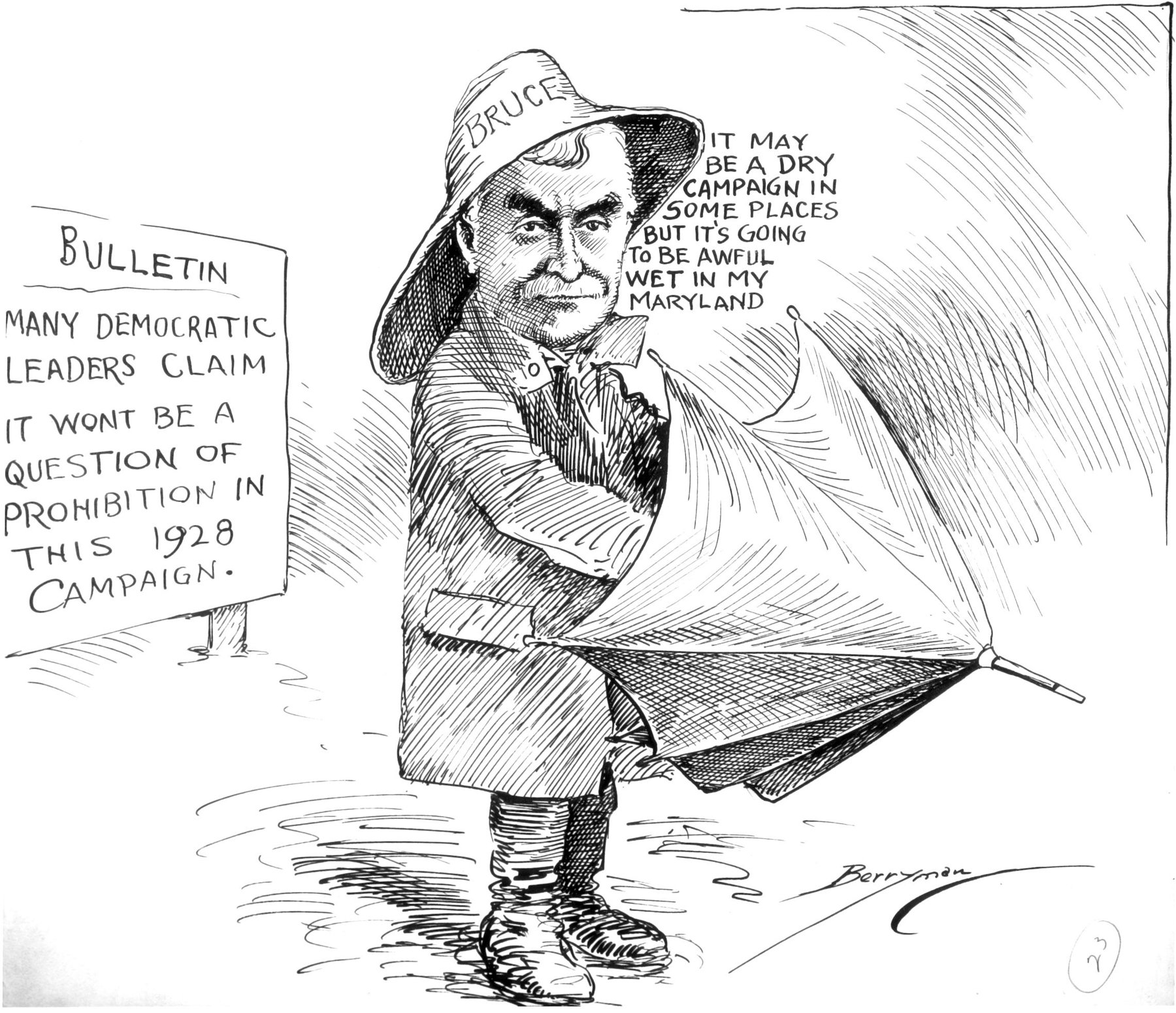
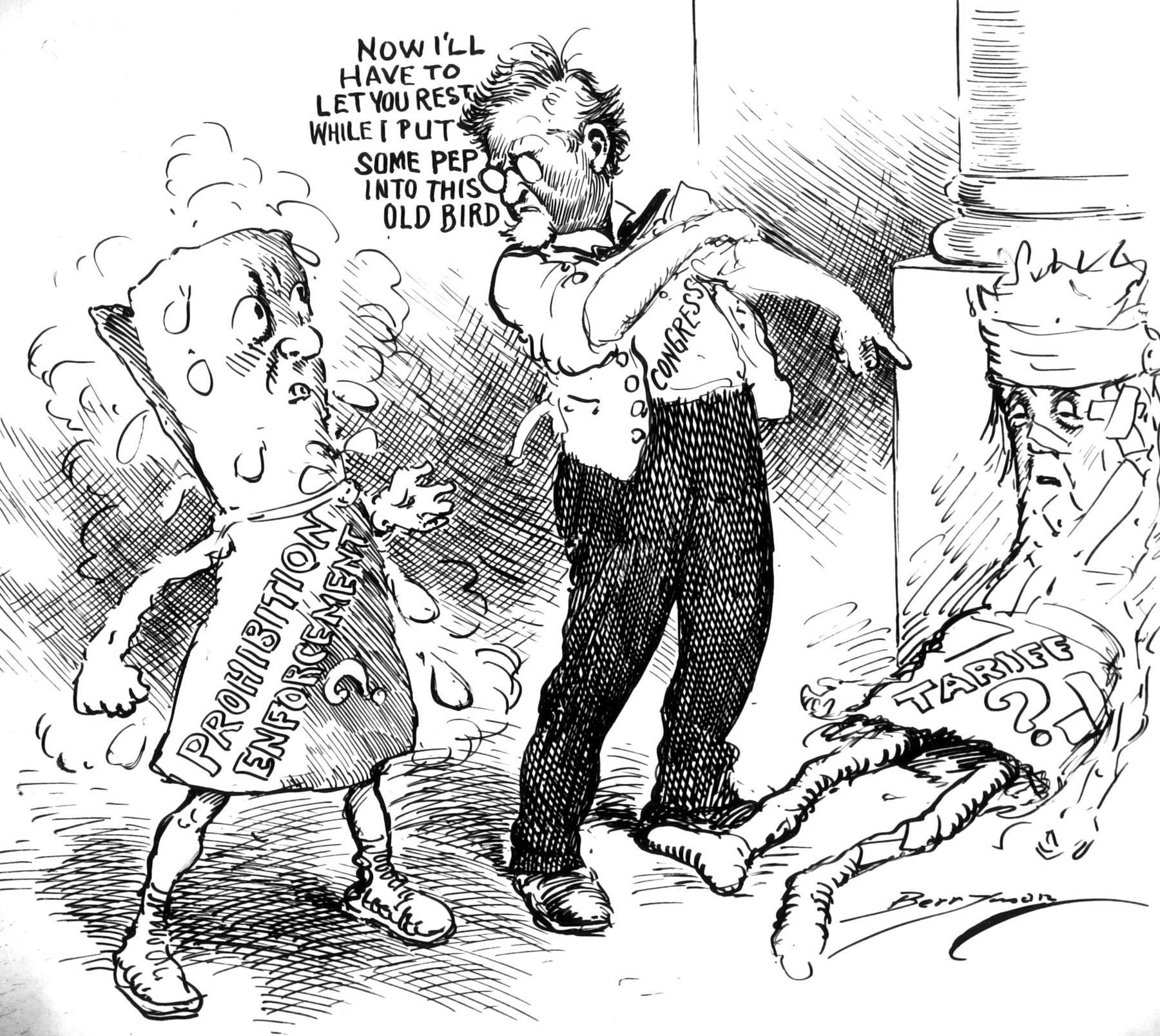
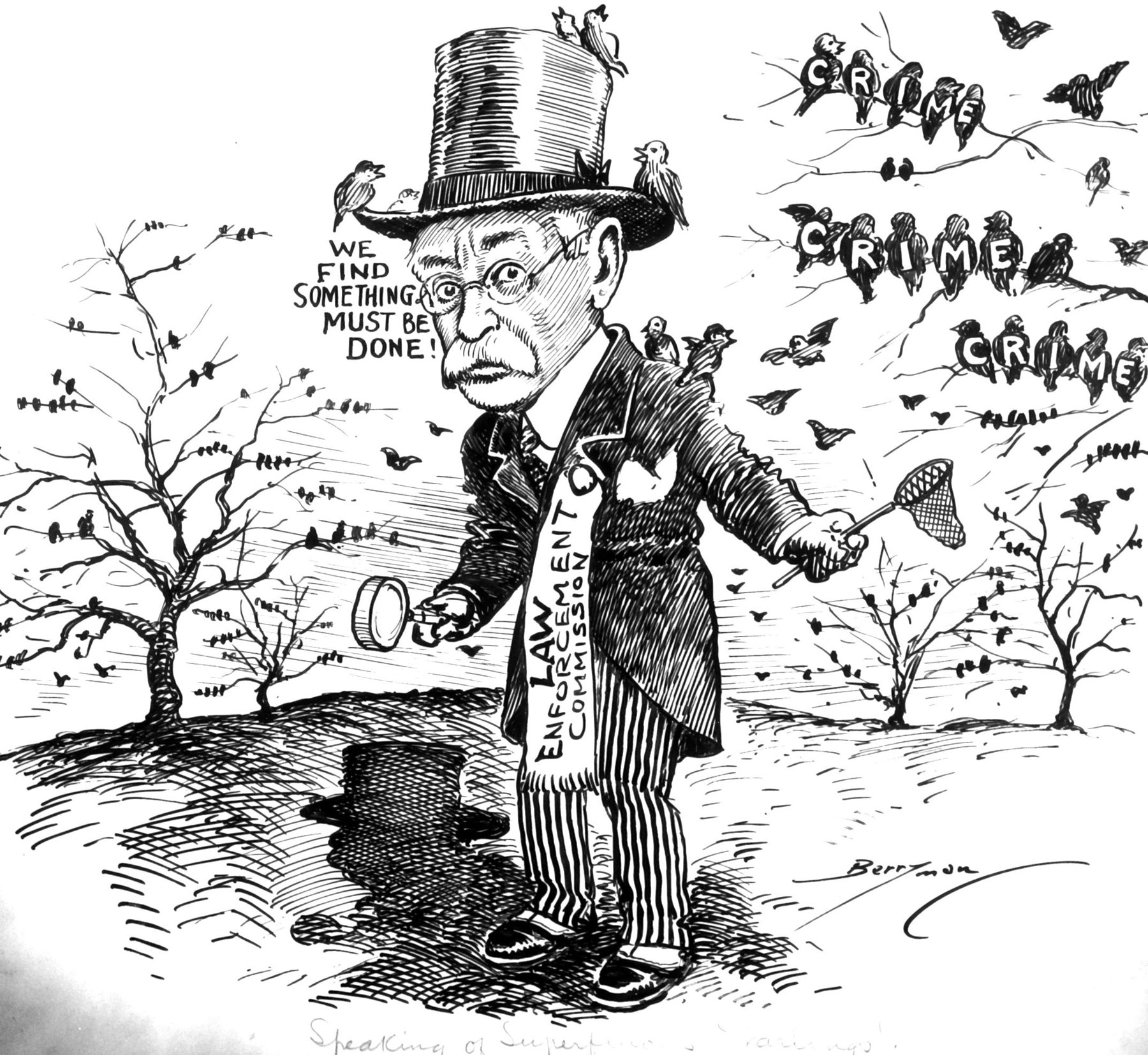
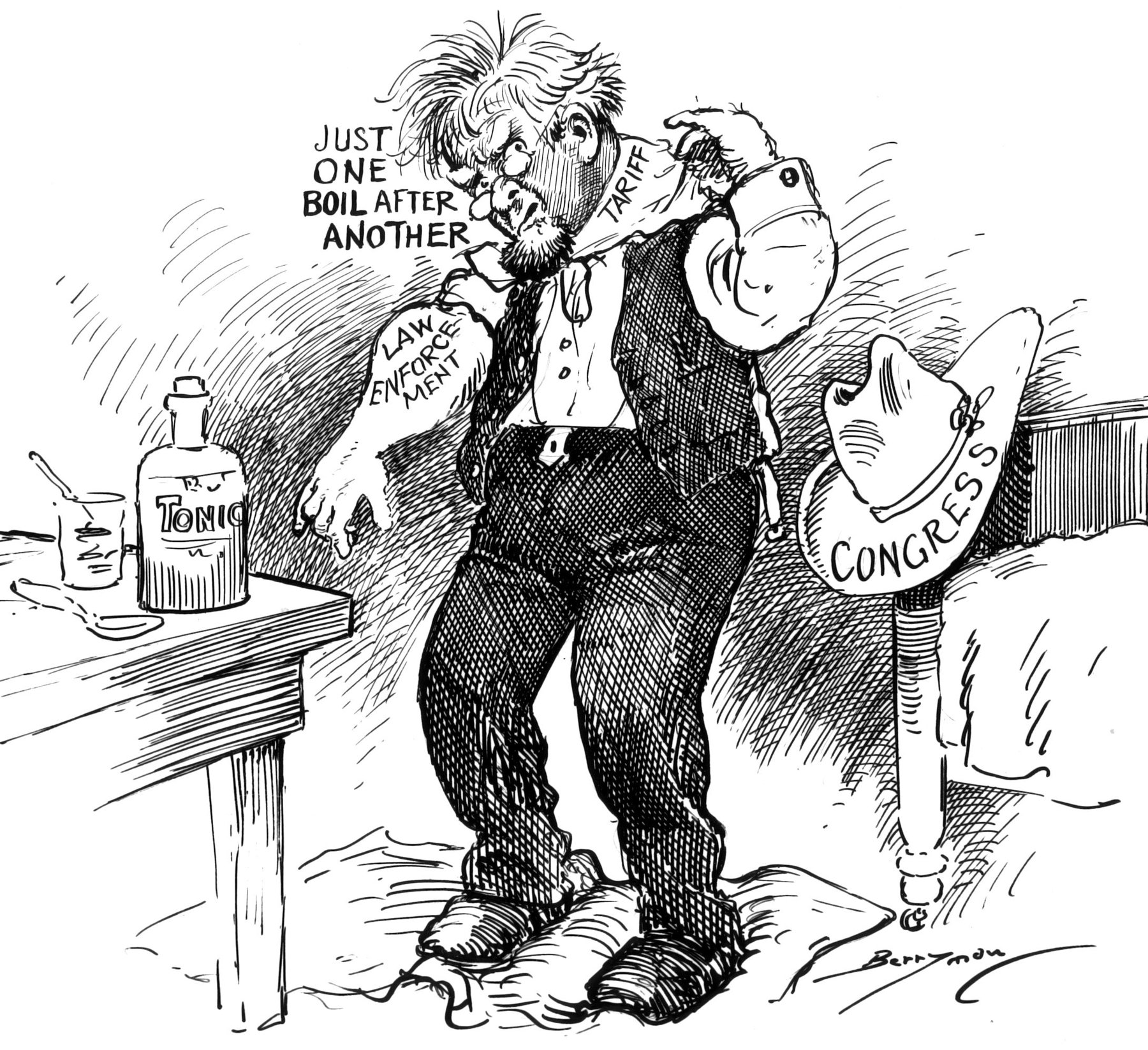
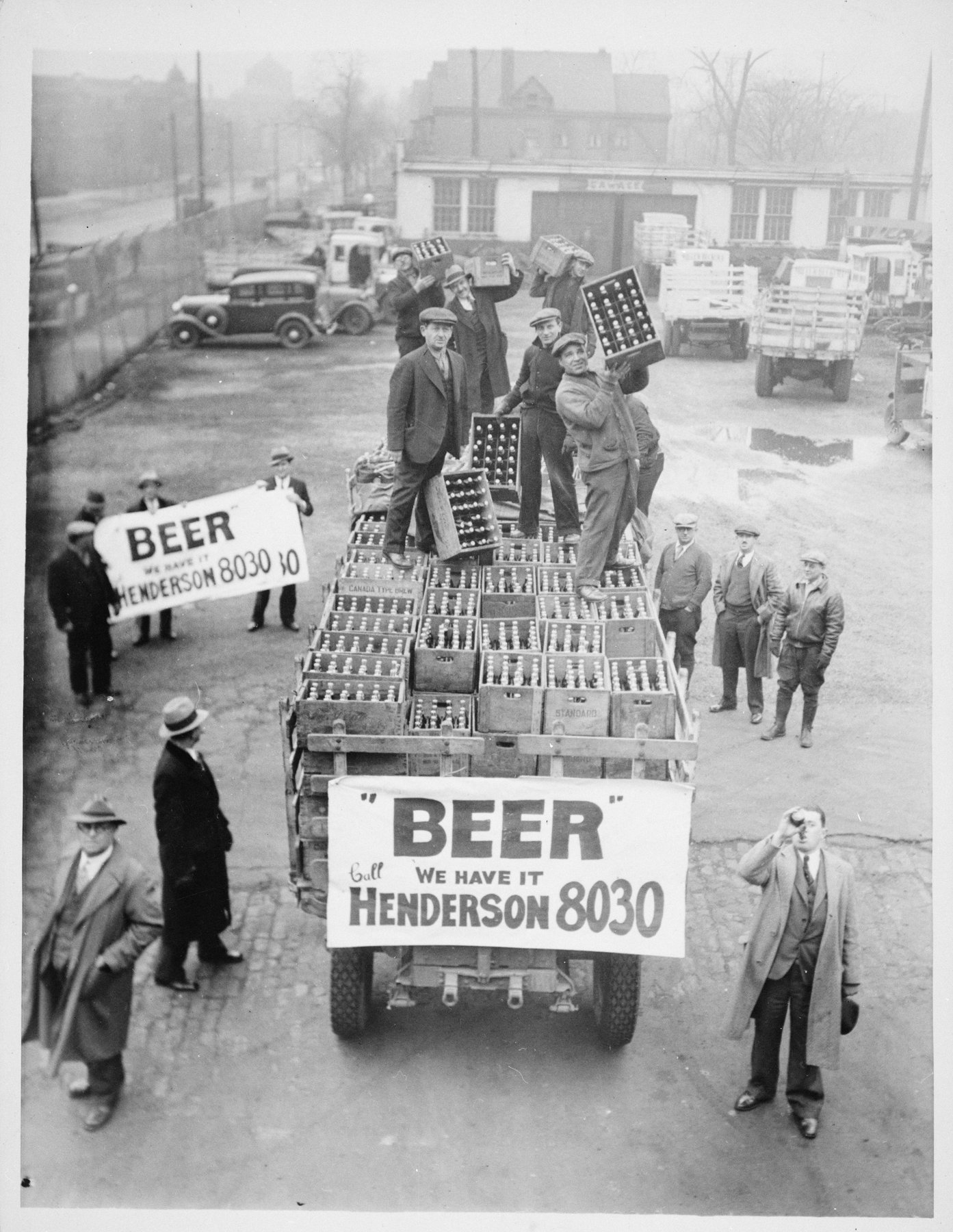
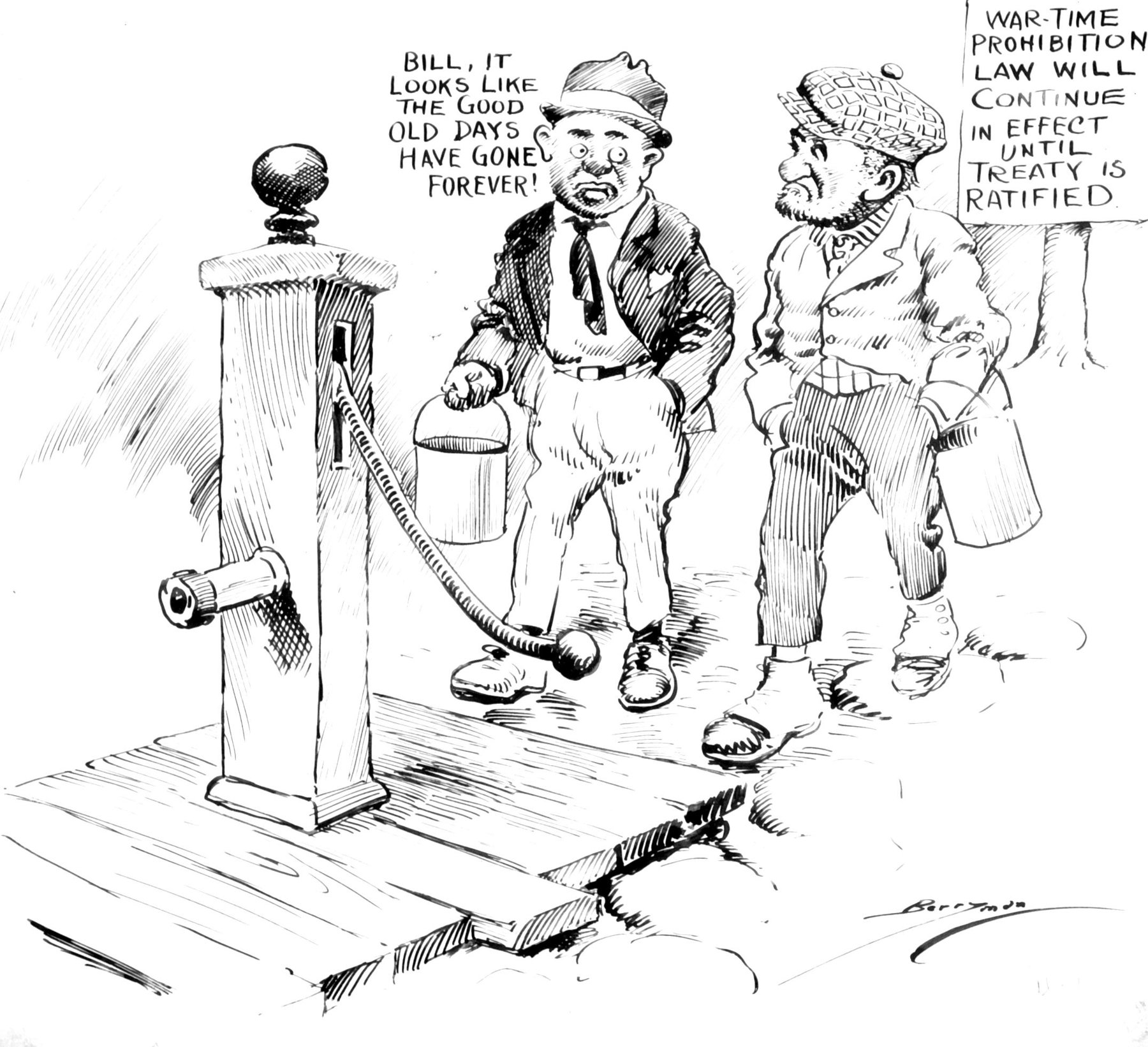
The National Archives adds pictures to these records. The Treasury’s lantern slides of about 1915 show the Internal Revenue Bureau testing whiskies and two moonshiners’ stills captured in a raid, and the Secret Service Division’s chief and staff, all before national Prohibition. Six Coast Guard photographs show the destroyers BEALE, SHAW, PORTER, HUNT, BURROWS and SEMMES, which the catalog describes as searching for or chasing rum-running vessels; two of the catalog dates fall in 1960 and 1961, long after that service, and three are blank. A Wickersham Commission exhibit photograph records a Chicago distillery seized on 25 September 1929, a case file of the federal court in Georgia holds a photograph of a still, and the Seattle investigative files hold a drawing of a still and a photograph of a shipping crate; the indictments and allegations in those files are not findings. Clifford Berryman’s cartoons in the Senate collection run from 1919 to the 1932 conventions, with a drawing of 30 April 1932 of two men labelled “Racketeer” and “Gangster” reading about Wall Street; those drawn after 1930 are cited without a stored copy. The New York Times Paris Bureau photographs, which the National Archives marks unrestricted while cautioning about copyright in the series, show repeal campaigning, beer arriving in Cleveland in April 1933 and a Los Angeles counter at repeal. Three Coast Guard frames of an illicit still in North Carolina date from 1948, after repeal, under the federal liquor tax laws.
Limits of this section
The Library of Congress items are marked no known restrictions on publication, and many repeat caption-card identifications that the Library flags as unverified. The Bureau of Prohibition correspondence records allegations by private persons, which this archive does not repeat. The Capone material that overlaps with these years is in the Capone section; this section does not add to it.
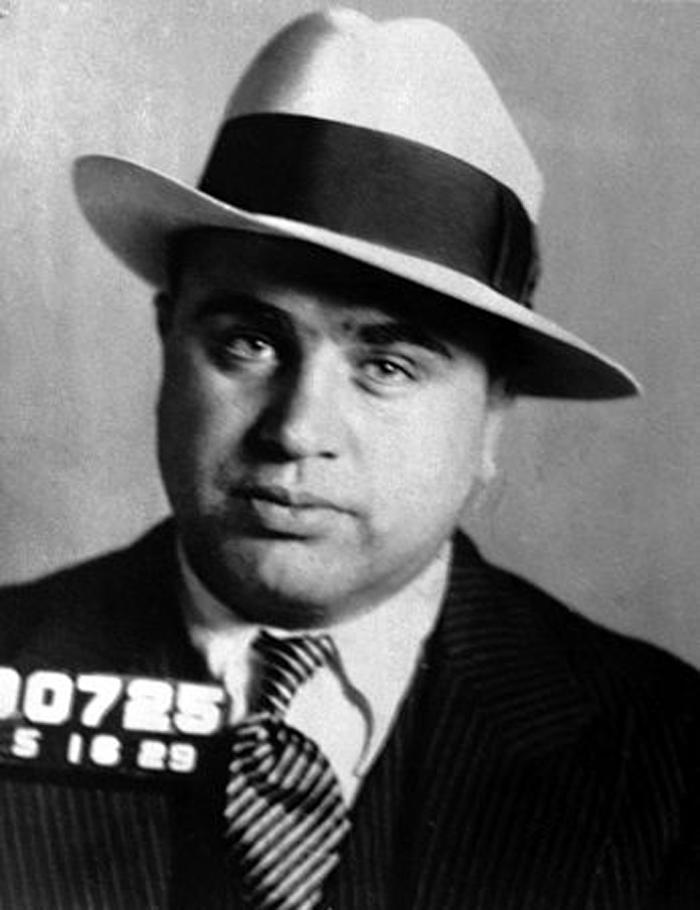
![Portrait of a man labeled R.S. [i.e. A.] Haynes.](../media/loc-2014712812-roy-haynes-portrait.jpg)