“Black Hand” was the name newspapers, police and some federal clerks gave to anonymous letters demanding money under threat of death, and by extension to the people who wrote them. The federal record of the period treats it in two ways. The Secret Service, which investigated counterfeiting, watched and arrested men it also suspected of other crimes, and its agents wrote down those suspicions. The Post Office and the federal courts prosecuted the letters themselves as a mail offence, under the mail-fraud and conspiracy statutes. Neither kind of record shows a single organisation behind the letters, and this page does not describe one.
Each record’s page quotes what the source says and labels it: a court’s holding, a grand jury’s charge, an agent’s belief in an internal report, a catalog note, or a newspaper’s report. A name in a record is not a finding. Newspapers of the period often described Italians in hostile terms; where a page quotes that wording it is the record’s, quoted only where needed and flagged, and one 1909 headline containing a slur is not reproduced at all.
The barrel killing, April 1903
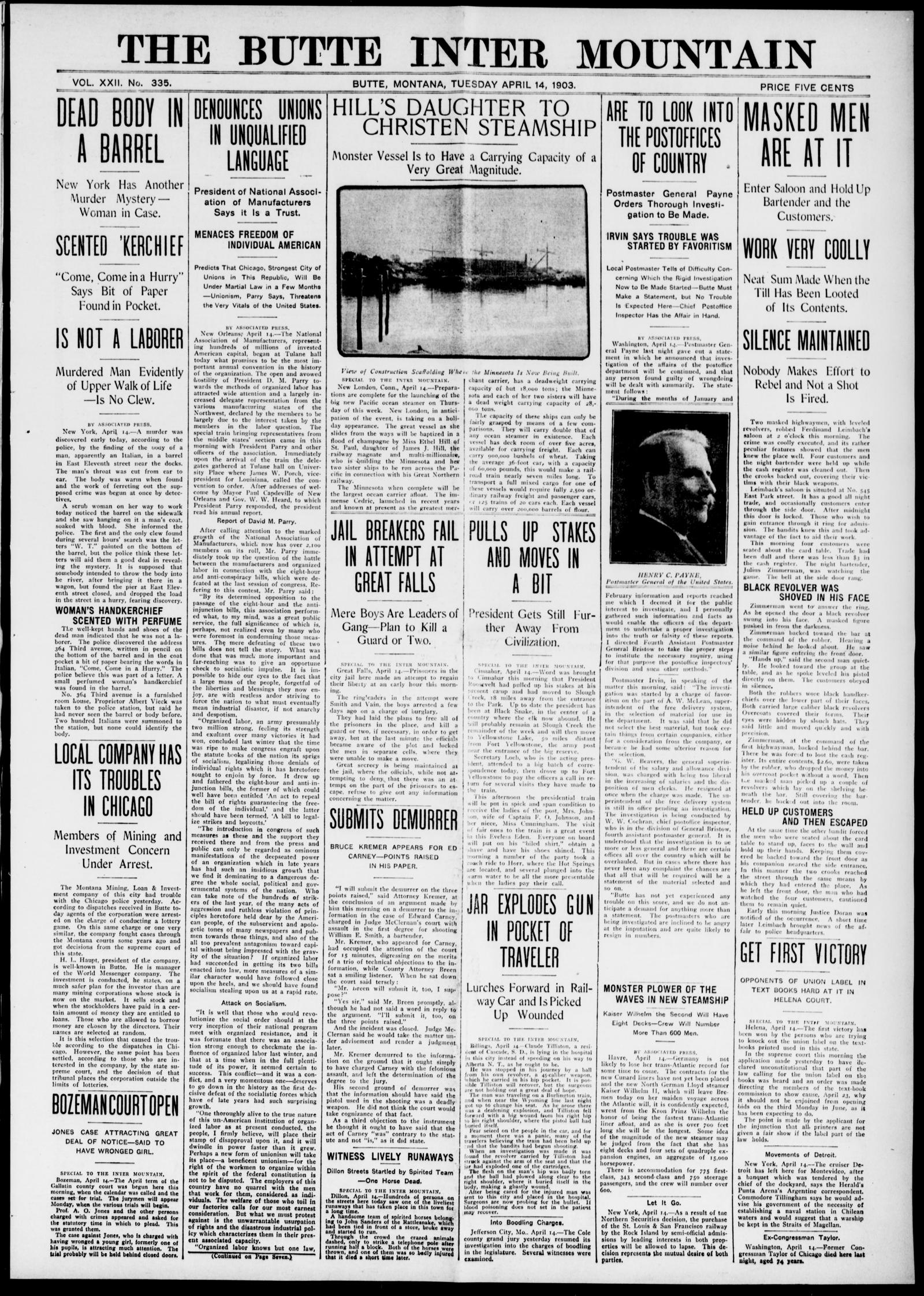
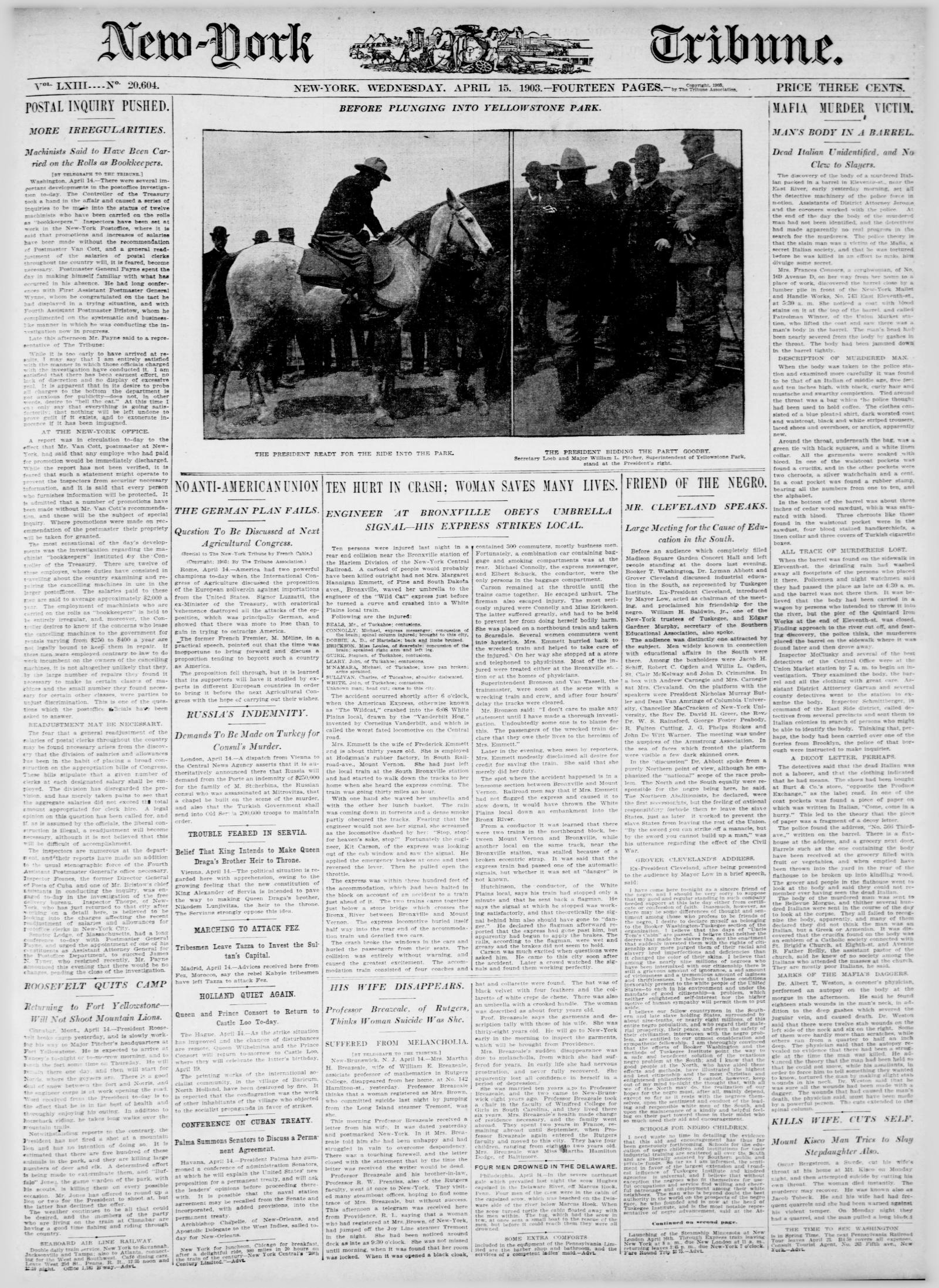
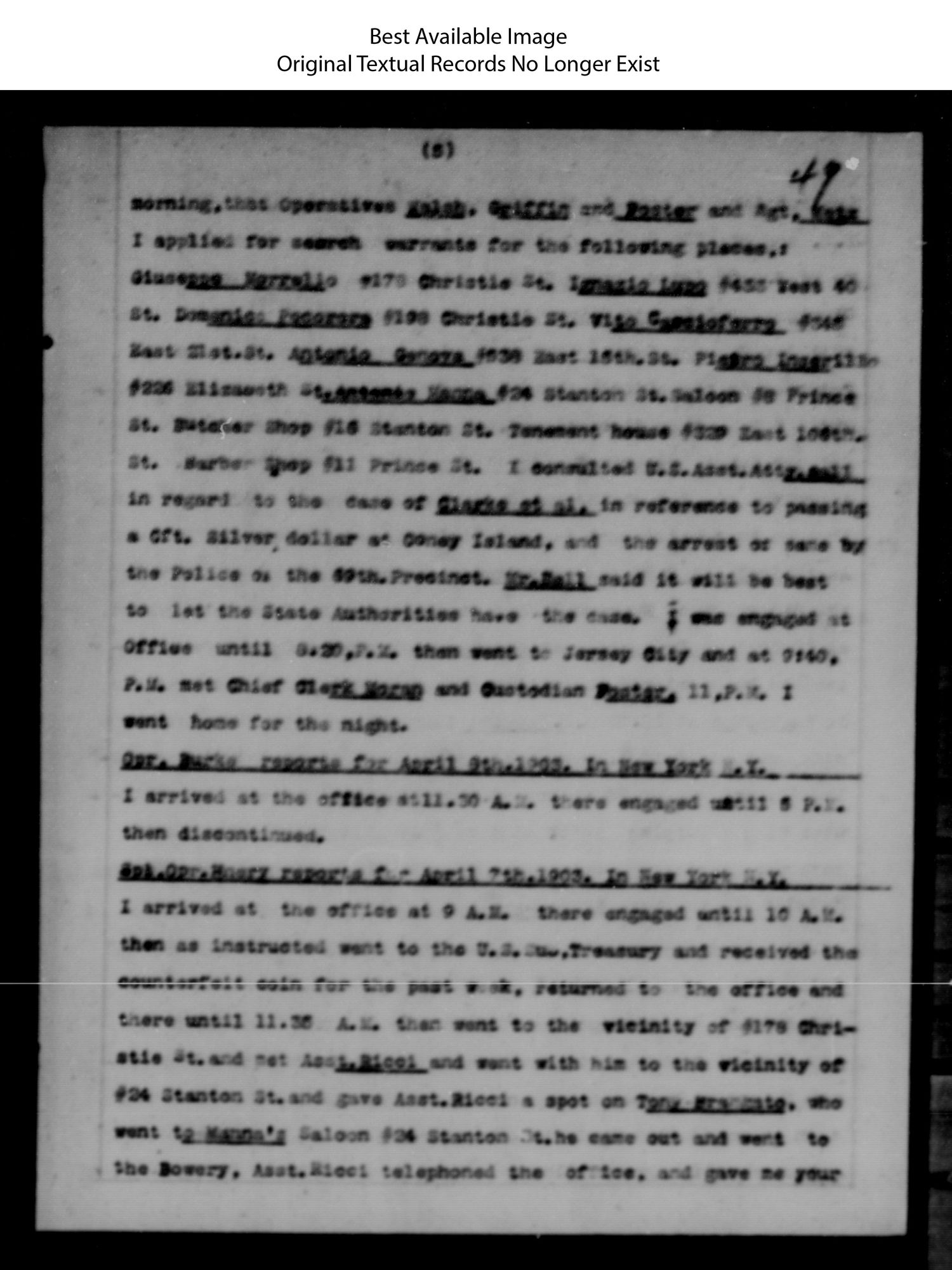
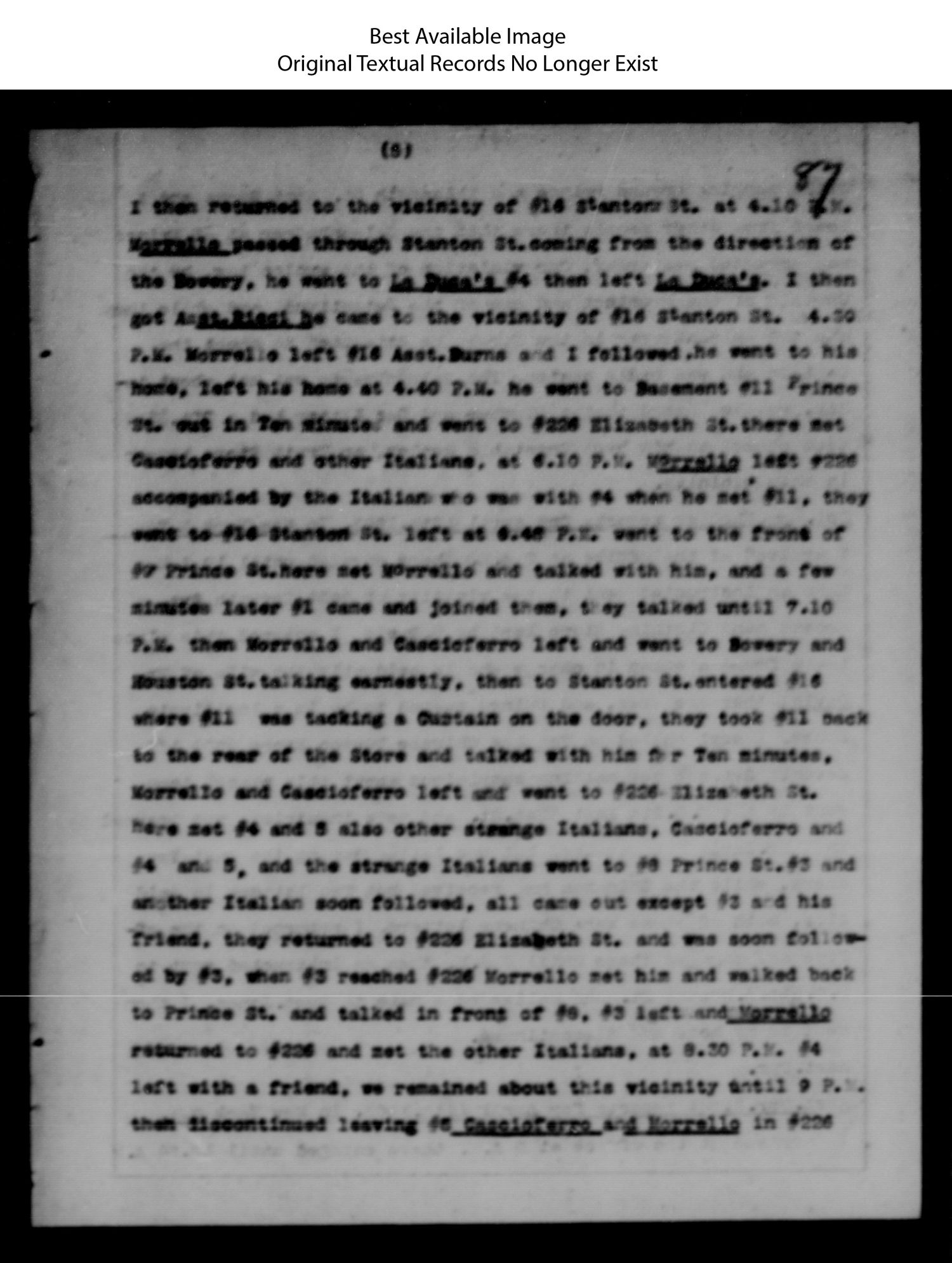
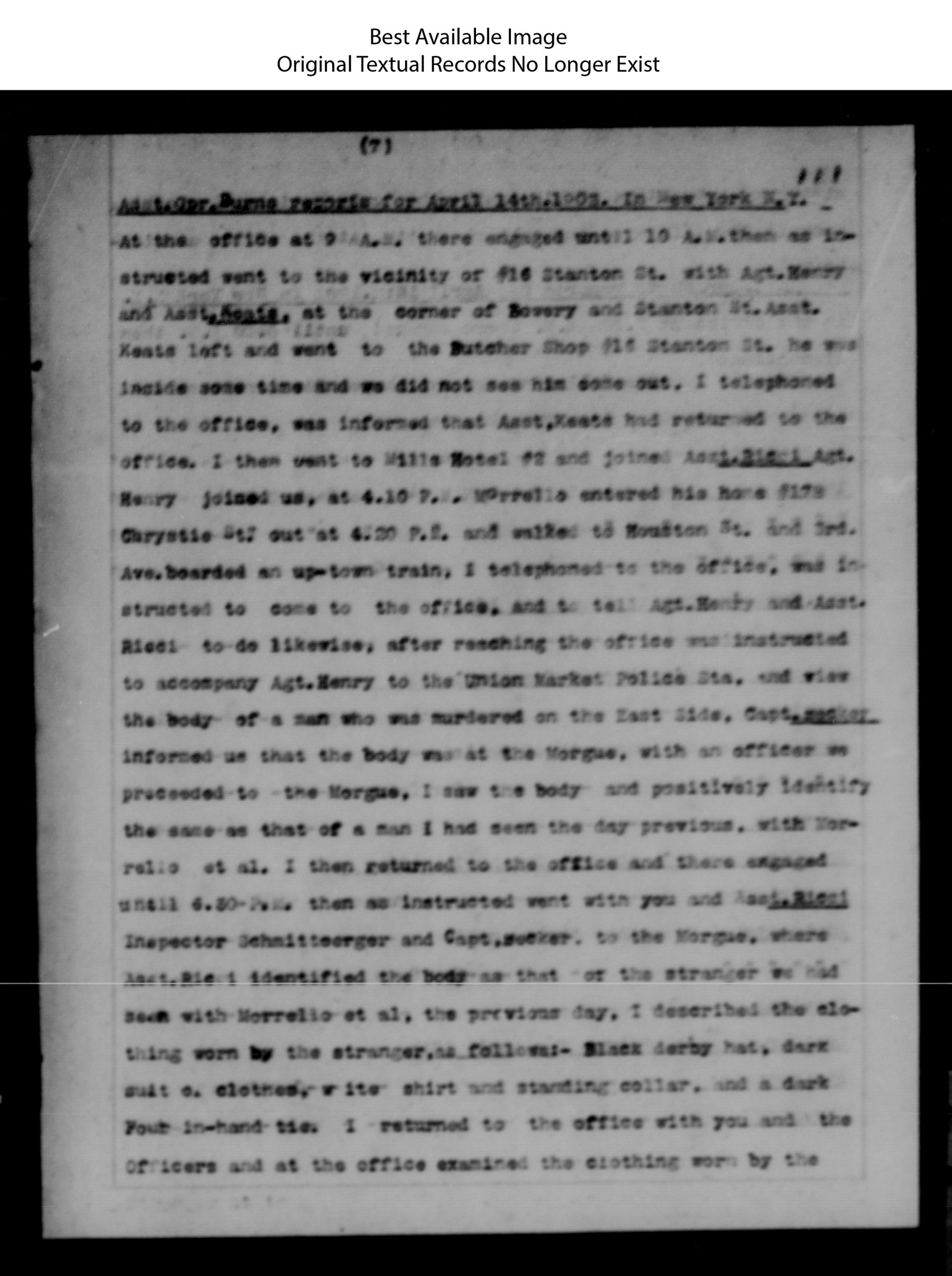
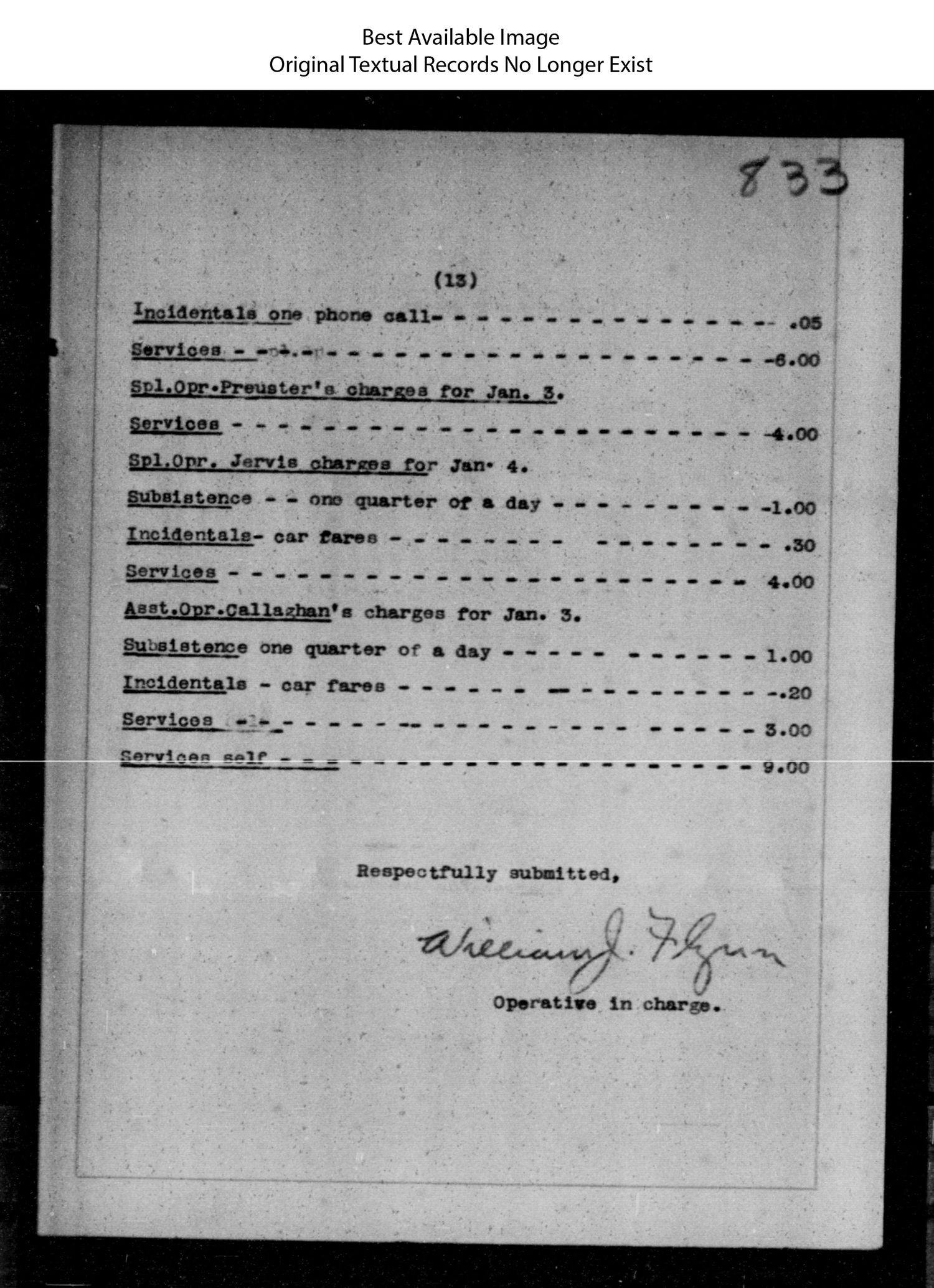
On 14 April 1903 a man’s body was found in a barrel on East Eleventh Street near Avenue D (Butte Inter Mountain, 14 April; New-York Tribune, 15 April). The Secret Service’s New York District, under William J. Flynn, had been watching a group of men in a counterfeiting inquiry for some time. Its daily reports, preserved on National Archives microfilm T915, record an application for search warrants for the premises of “Giuseppe Morrello” and “Ignazio Lupo” about a week earlier (pages 47-49); operatives following Morrello to a butcher shop at 16 Stanton Street and to Elizabeth Street on 13 April (pages 85-89); and, for 14 to 17 April, an operative’s identification of the body at the Morgue as a man “I had seen the day previous, with Morrello et al.,” the arrests of 15 April, a telegram to Chief Wilkie saying a letter Morrello had mailed to New Orleans “indicated that murder was to be done,” and the list of suspects (pages 103-111). These are an agency’s reports of what it saw and believed.
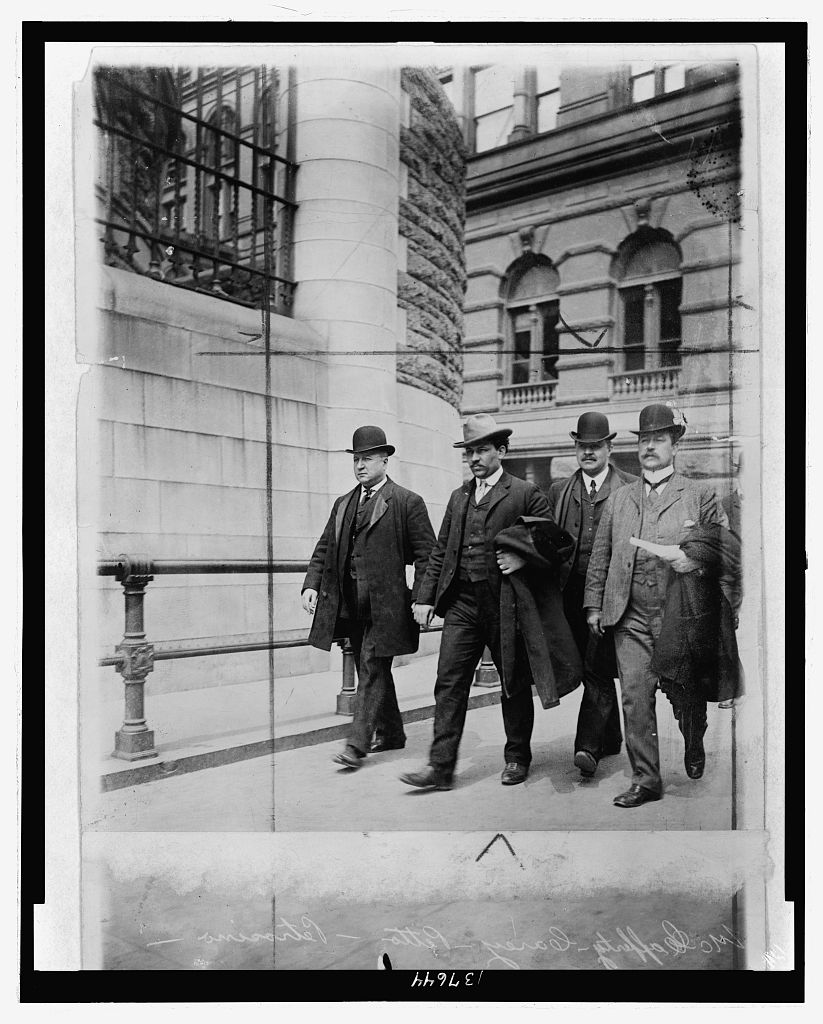
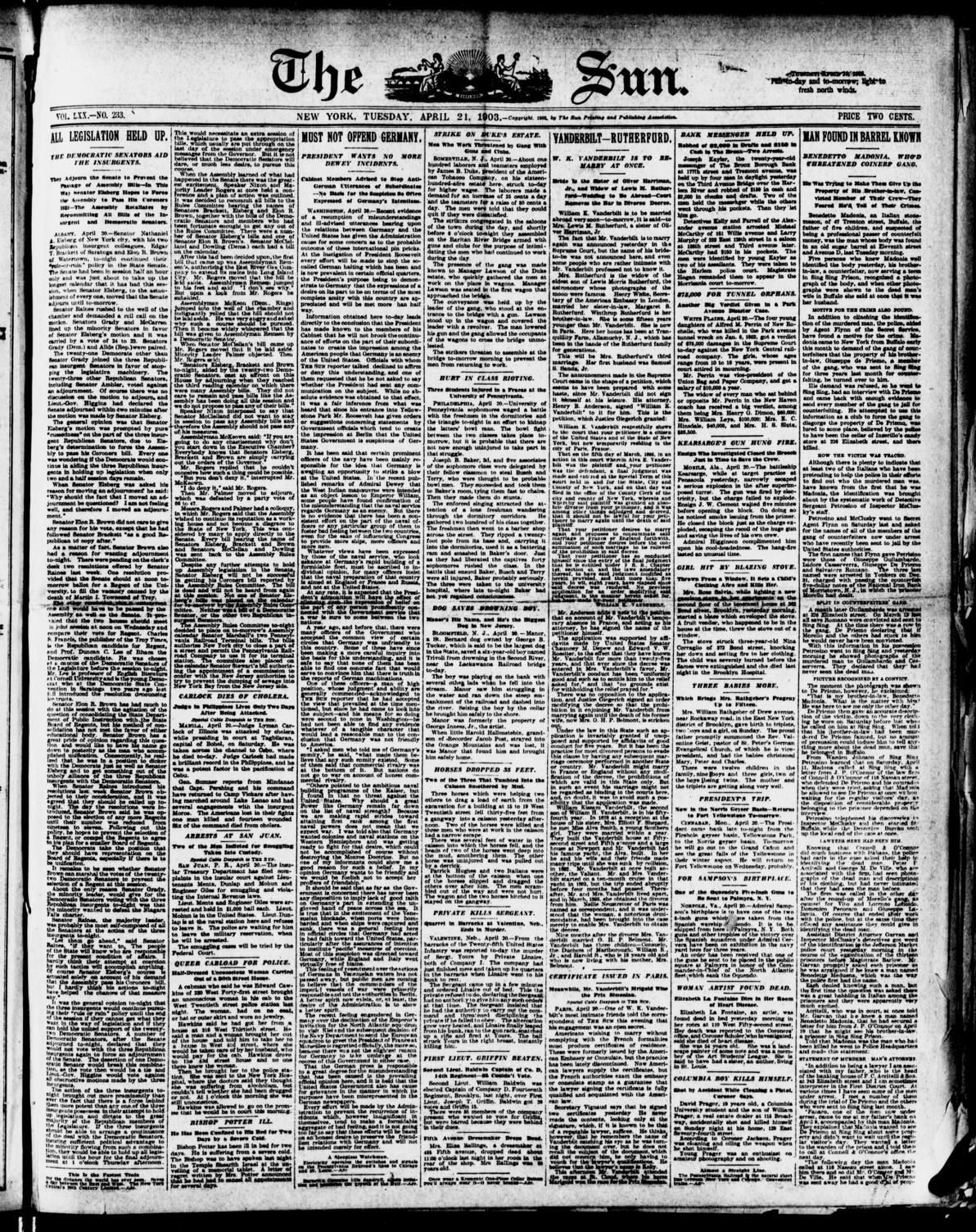
The New York papers reported the arrests of eight men, including Morello and Tomasso Petto, and the police theory of a secret society (Tribune, 16 April; Sun, 16 April). A Library of Congress photograph dated 1903 shows Petto in the custody of Joseph Petrosino and two inspectors (photograph). On 20 April the dead man was identified, after Petrosino showed his photograph to a counterfeiter in Sing Sing, as Benedetto Madonia, a stone mason from Buffalo (Tribune, 21 April; Sun, 21 April).
No record filed here shows that anyone was convicted of the killing. In 1911 the Second Circuit, reviewing the later counterfeiting trial, called a question about Morello’s 1903 arrest improper and wrote: “The arrest of Morelio for the murder proved nothing” (189 F. 305).
Petrosino, 1909
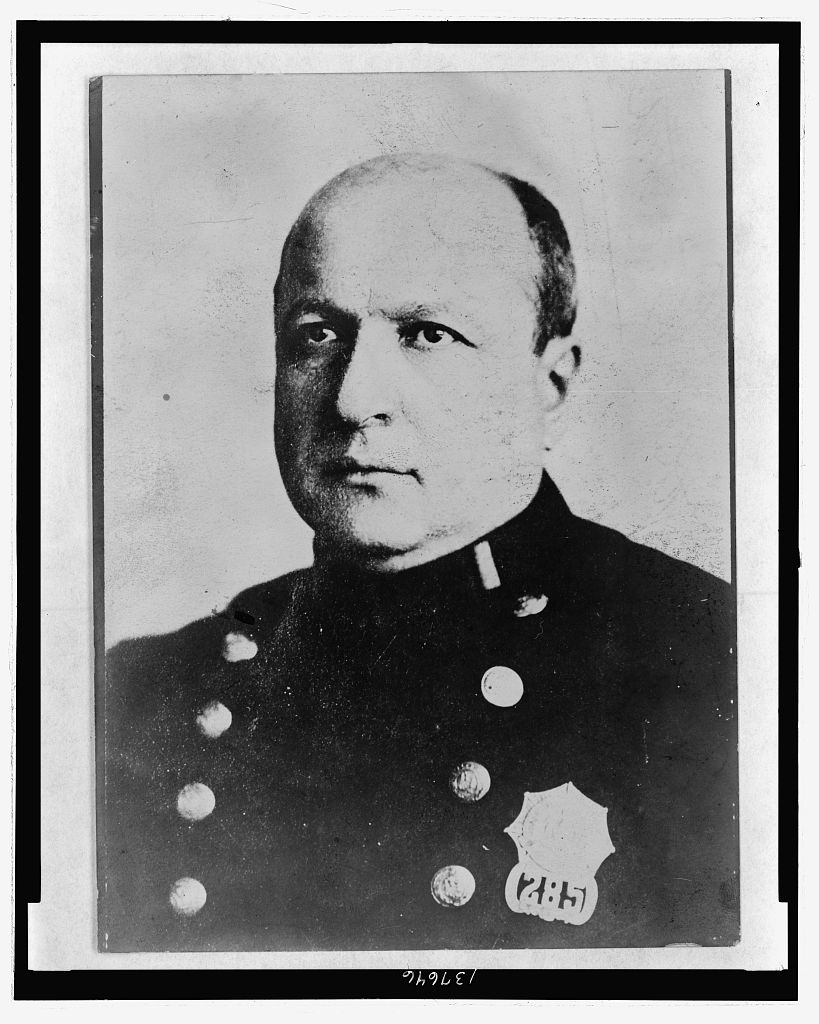
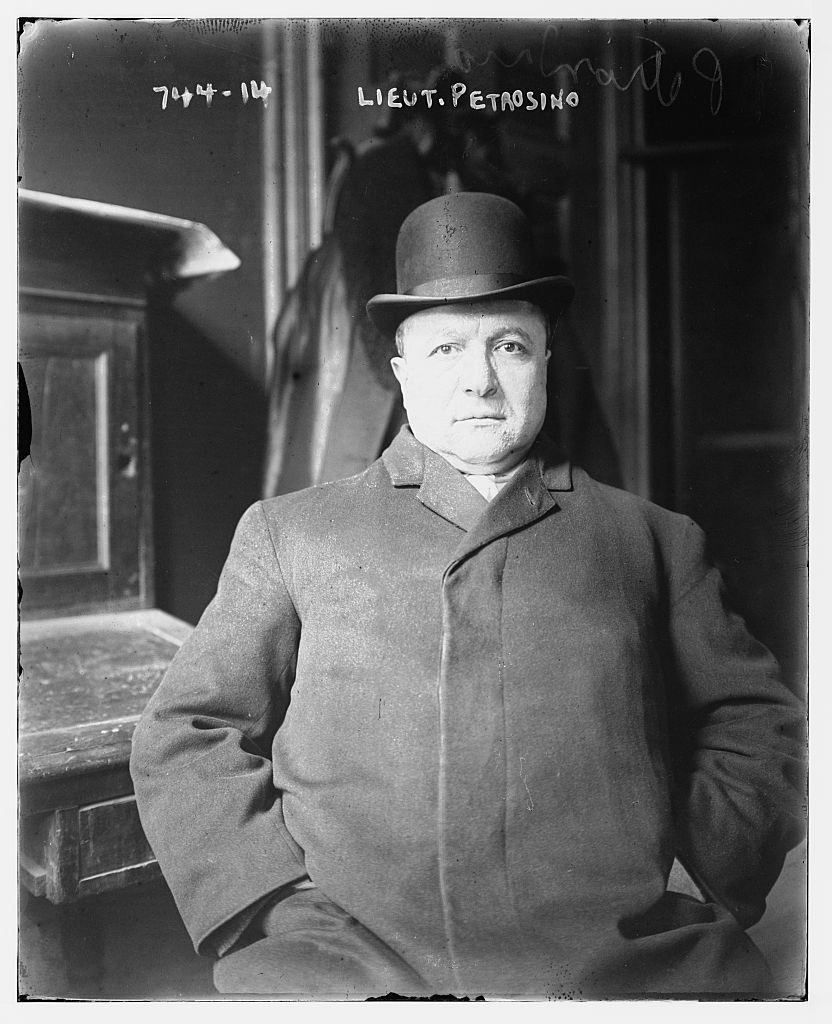
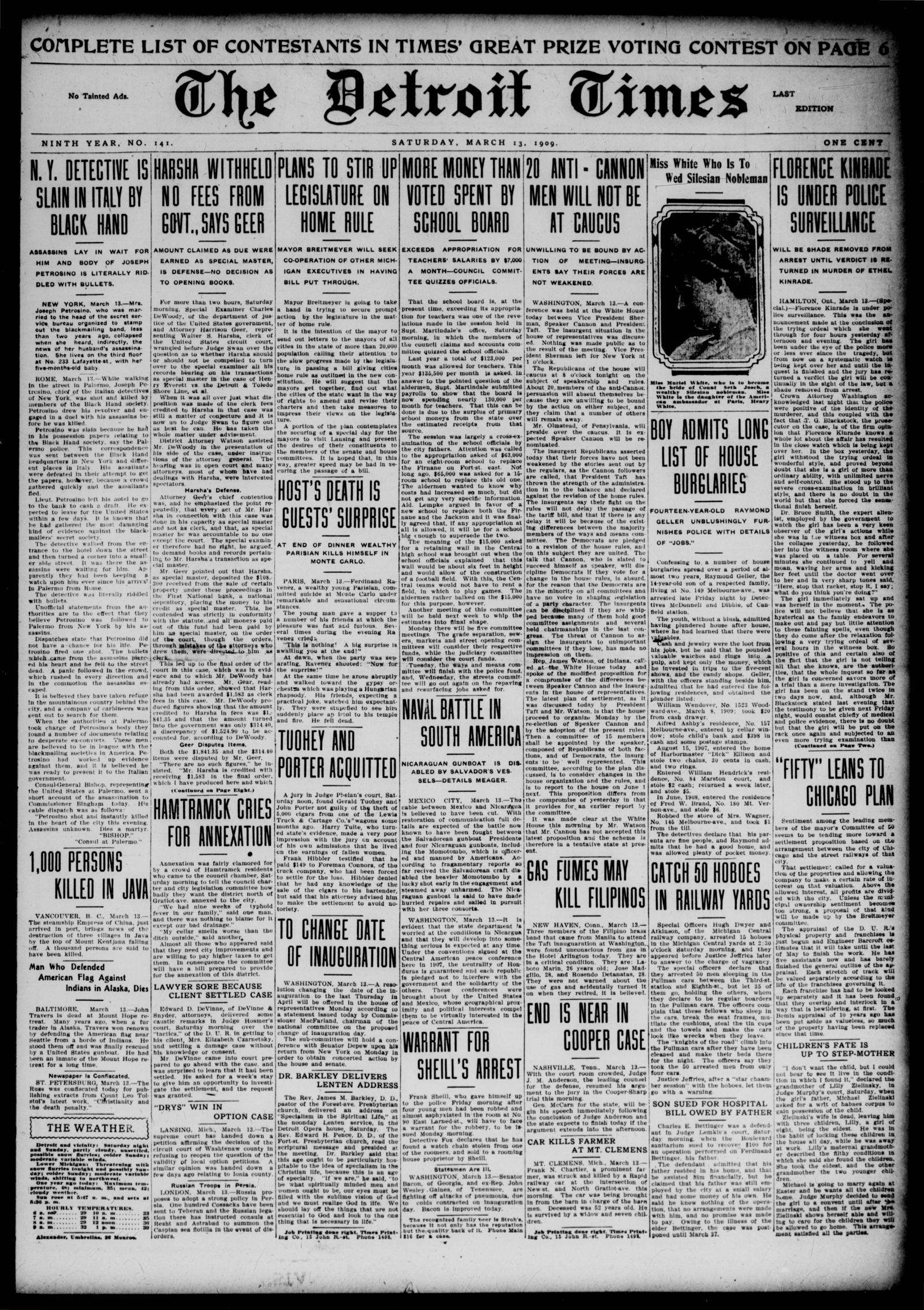
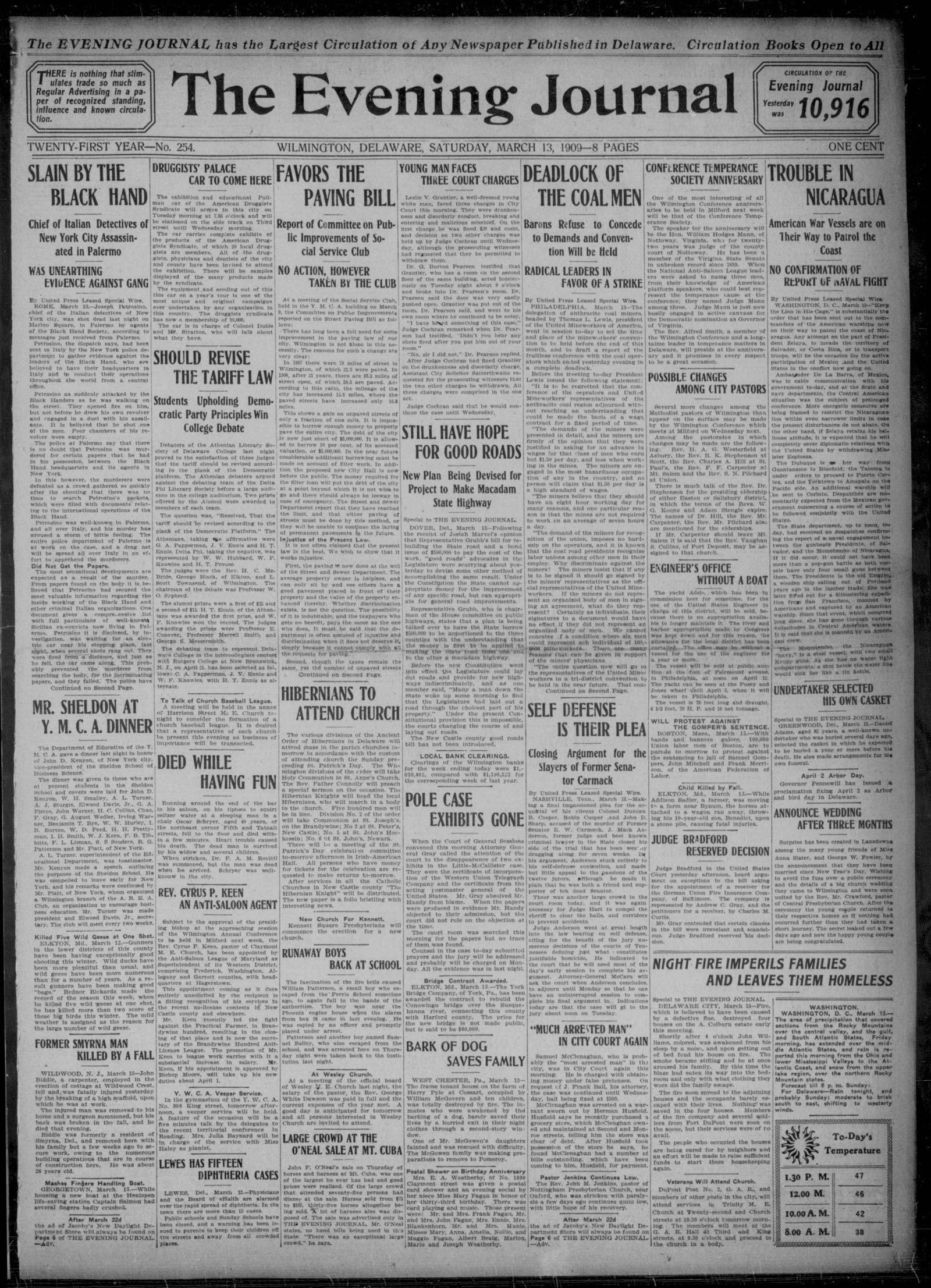
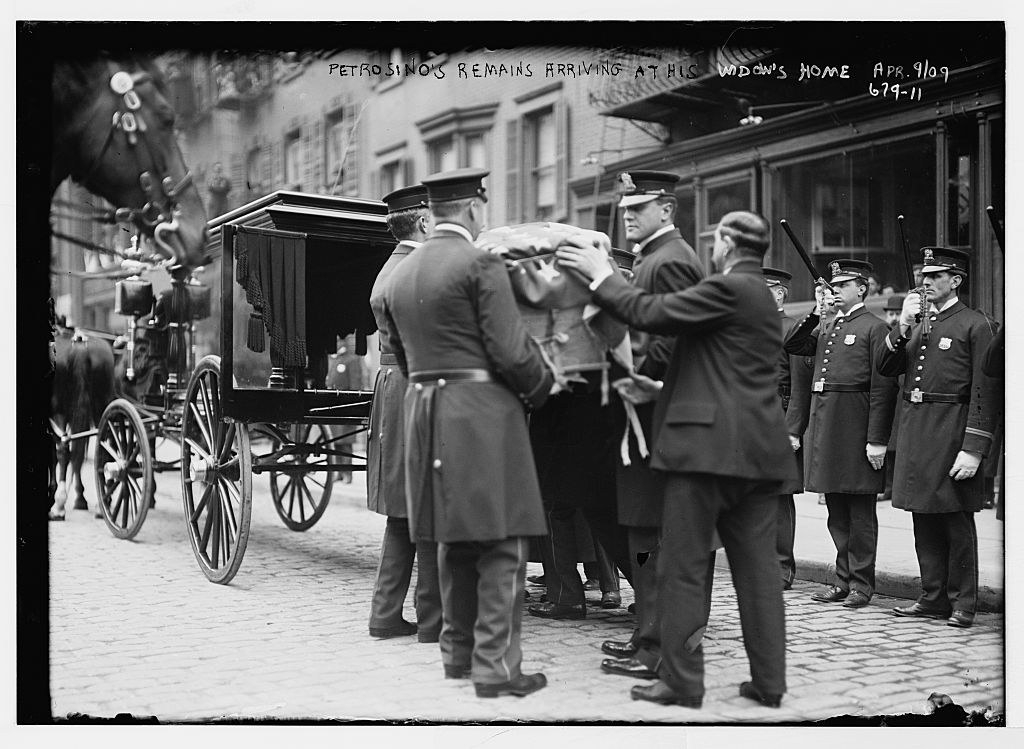
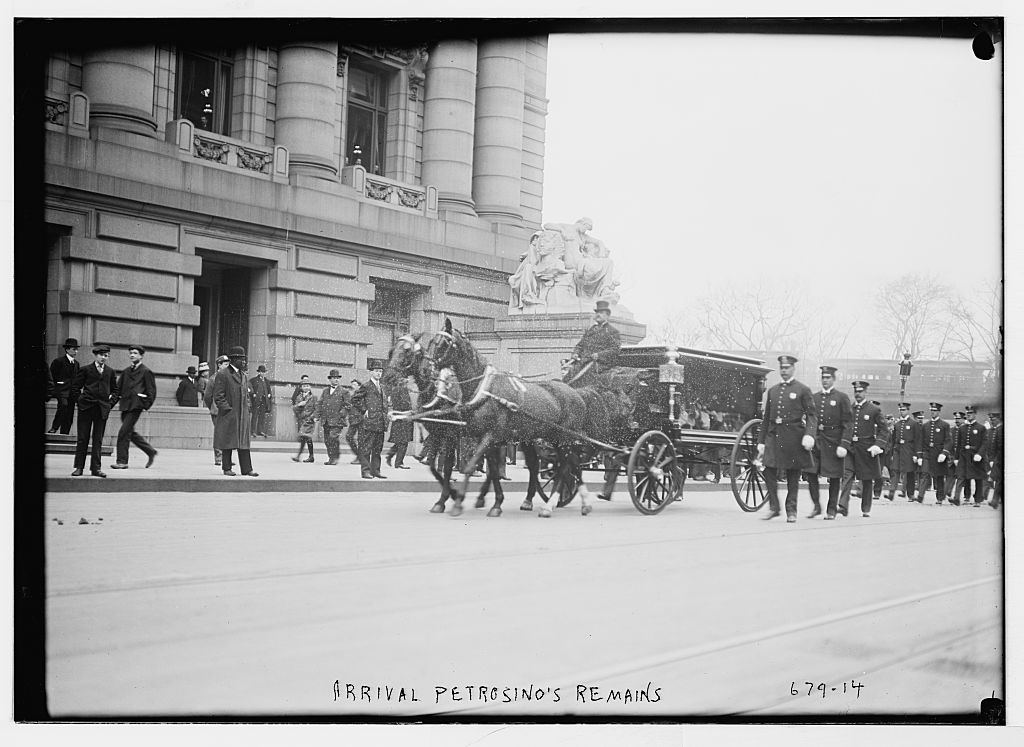
Joseph Petrosino, by then a lieutenant and head of the New York police Italian squad, was shot dead in Marina square, Palermo, on the evening of 12 March 1909. The wire reports of the next two days said the killers were unknown (Detroit Times, 13 March; Wilmington Evening Journal, 13 March; Bismarck Daily Tribune, 14 March). The second line of the Bismarck headline contains an ethnic slur and is not reproduced on that page. Library of Congress photographs show him in uniform (portrait), in a bowler hat (Bain portrait), and the arrival of his coffin in New York on 9 April 1909 (at his widow’s home; cortege). Who killed him is not established in any record filed here.
The counterfeiting case, 1909-1910
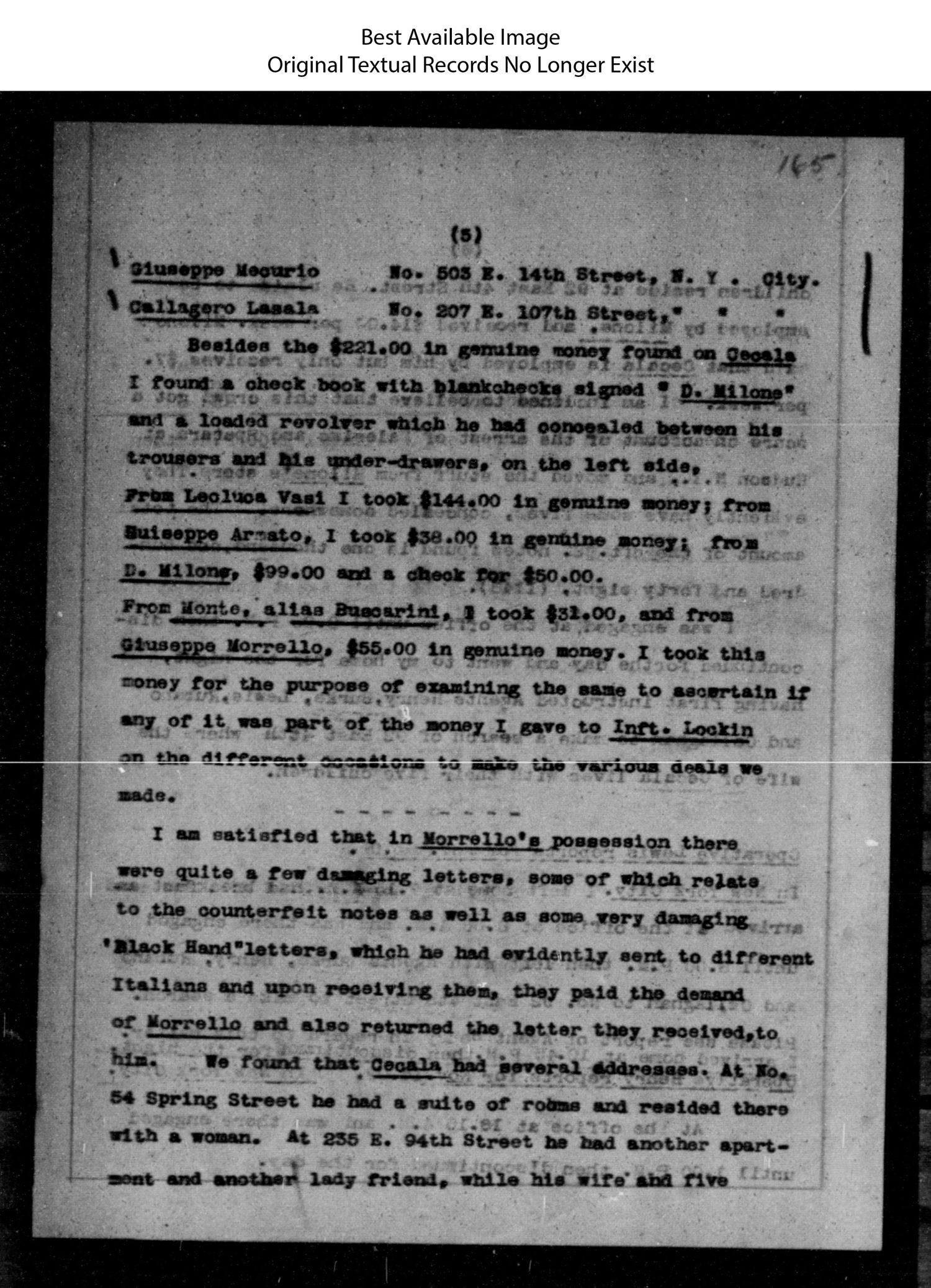
On 15 November 1909 Secret Service agents, helped by ten members of the Italian Squad, executed search warrants on “Morrello et al.” The report of that day records an agent’s statement that he was “satisfied” Morrello held “very damaging ‘Black Hand’ letters” that Italians had paid and returned (15 November 1909). That is the agent’s belief in an internal report, not a finding: no extortion charge followed in any record filed here. In early January 1910 the agents arrested Antonio Comito, who became the government’s principal witness (January 1910; Tribune, 28 January).
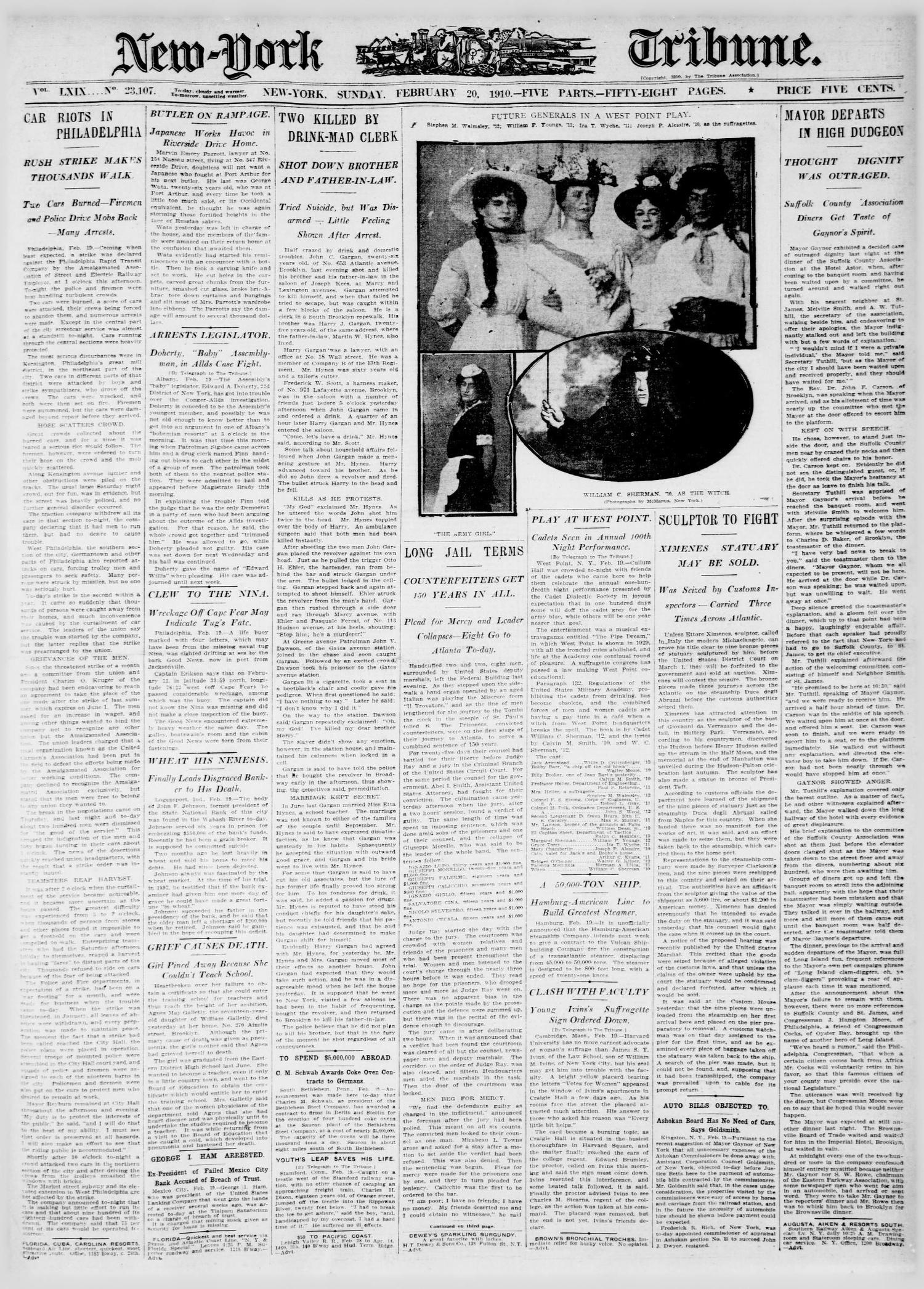
After a trial of about four weeks, eight men were convicted on 19 February 1910 of making counterfeit $2 silver certificates and $5 notes at a farm near Highland, N.Y. Lupo was sentenced to thirty years and Morello to twenty-five (Tribune, 19 February; Tribune, 20 February; Sun, 20 February). The Sun called the defendants “leaders in Black Hand operations”; the conviction was for counterfeiting. The Second Circuit affirmed in June 1911 (Calicchio v. United States, 189 F. 305).
Flagged speculation. The Tribune of 20 February 1910 reported a belief among detectives and Secret Service agents, resting on a remark by one convicted man, that Morello, Lupo “and the men who looked to them for leadership” were responsible for Petrosino’s death (page 3). It is filed as speculation only. No record filed here supports or tests it.
Lupo afterwards
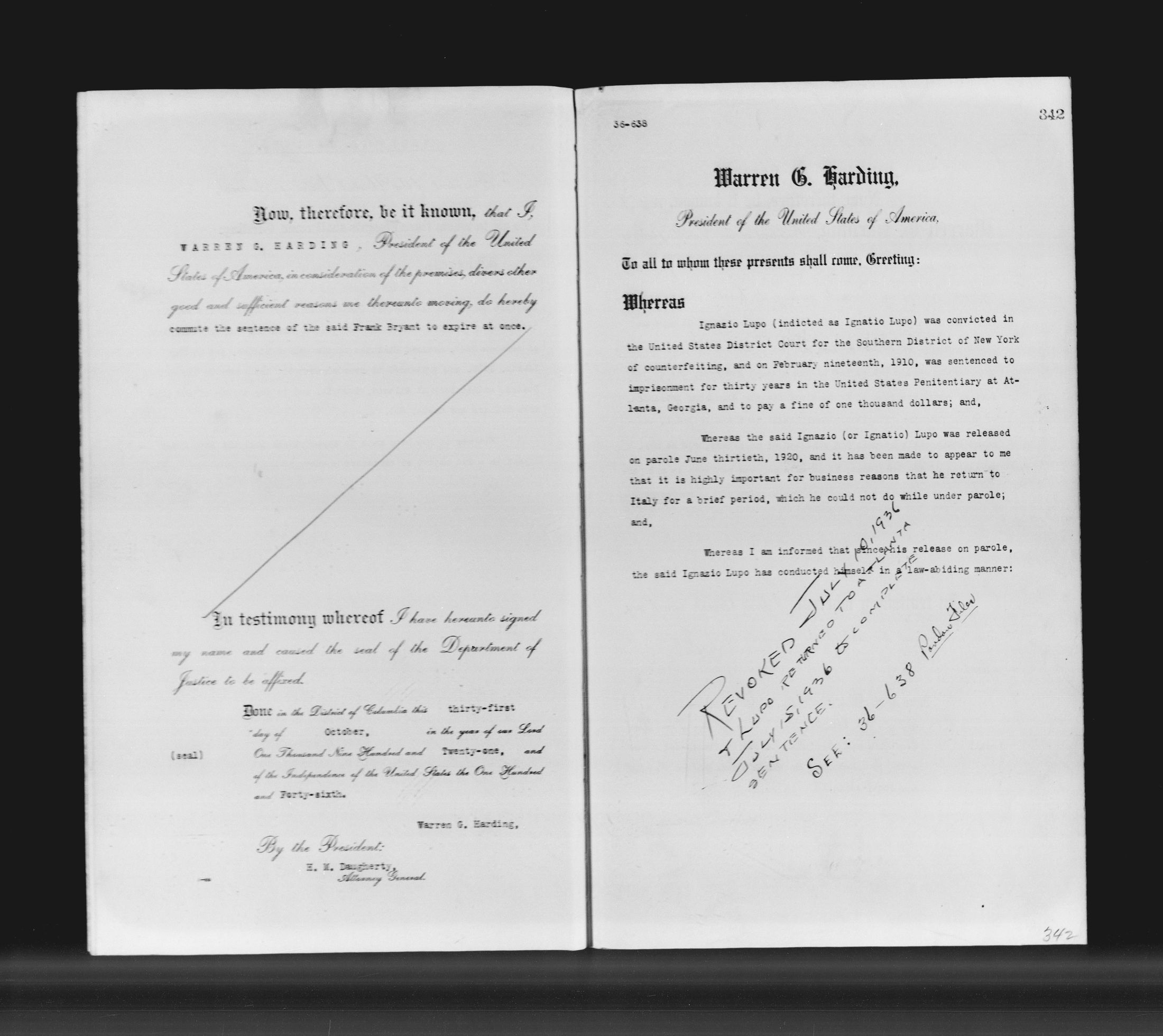
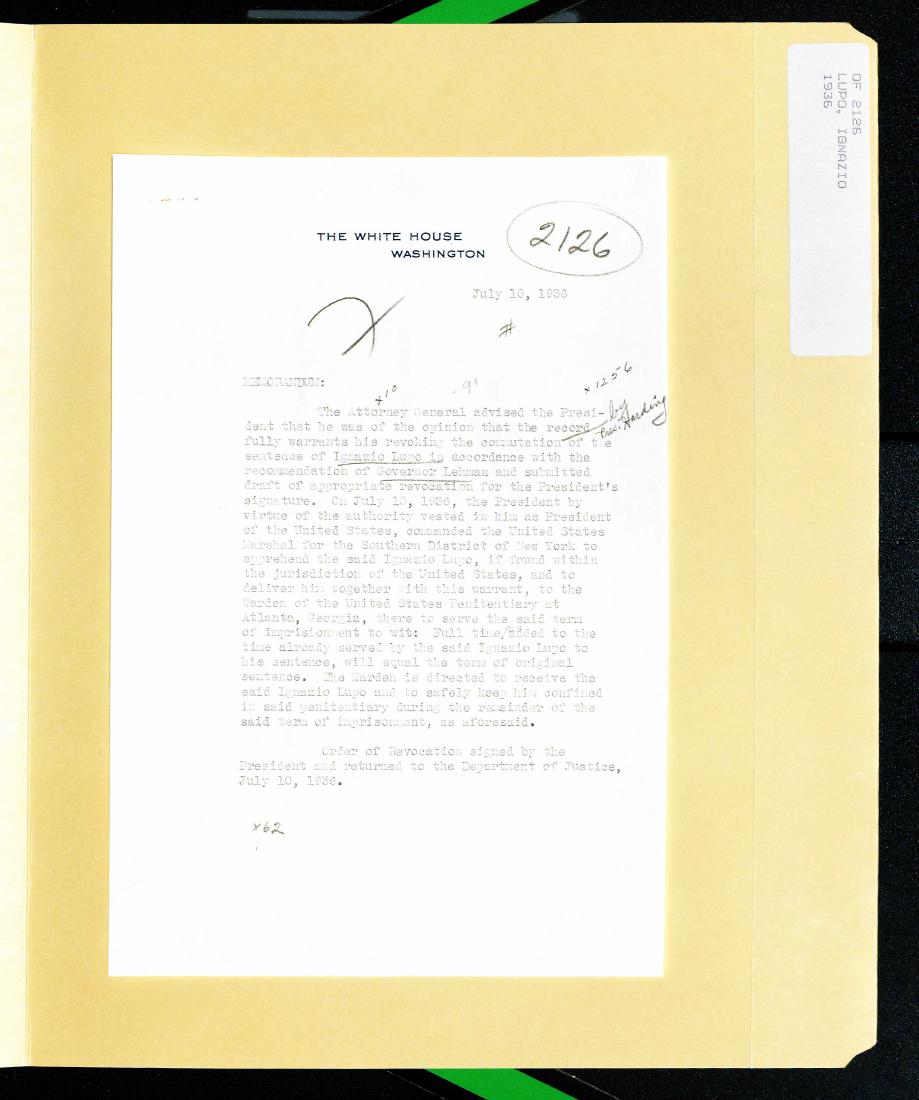
Lupo was paroled on 30 June 1920. On 29 October 1921 President Harding commuted his sentence on condition that he remain law-abiding, so that he could go to Italy; a handwritten note on the warrant records its revocation on 10 July 1936 (pardon warrant 36-638). The Roosevelt White House file records the revocation on the Attorney General’s advice and Governor Lehman’s recommendation (OF 2126). In 1937 the Fifth Circuit upheld his return to Atlanta and quoted the grounds recited in the revocation order; they are the order’s recitals, not the court’s findings (Lupo v. Zerbst, 92 F.2d 362).
Black Hand as a federal mail crime
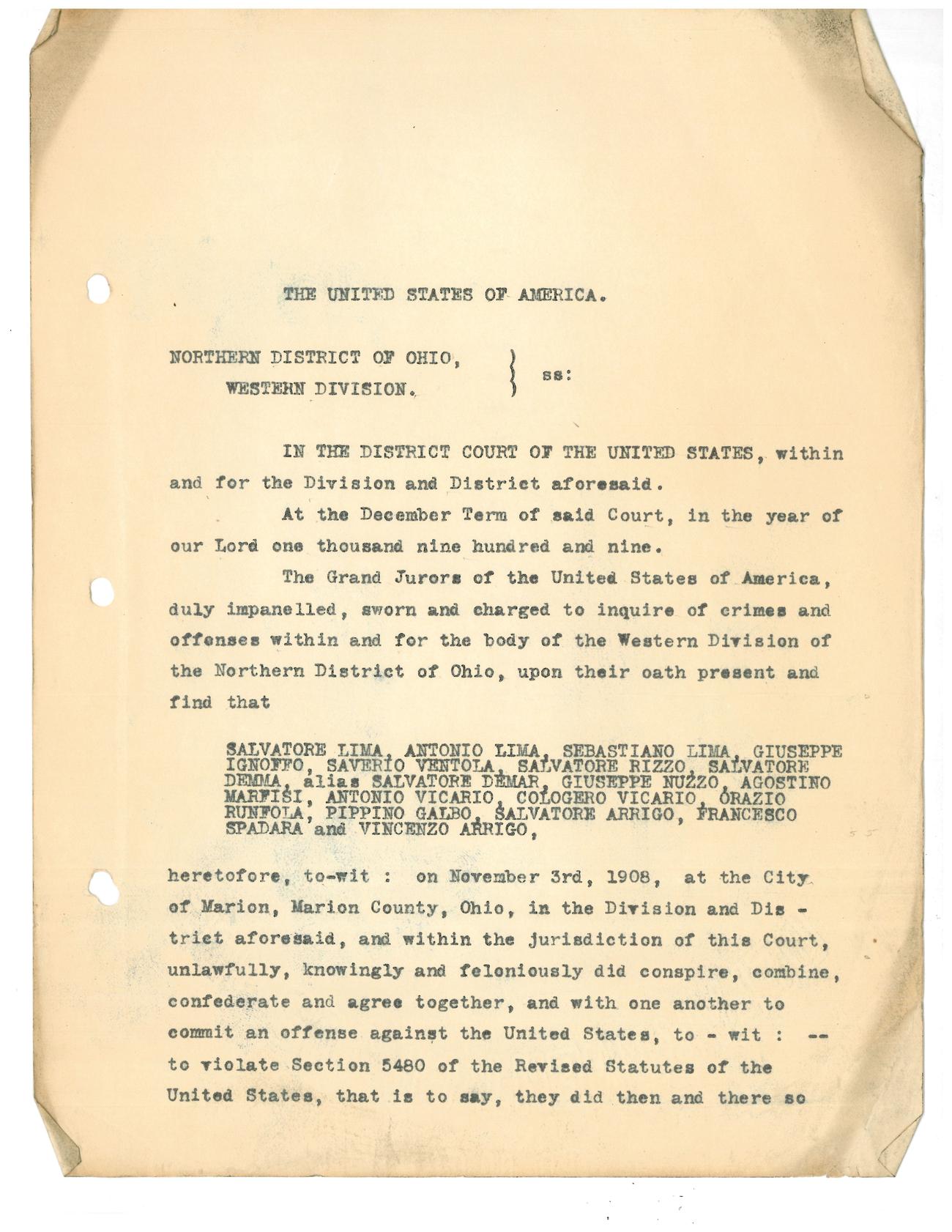
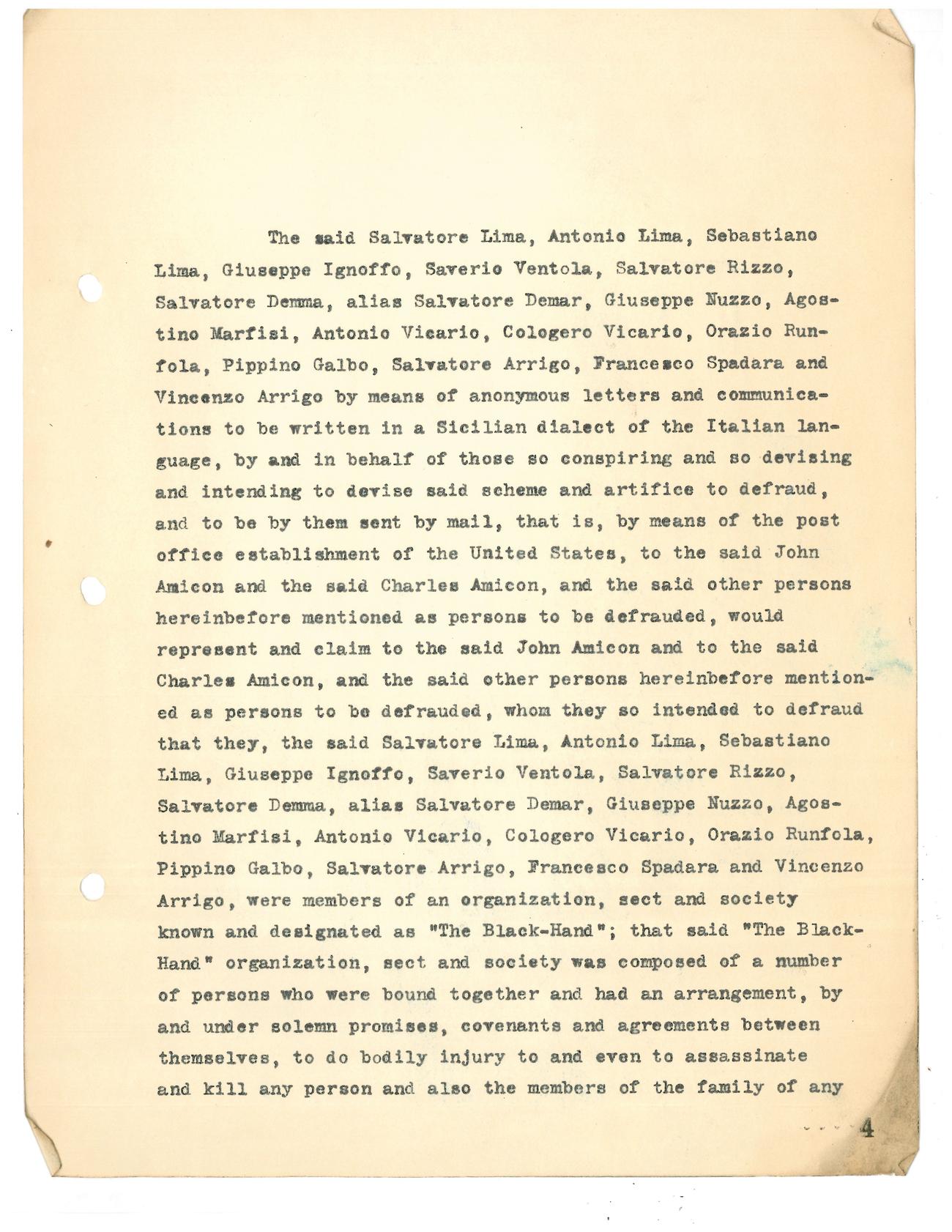
Threatening letters sent through the post were federal offences. On 11 December 1909 a grand jury in the Northern District of Ohio indicted sixteen men for a conspiracy begun at Marion, Ohio, on 3 November 1908 to use the mails to defraud (case file; first page). The indictment charges that their letters, “written in a Sicilian dialect of the Italian language,” would claim membership in a society “known and designated as ‘The Black-Hand’” (averment). The jury found them guilty on 29 January 1910 (verdict file), and the sentences, passed at Toledo, are recorded in the Post Office album (album entries).
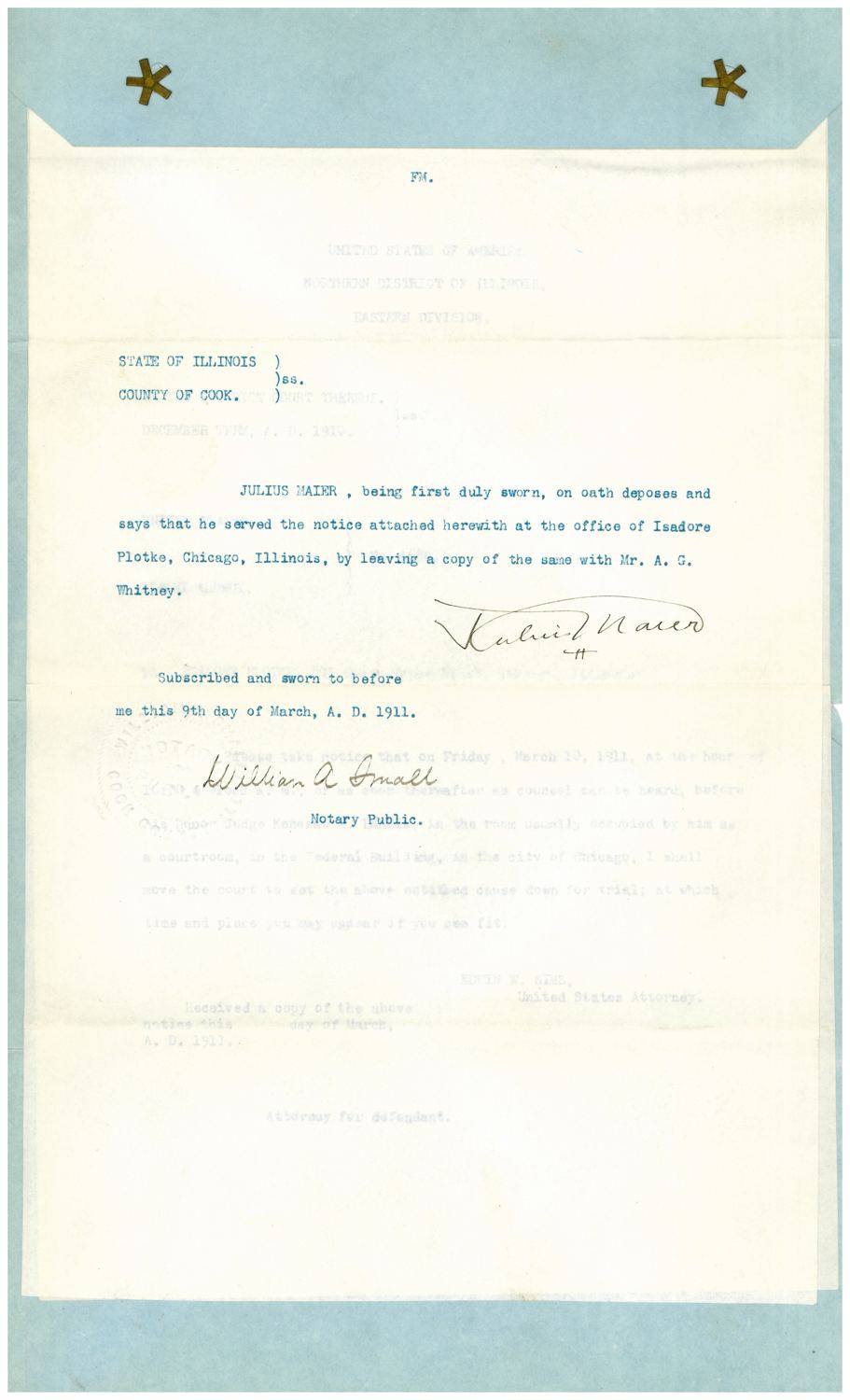
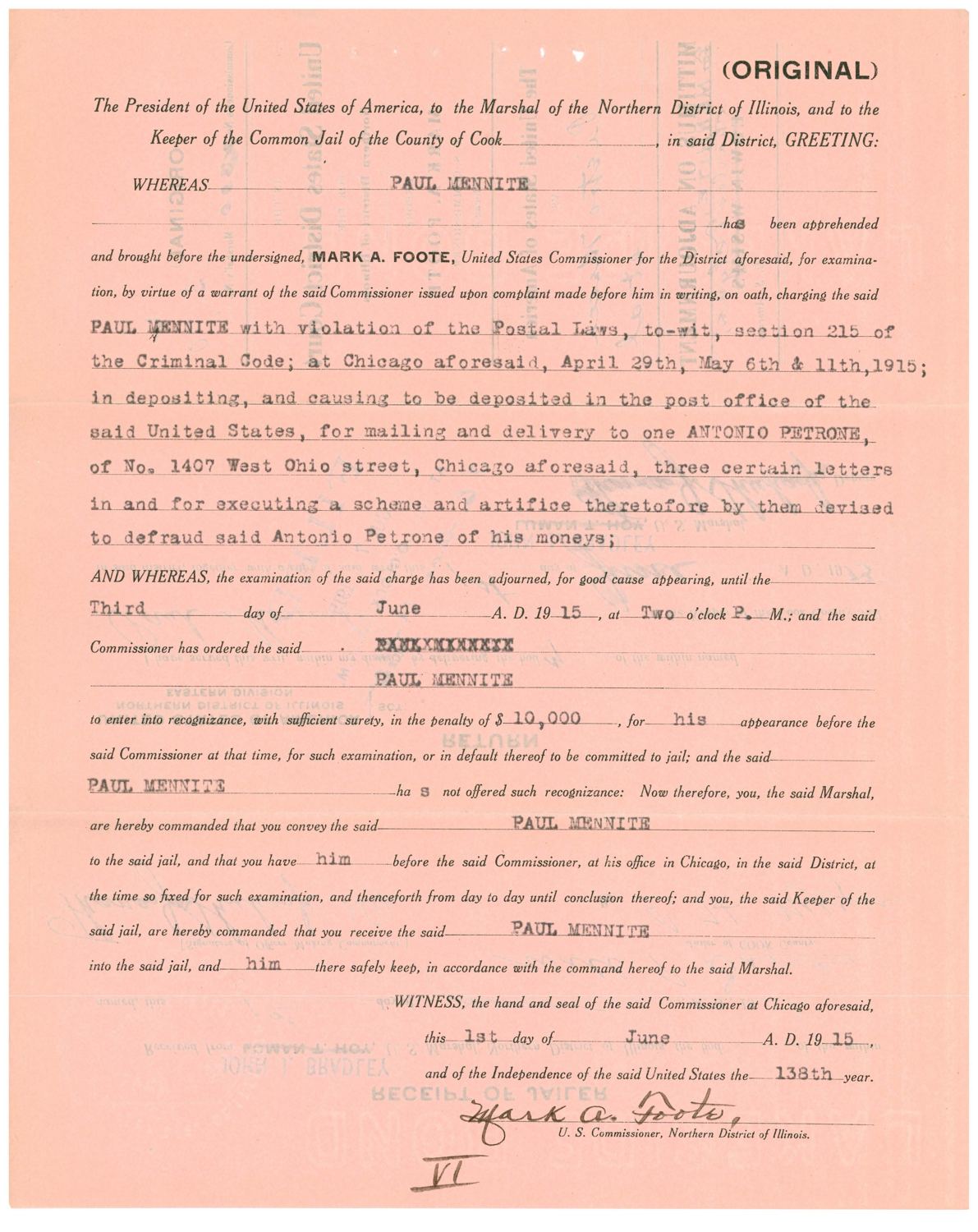
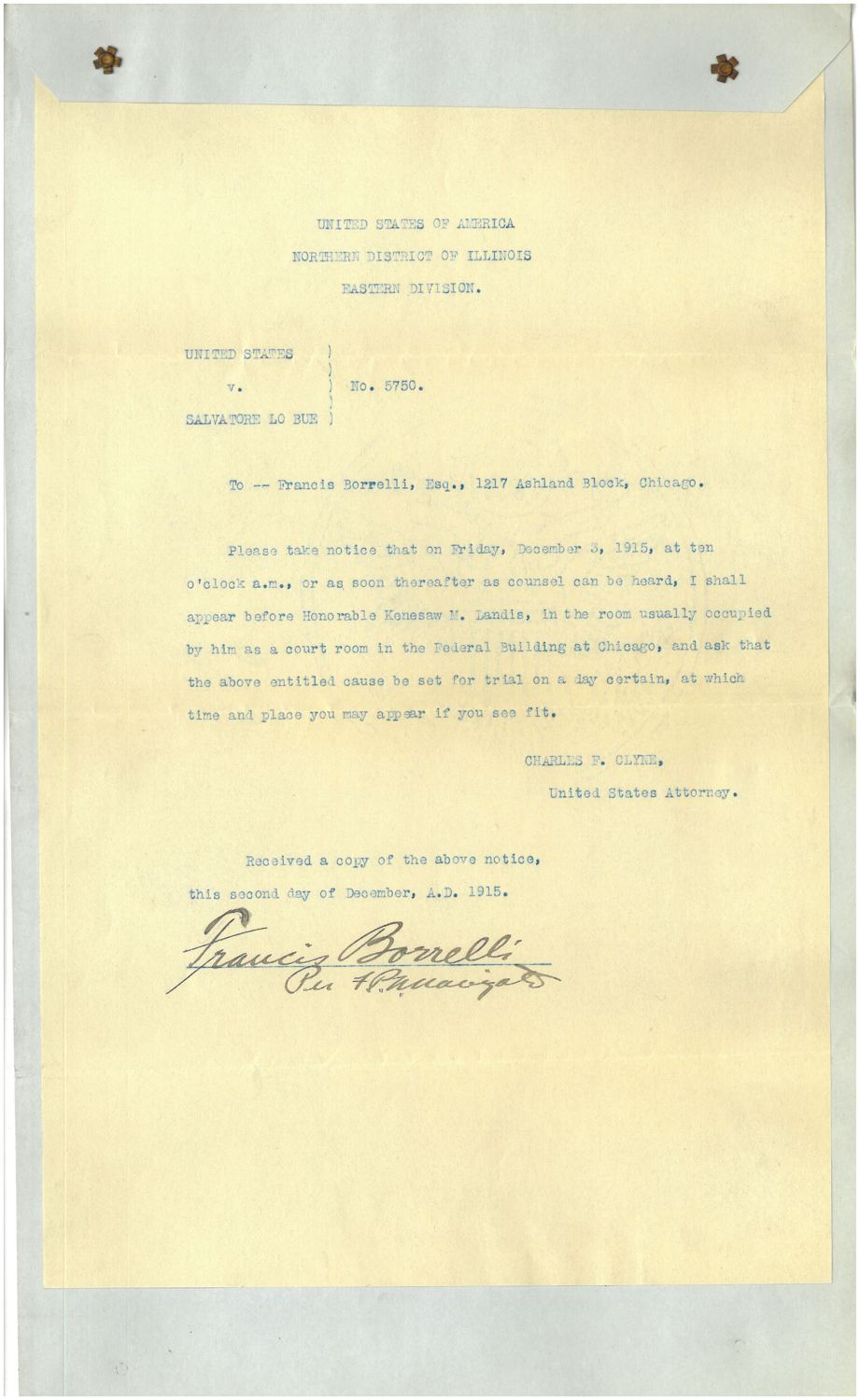
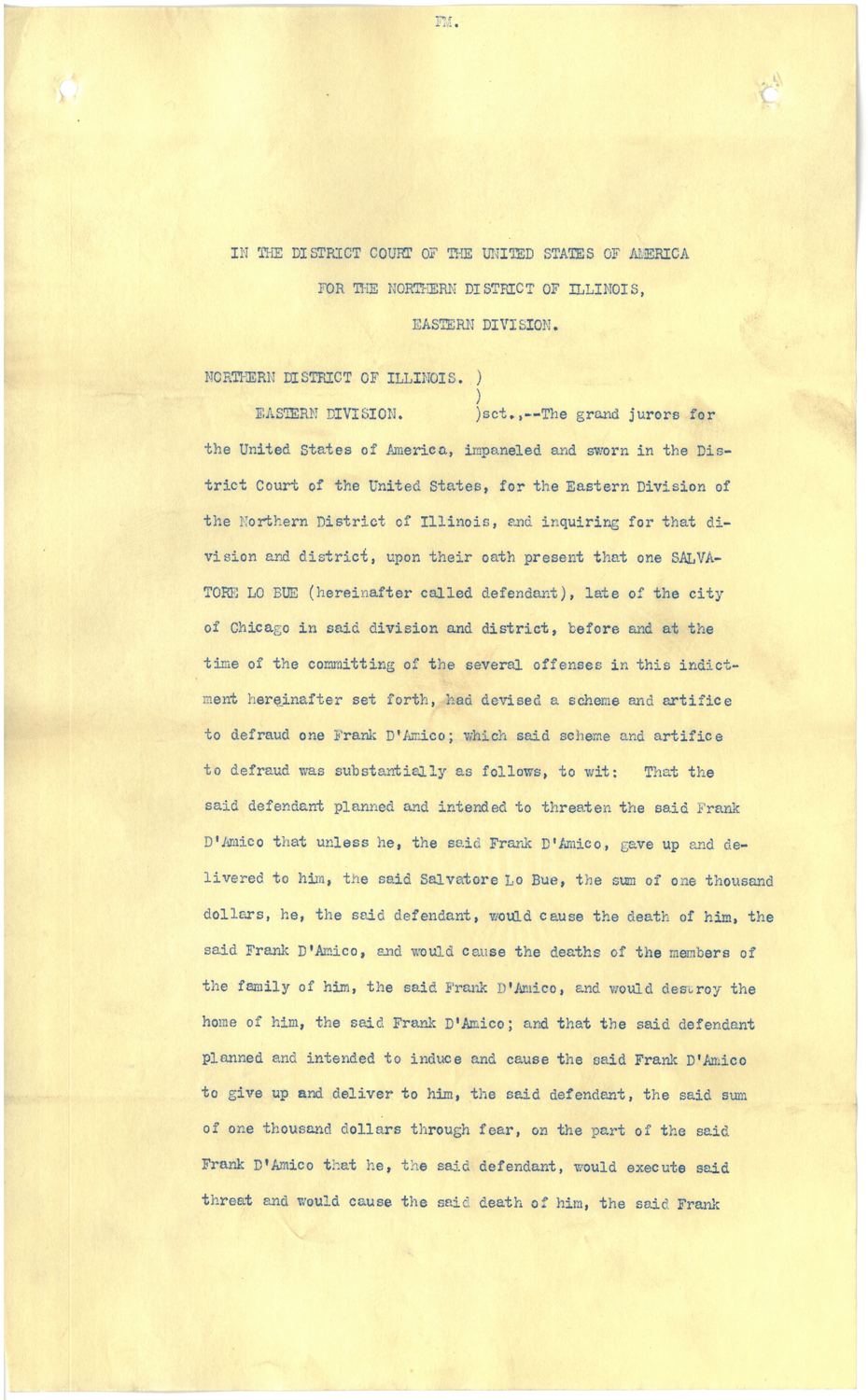
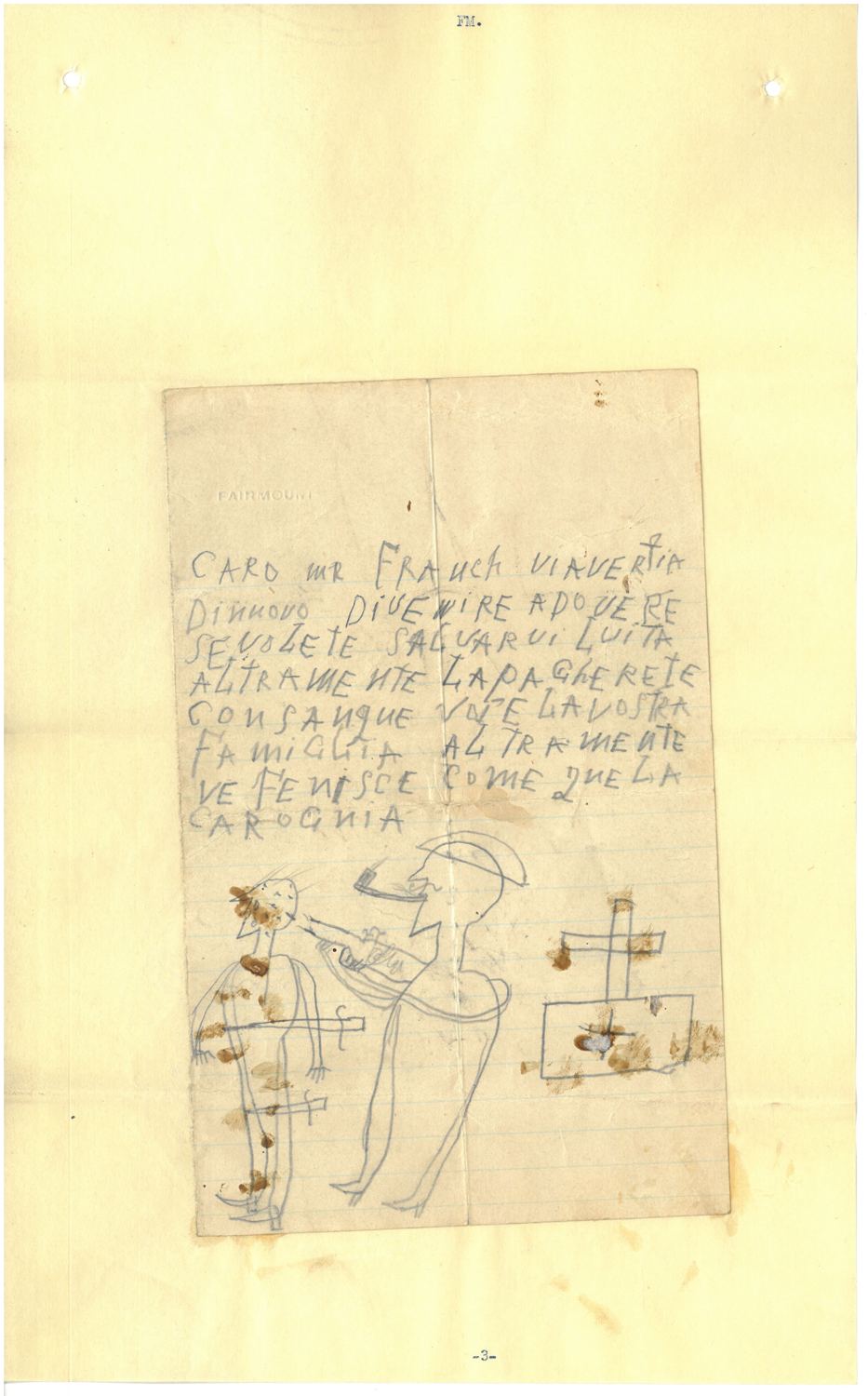
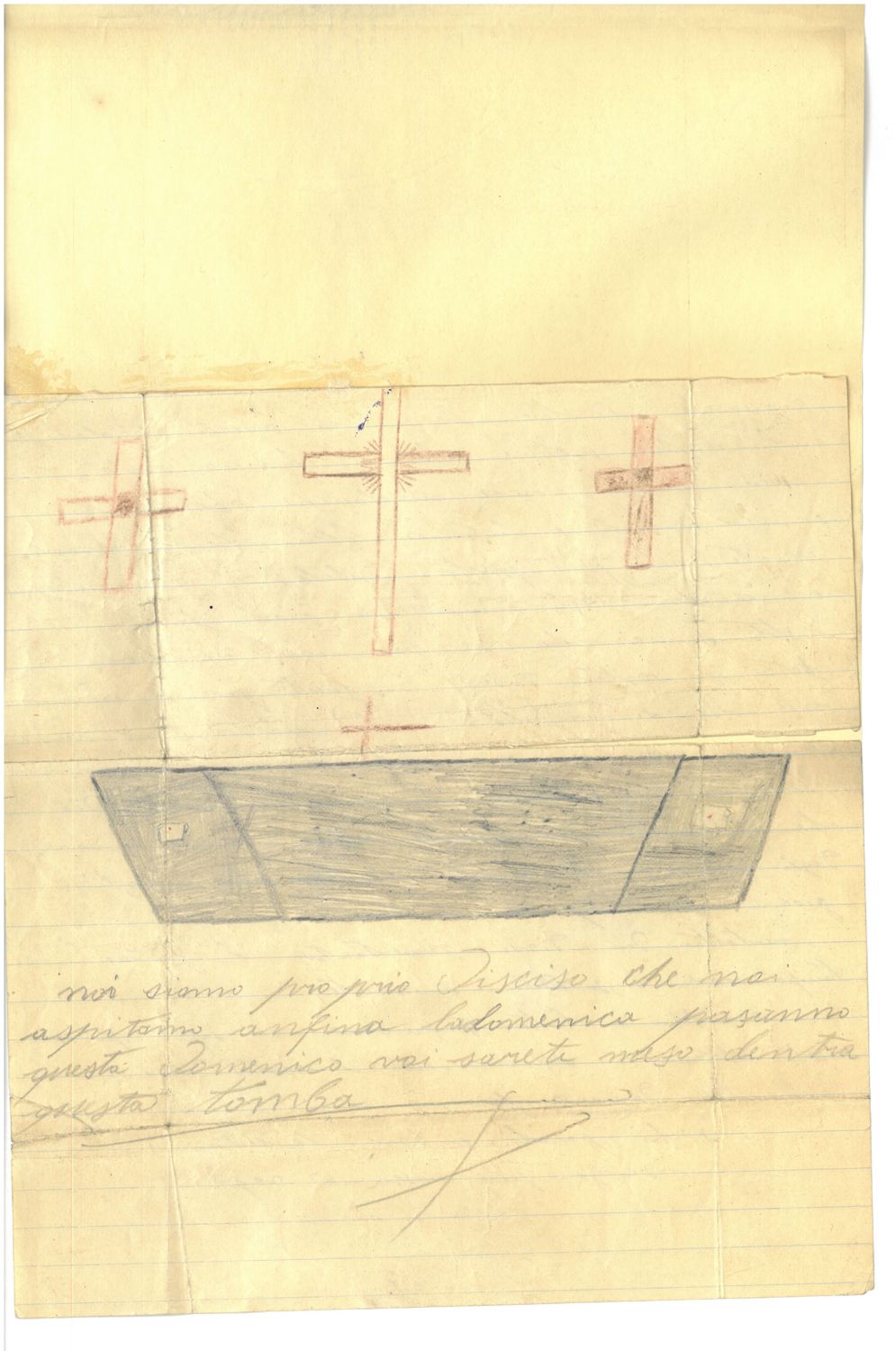
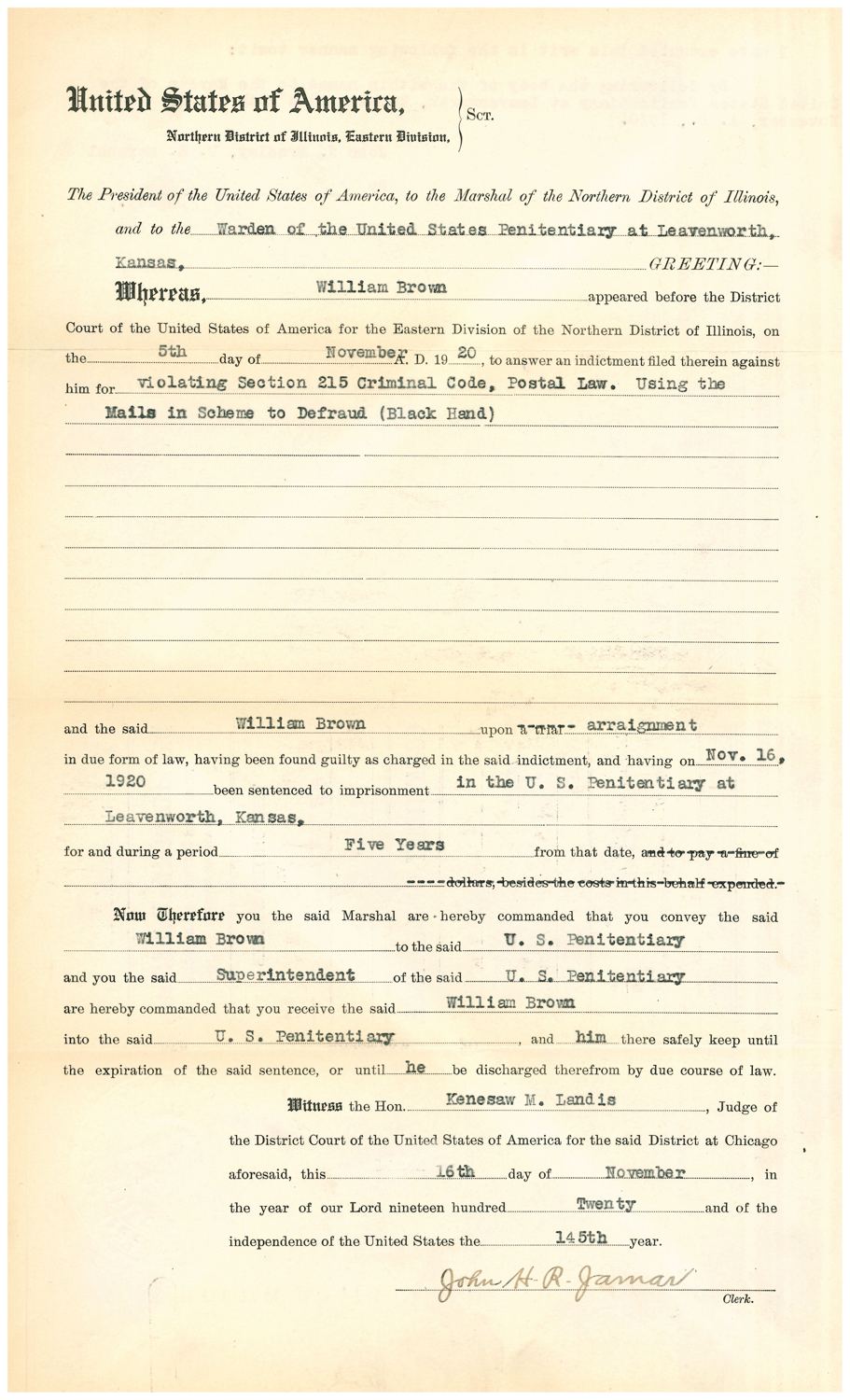
The federal court at Chicago heard a series of such cases: Gianni Alongi in 1911, whose letters, the catalog says, claimed membership in “the Black Hand organization” (case file); Pietro Mecca and Paul Mennite in 1915 (case file; commitment); Salvatore Lo Bue in 1915, whose file holds letters with drawings of an attack, a tomb and a coffin (case file; indictment; letter; letter); and William Brown in 1920, whose commitment form the clerk labelled “Using the Mails in Scheme to Defraud (Black Hand)” (case file; commitment).
The Post Office Department’s Chief Inspector printed an album in 1916 of persons charged with postal crimes. Its second volume tags 23 entries “[BLACK HAND.]”, with sentences at Chicago, St. Louis, Cincinnati, Toledo, Trenton, Salt Lake City, Pittsburgh and Clarksdale between 1910 and 1915 (volume 2; Chicago; St. Louis; Pittsburgh). One St. Louis entry speaks of “a band of Sicilian black handers”; that is the album’s wording, flagged on its page. The first volume shows the term used for a scheme aimed at Armenians, among others (volume 1). The U.S. Postal Inspection Service’s modern history page on the subject is cited and linked only, because it carries a copyright notice, and several of its statements are not supported by any record opened here (USPIS).
Context
The Dillingham Commission’s Immigration and Crime (1911) reported that blackmail and extortion, though few in number, formed a larger share of the recorded crimes of Italians than of other groups in four of its five sets of data, and that most gainful offences were committed more by the native-born than by immigrants (Senate Document 750). Its nationality categories are the commission’s and are flagged on its page; the volume does not use the words “Black Hand.”
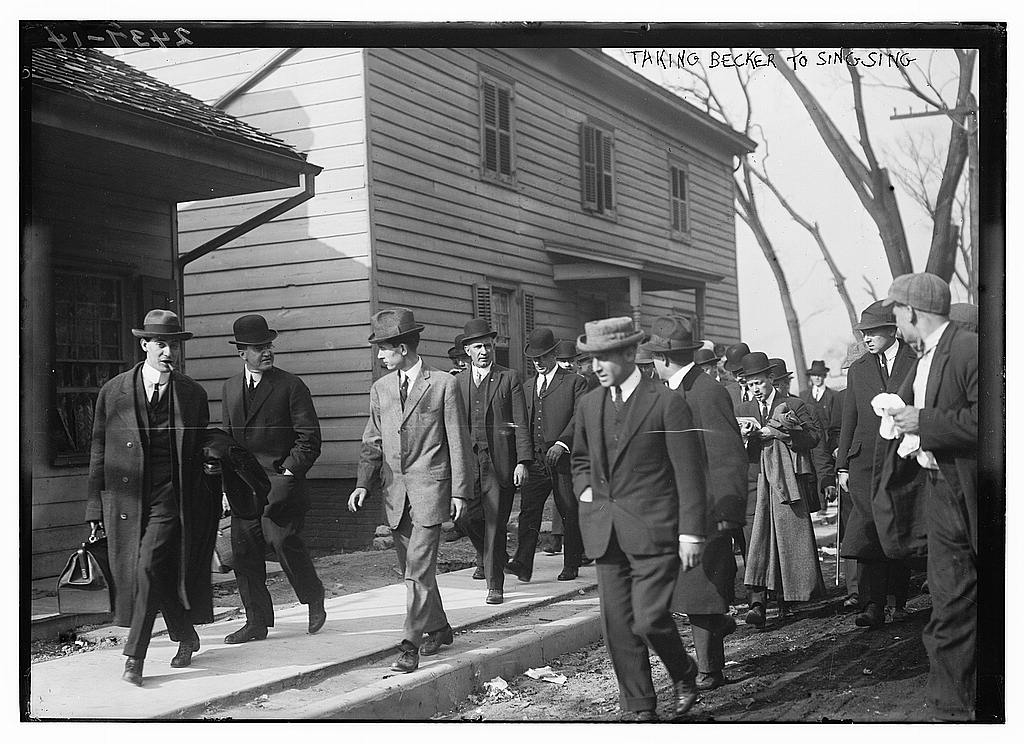
The 1912 killing of the gambler Herman Rosenthal, for which police lieutenant Charles Becker was convicted, was not a Black Hand case. It is filed as context for the New York of those years: the Court of Appeals reversed the first conviction in 1914 (People v. Becker, 210 N.Y. 274), and a Bain photograph shows Becker on his way to Sing Sing (photograph).
The Day Book, Chicago, 1912-1913
A small Chicago daily printed short items that show how loosely the label was used. Police blamed two Chicago killings on the “Black Hand” without naming anyone (6 May 1912); a building owner suggested a Black Hand letter explained a fire (7 August 1912); a Peoria prosecutor received a threat signed “Black Hand” in shorthand (20 September 1912); a wire item attributed a New York killing to “believed members” (4 November 1913); and a columnist mocked a letter sent in Ohio (20 January 1912). On 3 September 1912 the paper printed a wire story of Black Hand letters to the Rockefeller household (3 September); on 11 September its own correspondent reported from the estate that he found no guards, under the headline “Black Hand Story on Jawn’s Estate Stretched” (11 September).
People
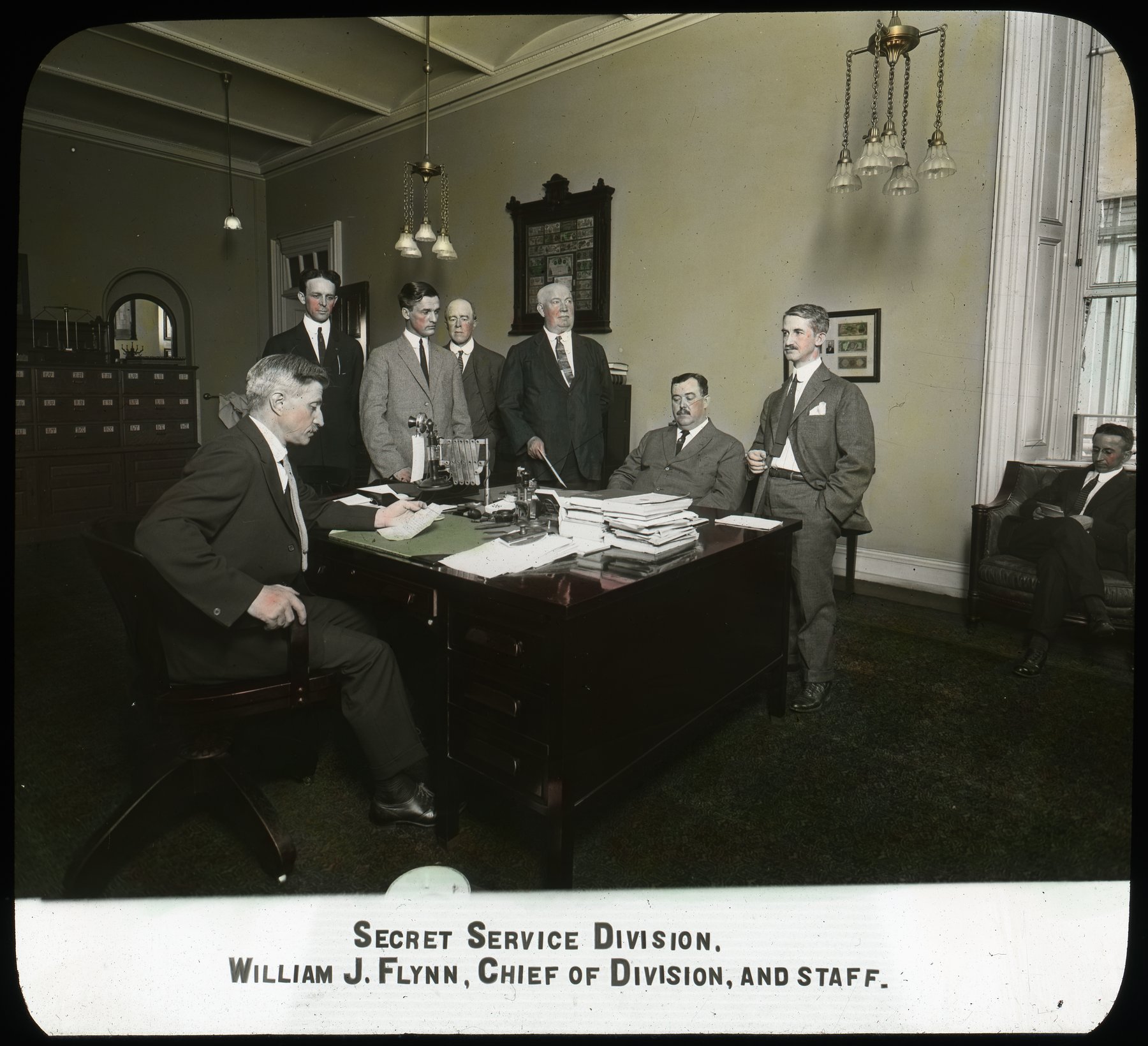
Person pages filed with this section: Joseph Petrosino, Giuseppe Morello, Ignazio Lupo, Tomasso Petto, Benedetto Madonia and William J. Flynn. Names are spelled as each record prints them, and each page lists the variants. Only Flynn’s page states a role, quoted from his own signature on a Secret Service report. A Treasury lantern slide of about 1915, captioned “Secret Service Division, William J. Flynn, Chief of Division, and Staff,” is filed as a photograph; it does not mark which of the nine men is Flynn. No page states a family, and nothing in this section fills a chart seat.
Not filed yet
- Newspaper pages on New Orleans and Pittsburgh Black Hand cases, and the further 1904-1909 New York pages listed in the Library of Congress’s research guide on the NYPD Italian Squad: the Library’s newspaper service was unavailable during the research, so they could not be opened.
- Scans of most of the newspaper pages above: only two are stored, and the others show a document plate until the Library’s image service can be used again.
- The name “Saietta” for Lupo: no record opened prints it, and it is not used as an alias here.
- The State Department’s files on Petrosino’s killing, Morello’s later prison record and release, and any NYPD or grand-jury record of the 1903 killing: not located.
- Photographs of Morello, Lupo or the Italian Squad from a federal source or marked no known restrictions: none found.