This section gathers records on six groups and figures from New York, Chicago, Boston, St. Louis and Cleveland. “Irish gangs” is this archive’s grouping, not a category the records share. Some of the sources use an Irish label themselves: the Second Circuit lists “the “Westside Irish Mob”” among the Westies’ other names, and a First Circuit opinion filed with the New England records calls the Winter Hill Gang “also known as the Irish Mob.” Most do not, and no page here infers a person’s ancestry or membership from a surname.
The names of the groups are the sources’ words, each labelled on the record page: a court’s recital of trial evidence, a National Archives archivist’s summary, an FBI memorandum, a Senate staff exhibit, or a newspaper. None of these groups has a chart on this site, and no seat on any family chart is filled from this section. Living people named in the court records are described only as those records describe them.
The Westies
Five federal opinions from the prosecution of James Coonan and his codefendants, indicted in the Southern District of New York on 17 September 1987. The Second Circuit’s 1991 opinion on Kevin Kelly’s appeal recites the trial evidence about the group “based in the Hell’s Kitchen section of Manhattan,” and its 1988 mandamus opinion summarizes the indictment’s thirty-two predicate acts. The 1987 detention opinion does not mention the Westies. United States v. Bokun (1995) lists the 1988 sentences, and Shannon v. Artuz (1997) explains how the state murder conviction of Francis Featherstone was set aside.
People: James Coonan, Francis Featherstone, Kevin Kelly, William Bokun, Kenneth Shannon, James McElroy. Featherstone appears only as the opinions describe him: a cooperating witness whom the 1991 opinion places second to Coonan, in its account of the evidence.
The North Side gang, Chicago
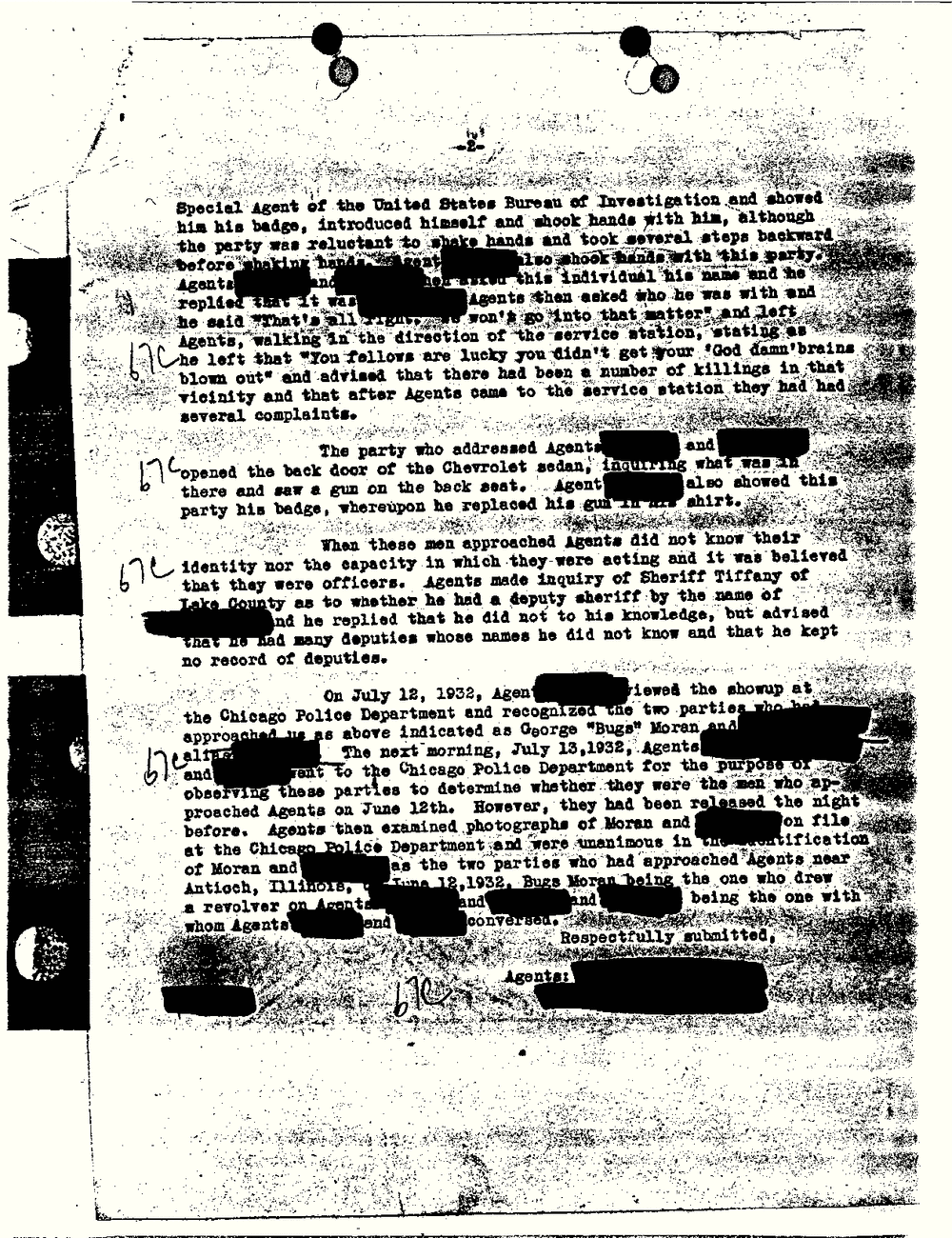
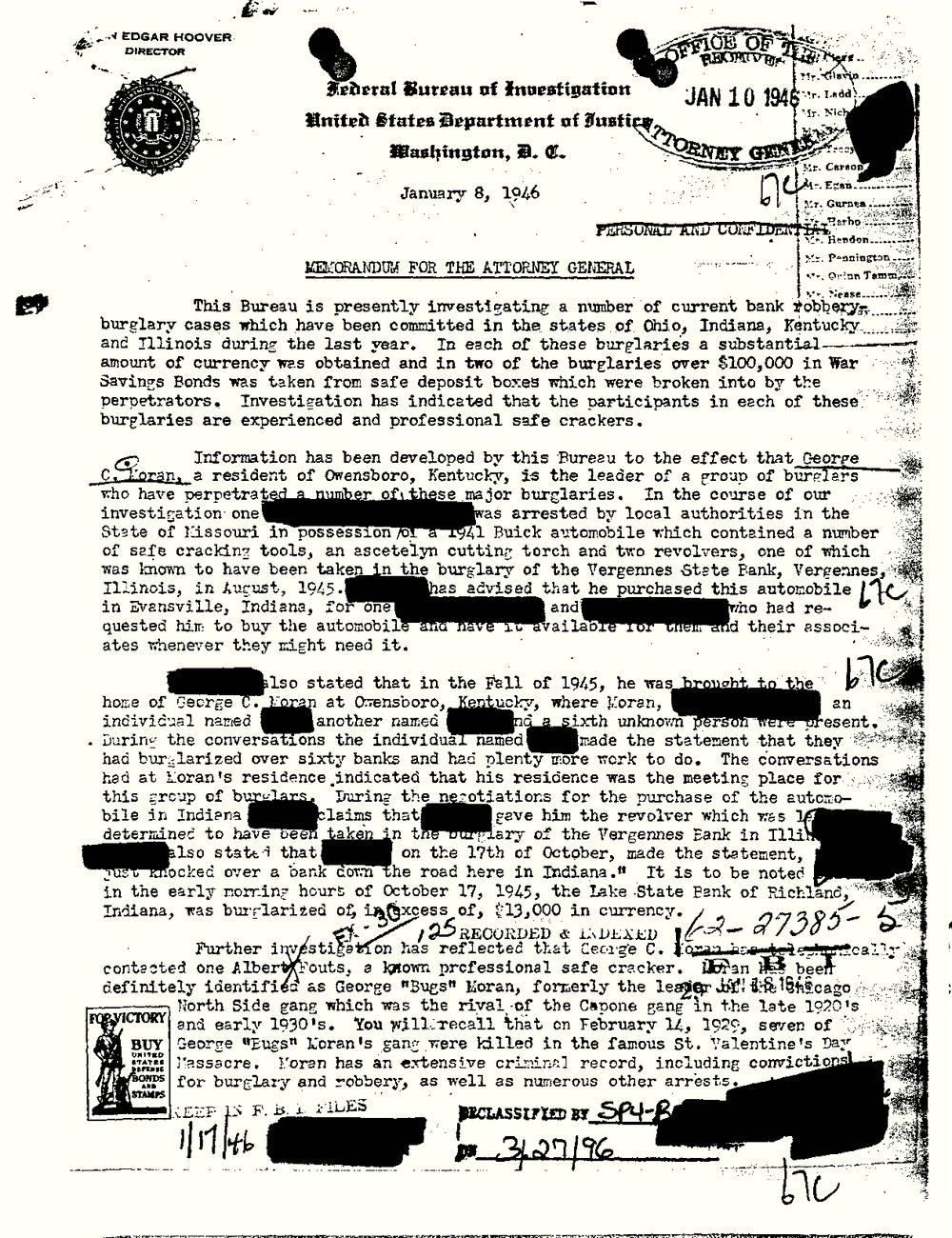
Three parts of the FBI’s file on George “Bugs” Moran: a 1932 Bureau memorandum in which agents identify Moran as the man who drew a revolver on them near Antioch, Illinois; a 1946 memorandum for the Attorney General that calls him “formerly the lea[der of] the Chicago North Side gang”; and a last part of the 1950s made up mostly of newspaper clippings. The Vault’s OCR of these parts is poor. Quotations on the record pages were read on the page images, and the 1946 memorandum’s street address is left out.
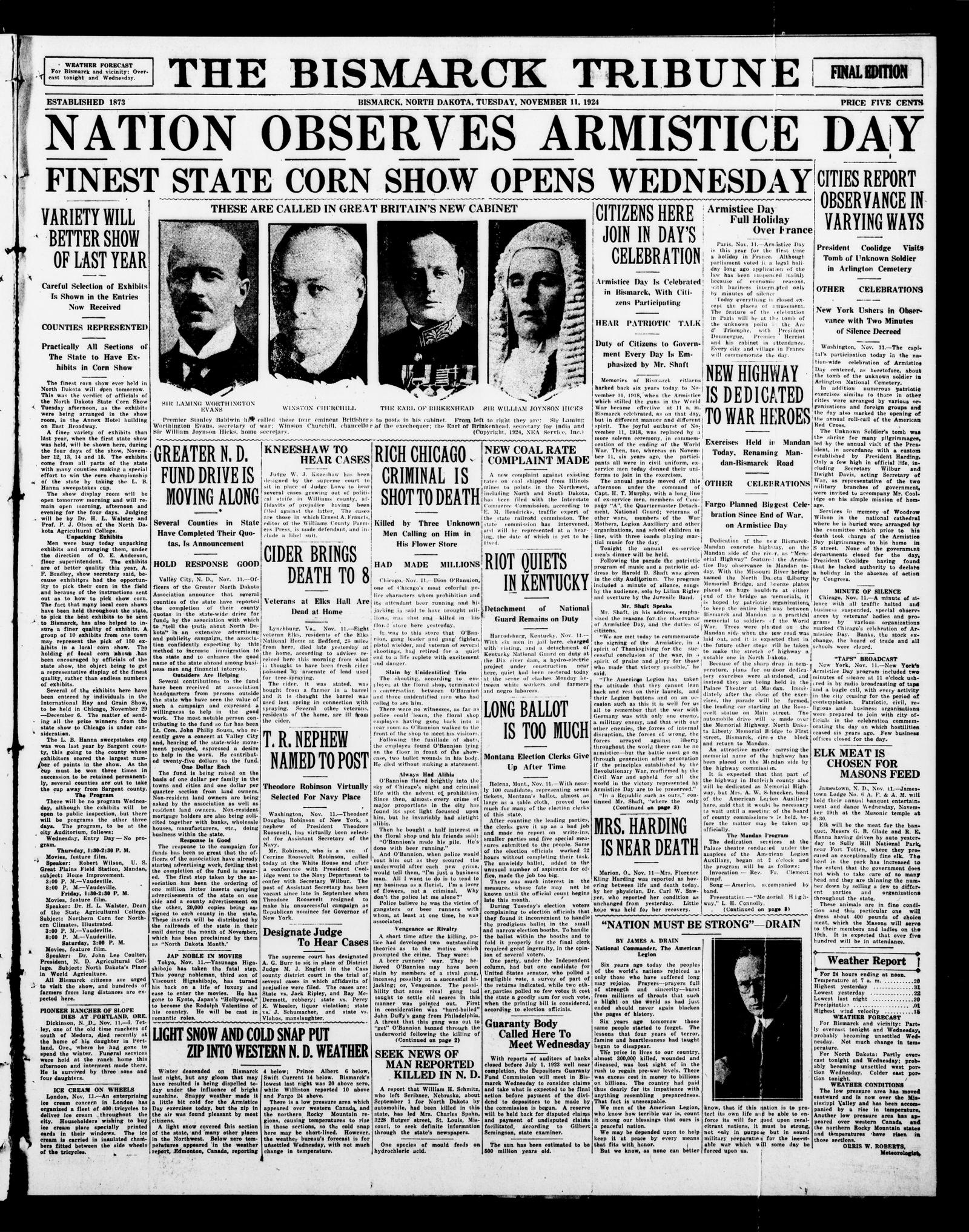
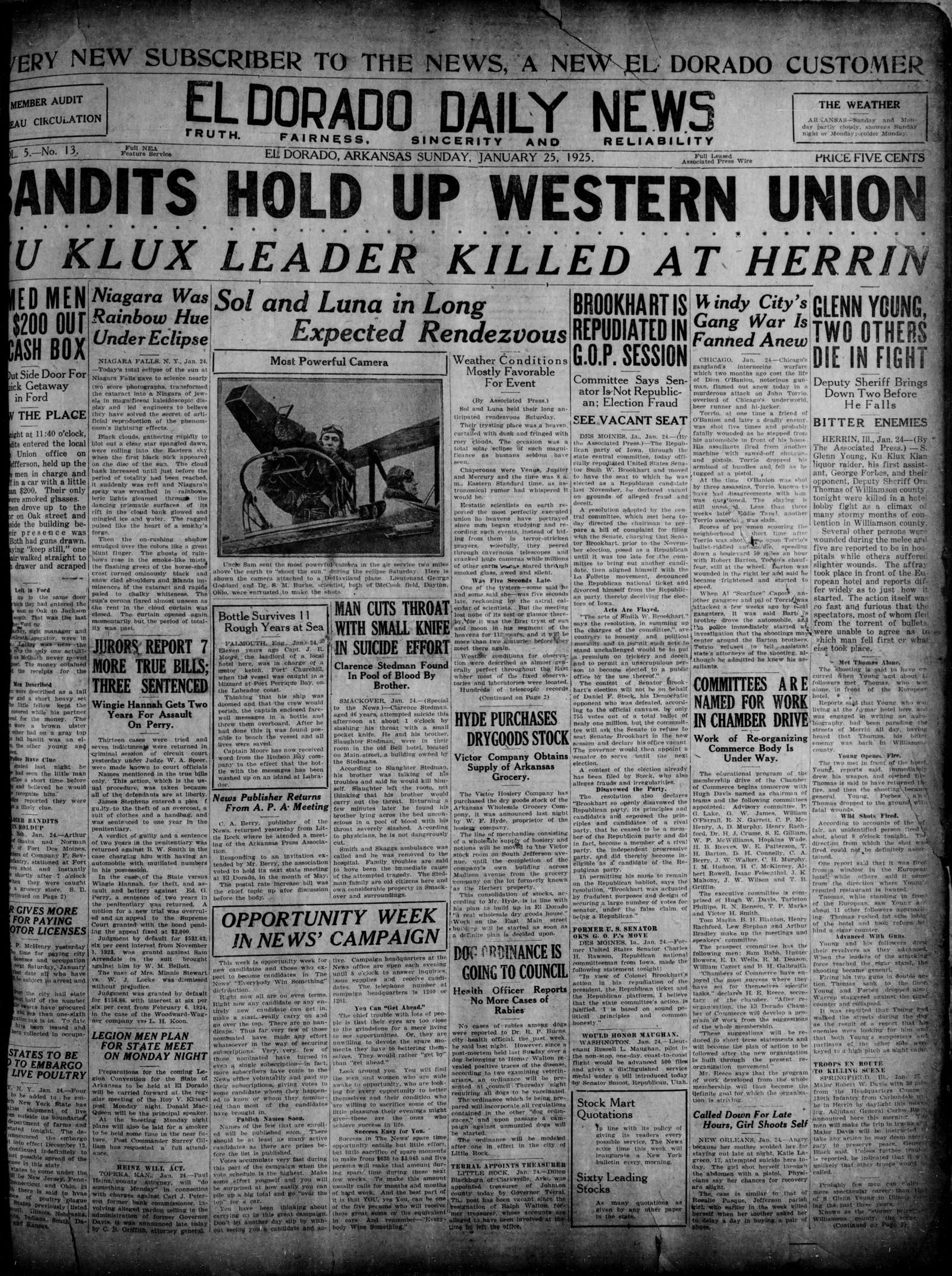
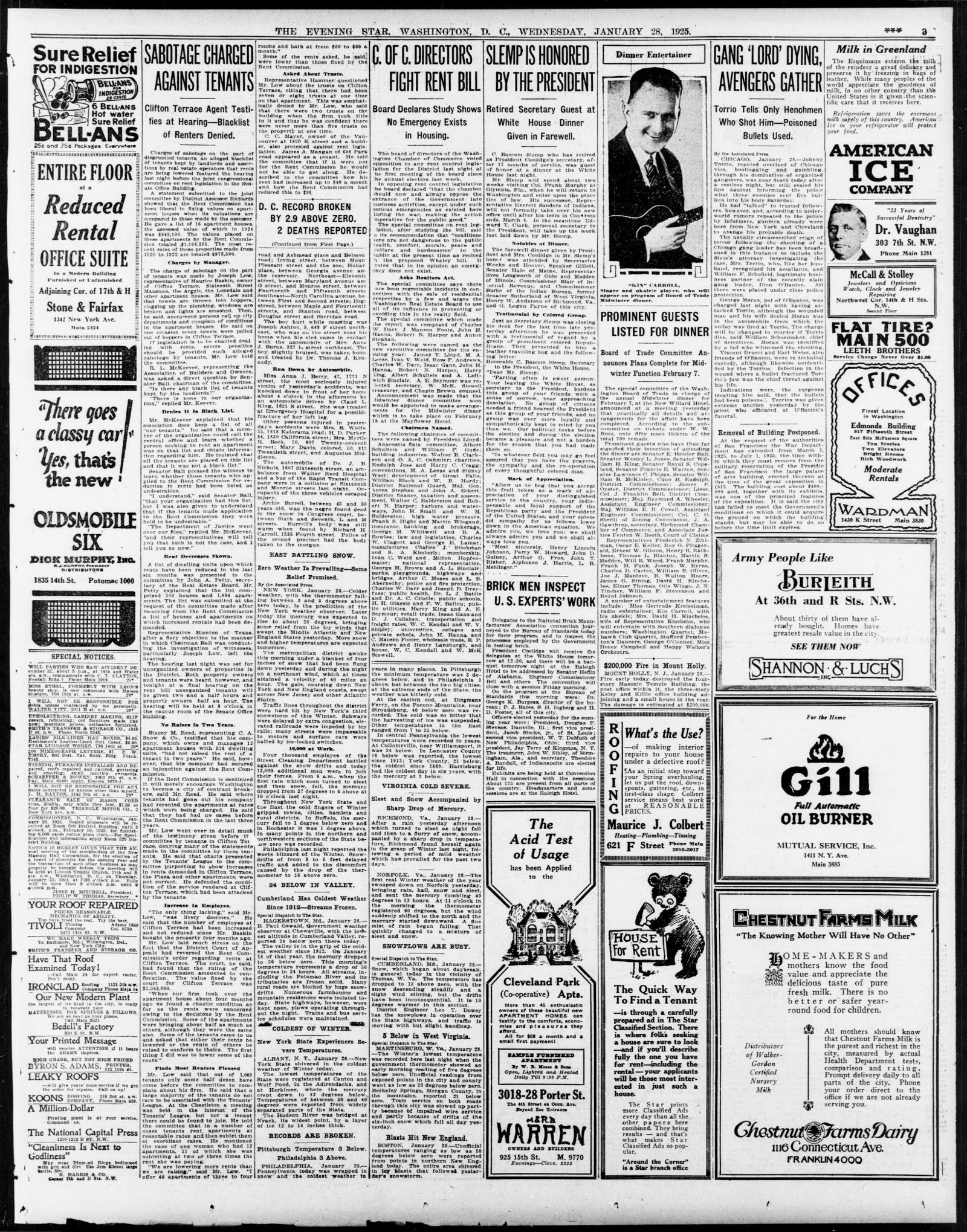
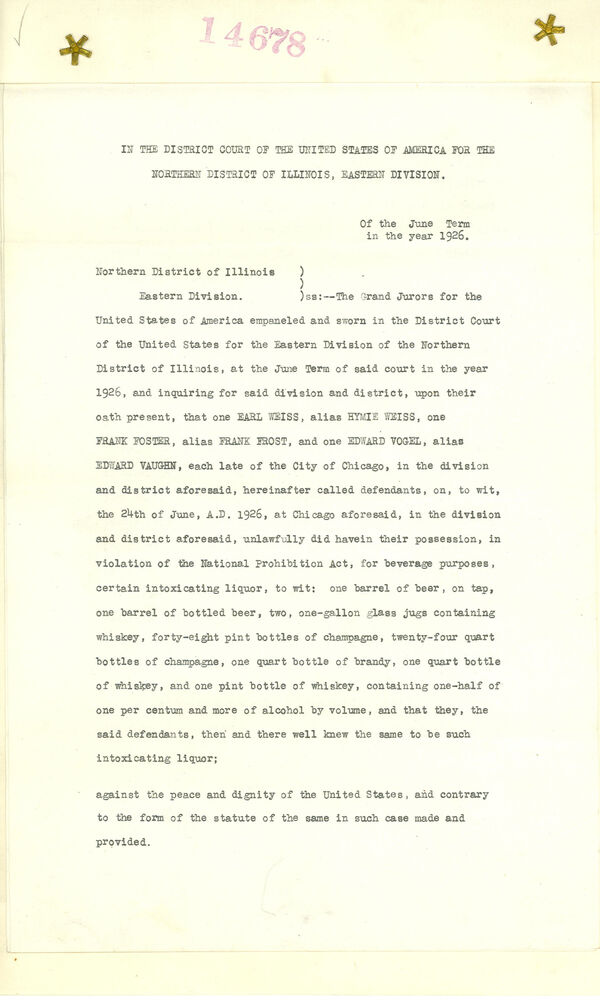
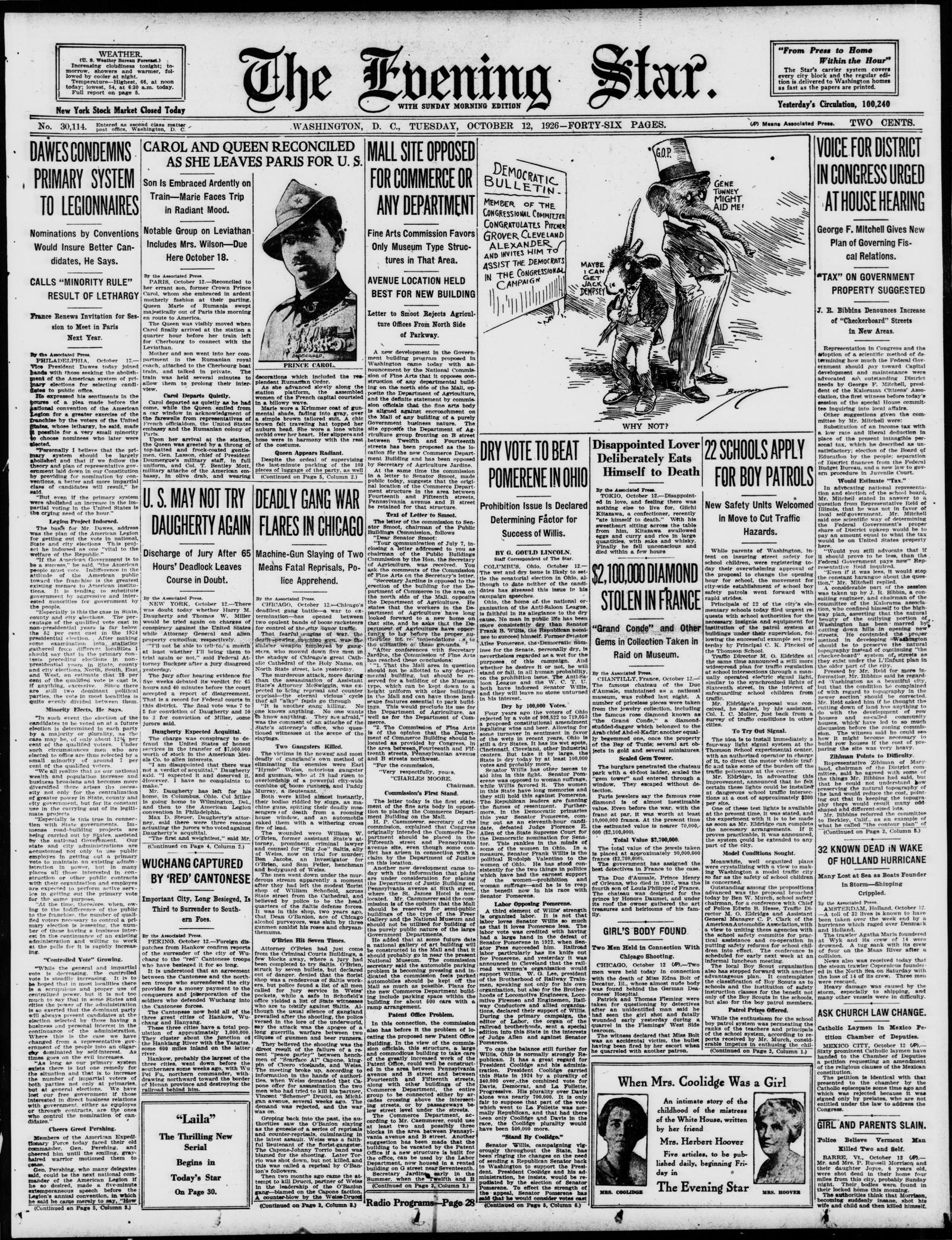
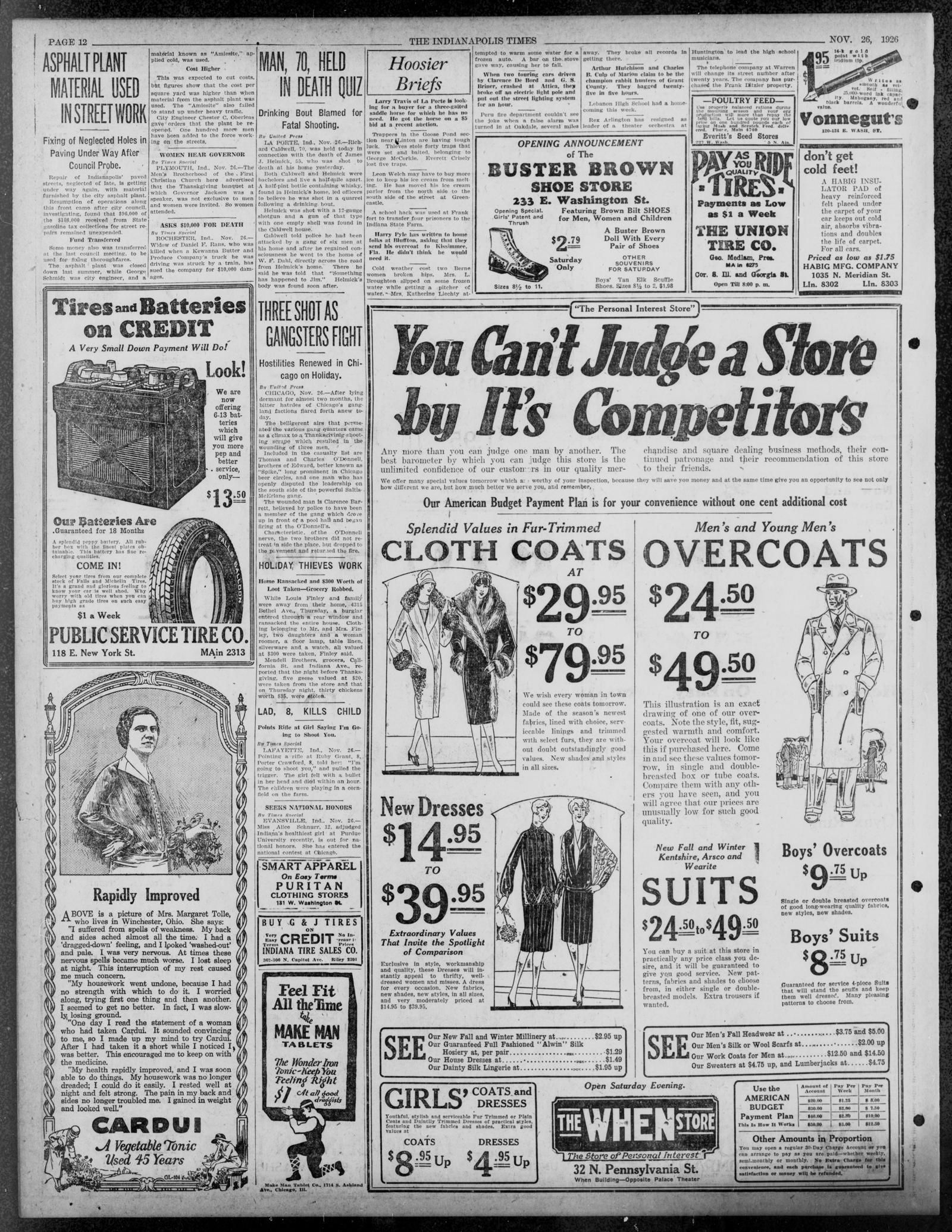
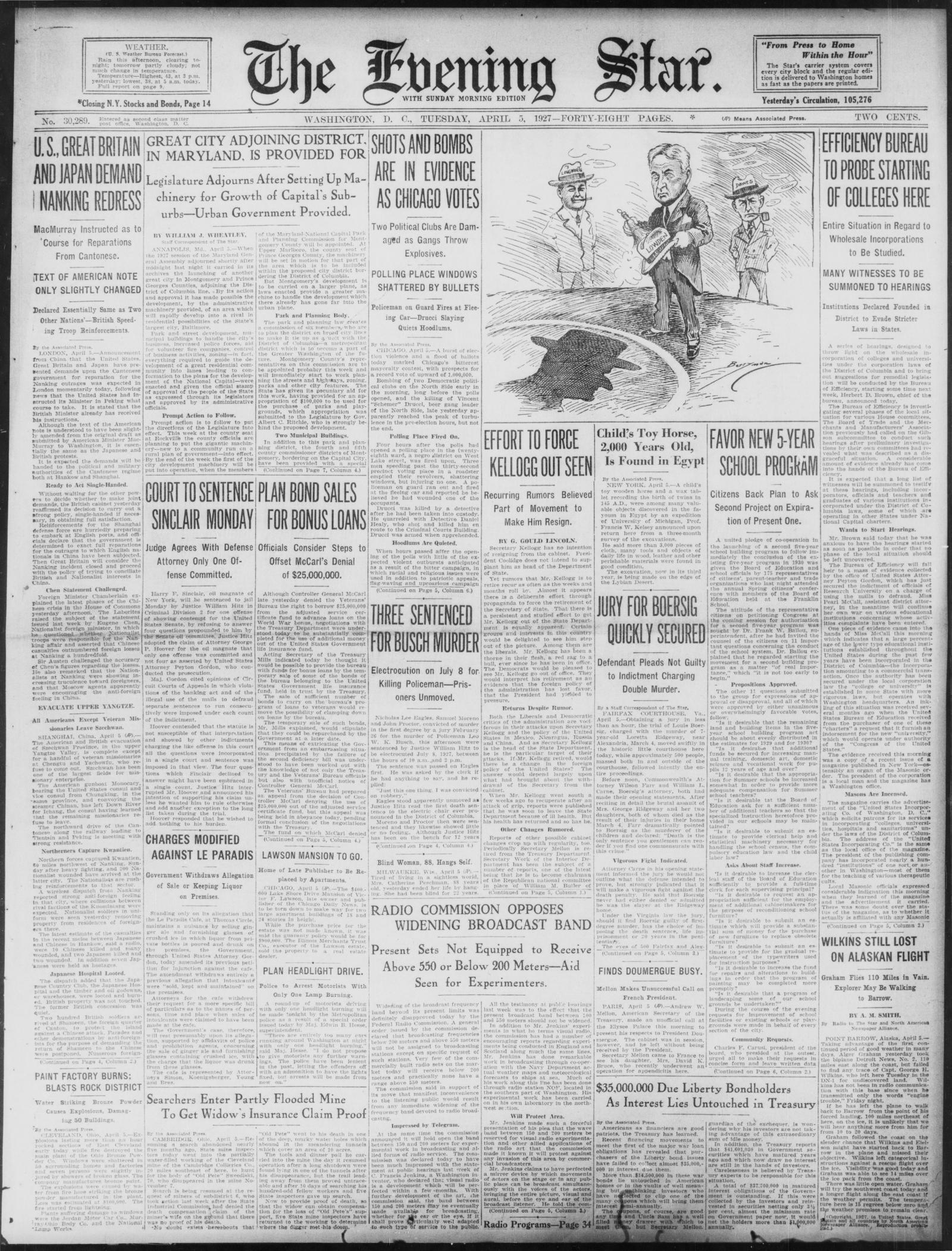
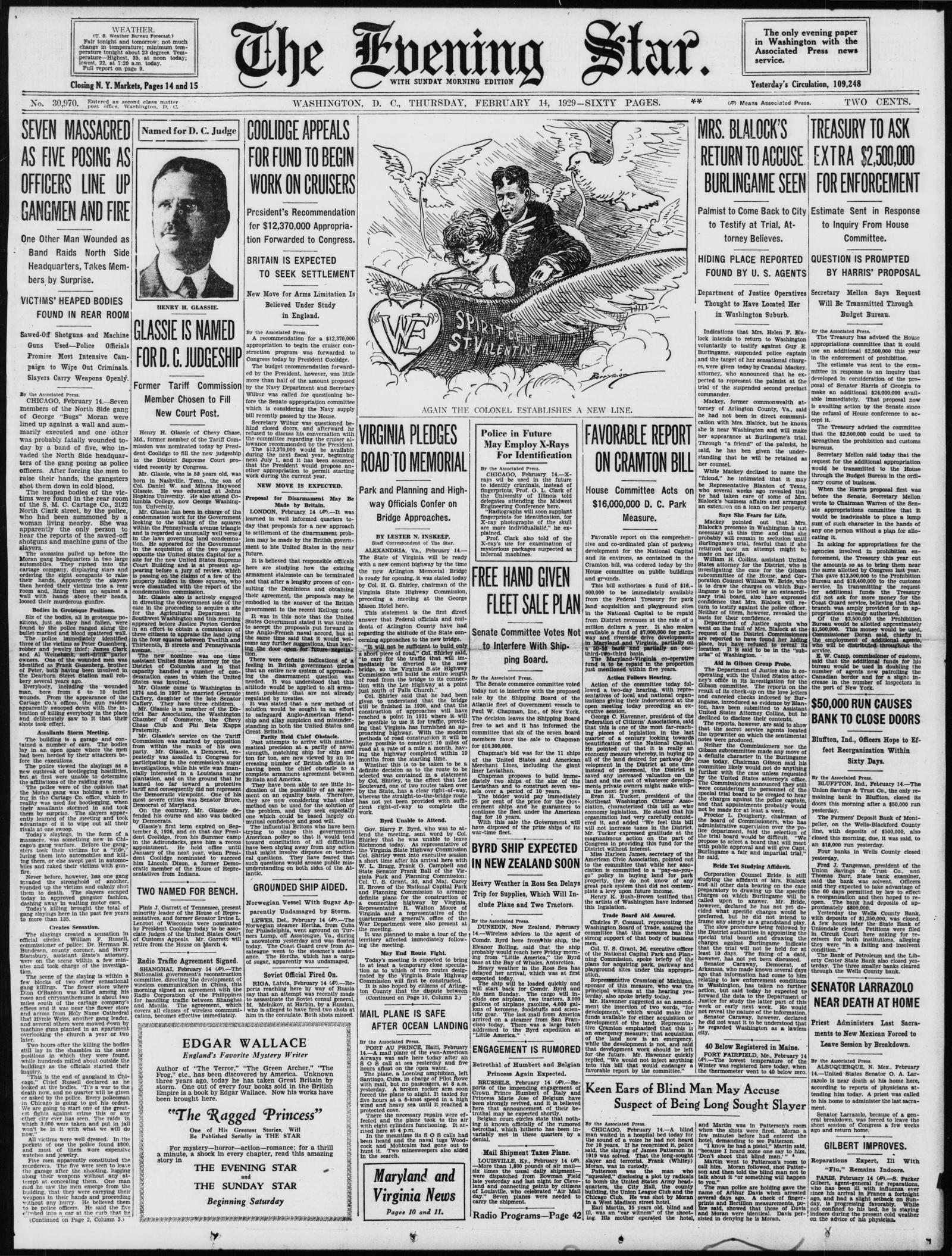
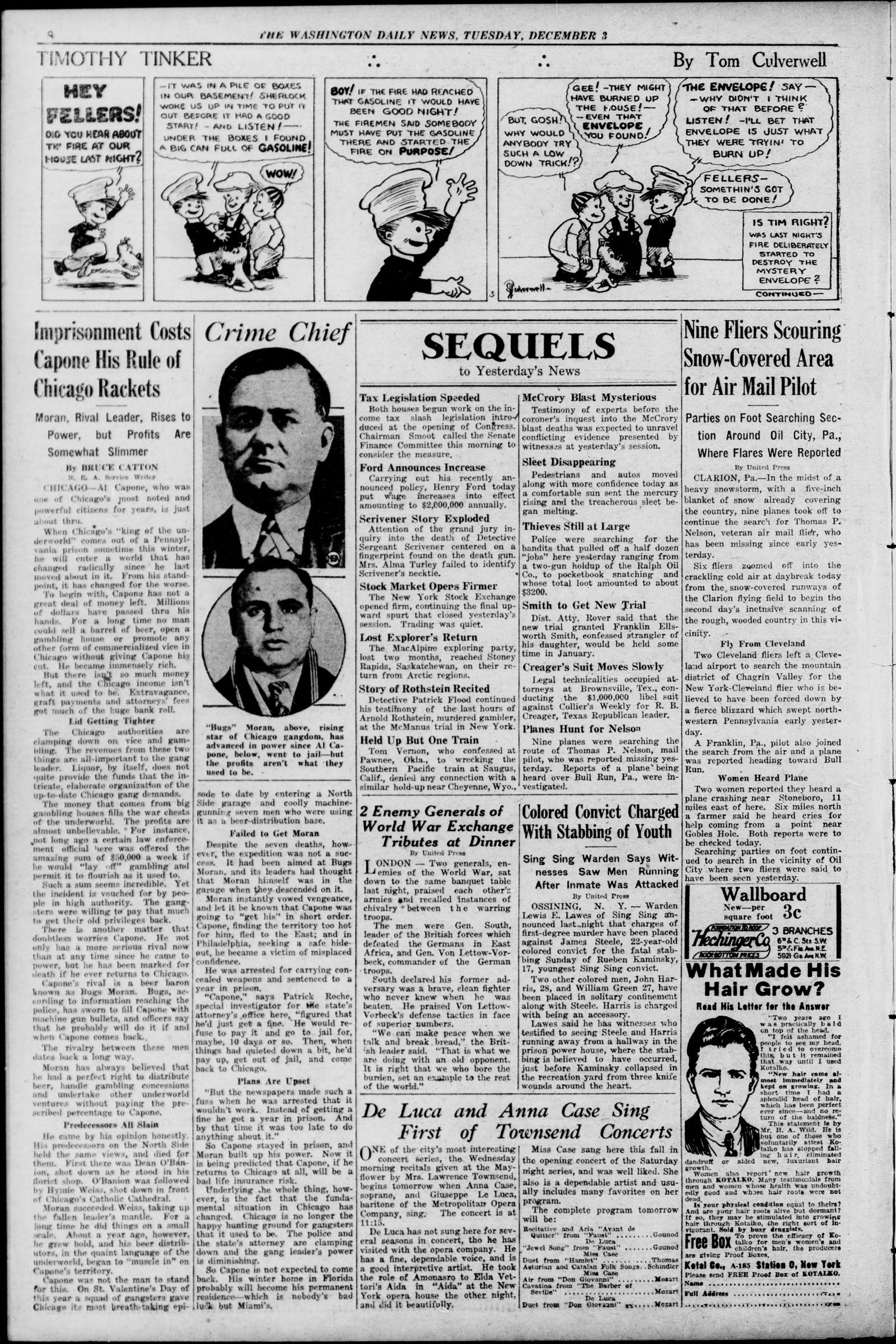
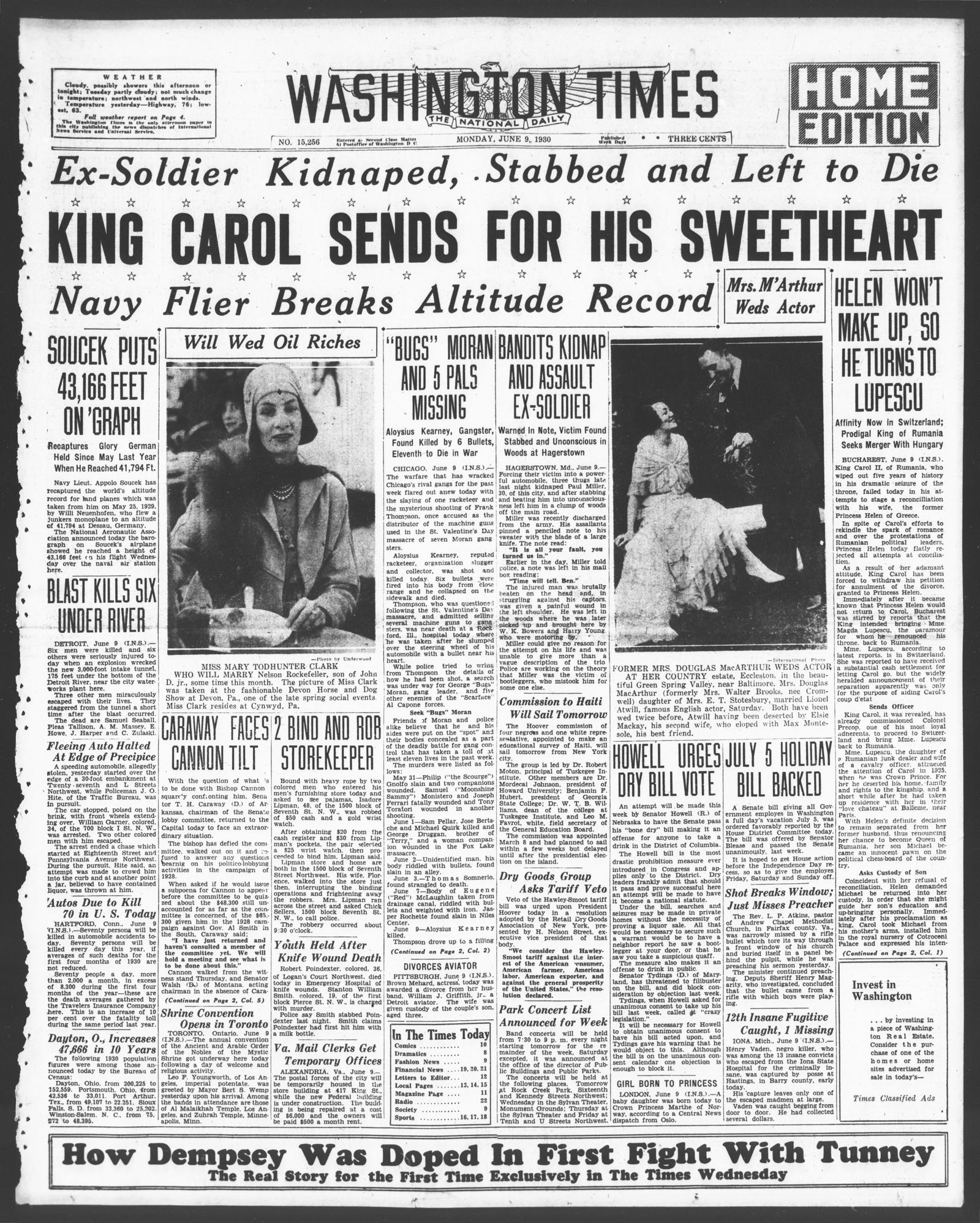
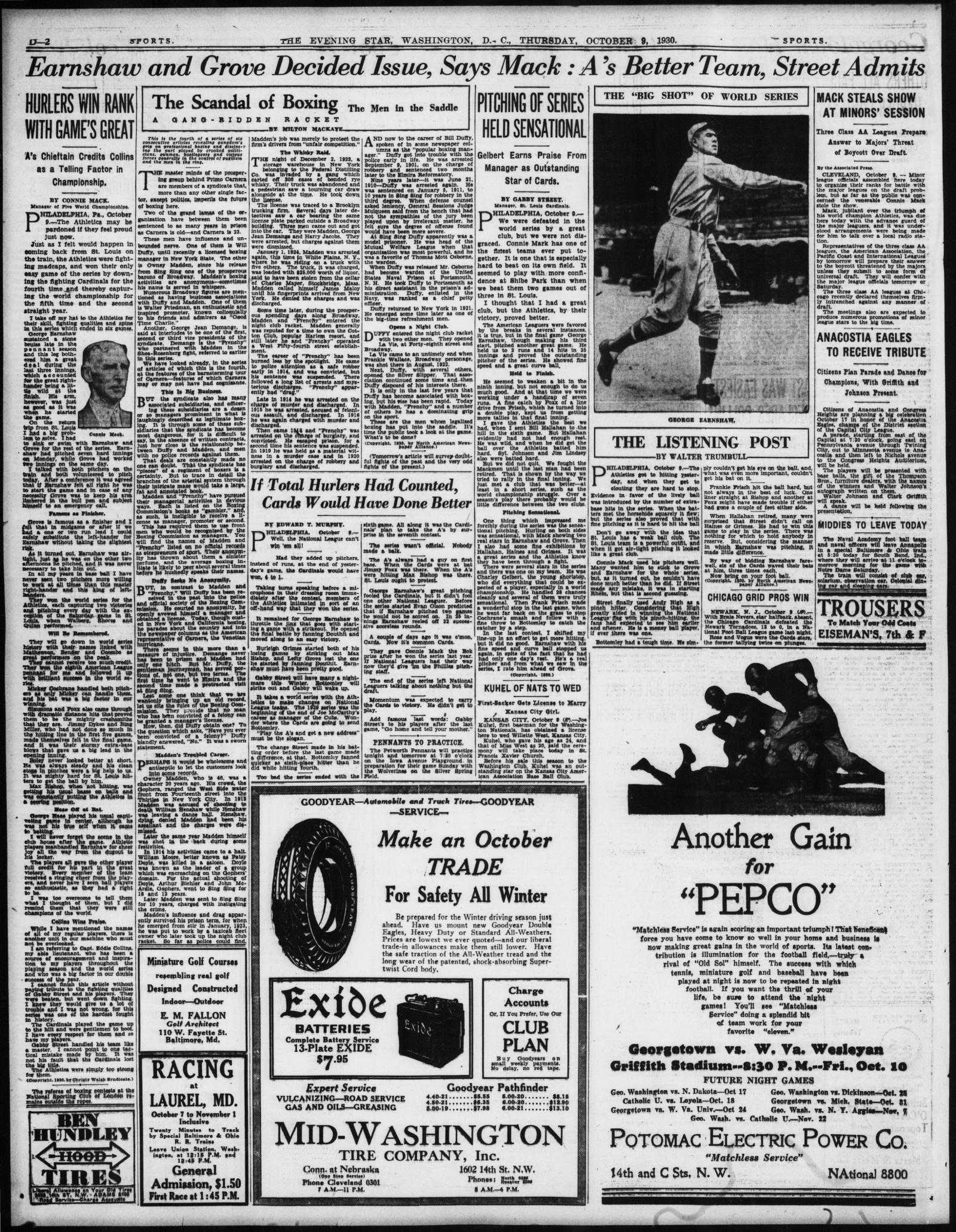
The National Archives holds the 1926 indictment of Earl “Hymie” Weiss on a liquor charge, dismissed after his death. Five newspaper pages, read on the scans, report the charge against Moran in the Torrio shooting (1925), a Thanksgiving shooting of the O’Donnell brothers (1926; a different Chicago faction), the killing of Vincent Drucci by a detective (1927), an NEA feature on Moran (1929) and the report that Moran was missing (1930). Pages filed earlier cover the shooting of O’Banion, the Torrio shooting, the killing of Weiss and the February 1929 garage killings; the Capone section carries the rest.
People: George Moran, Earl Weiss, Vincent Drucci.
Winter Hill and the Winter case, Boston
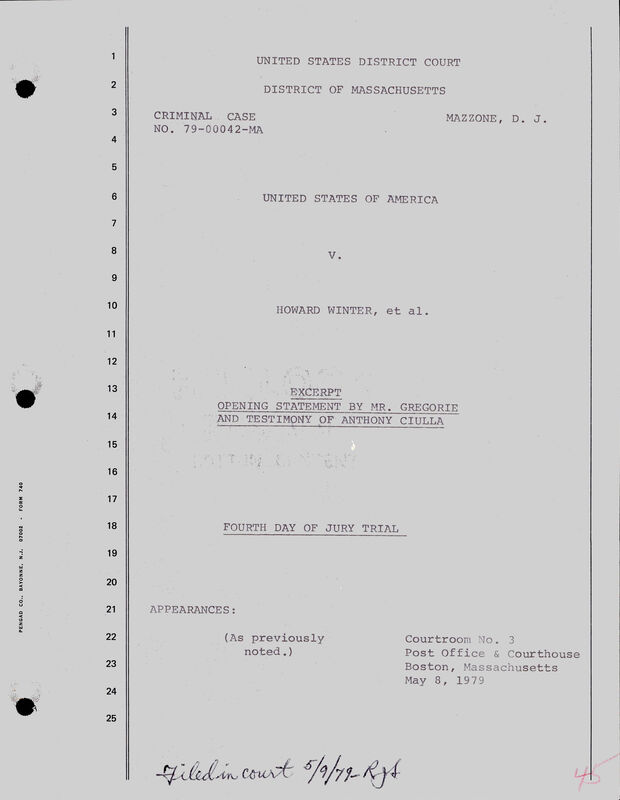
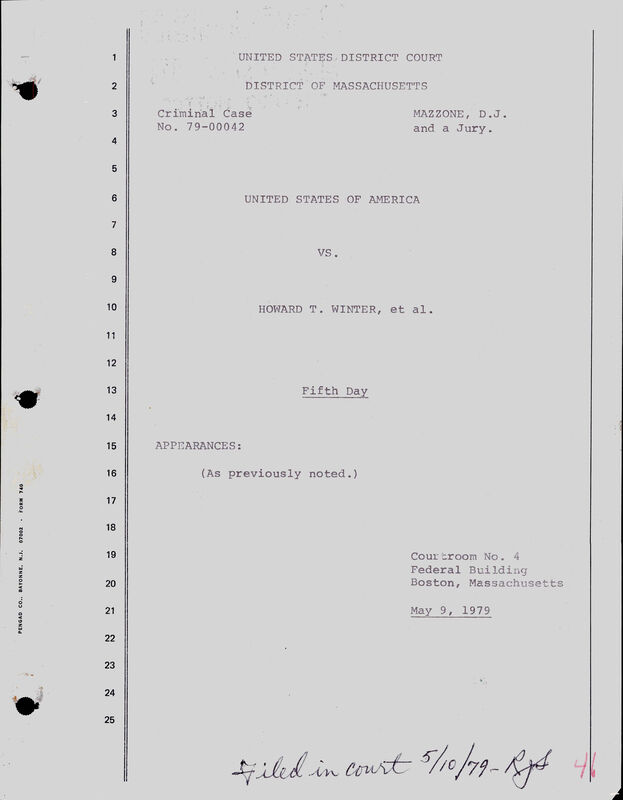
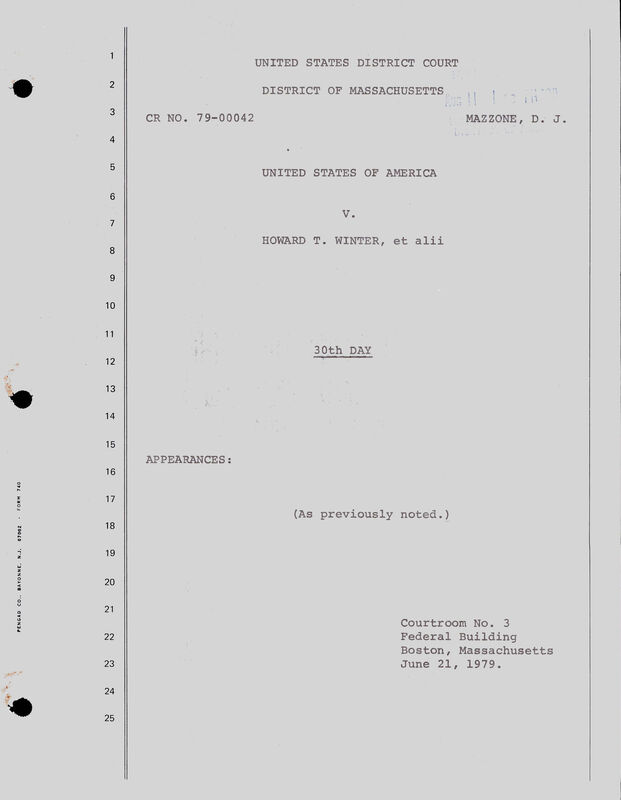
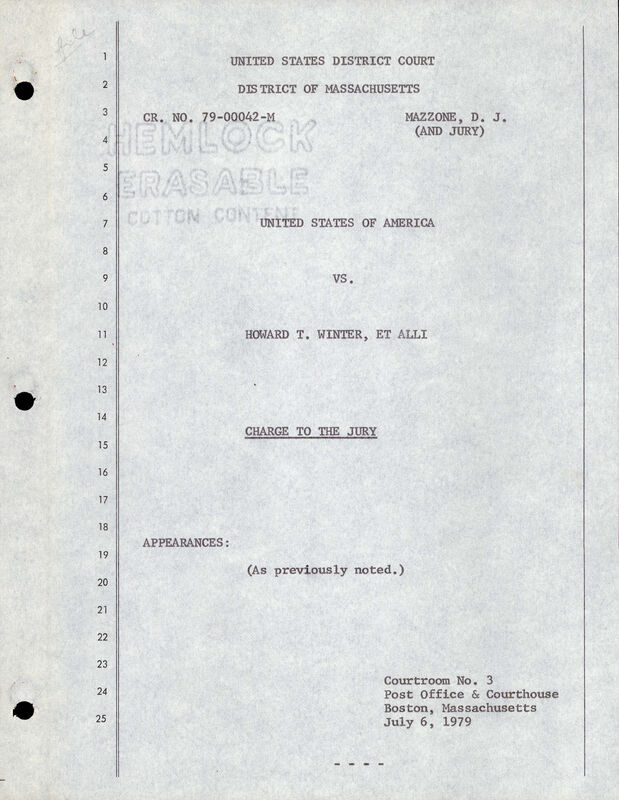
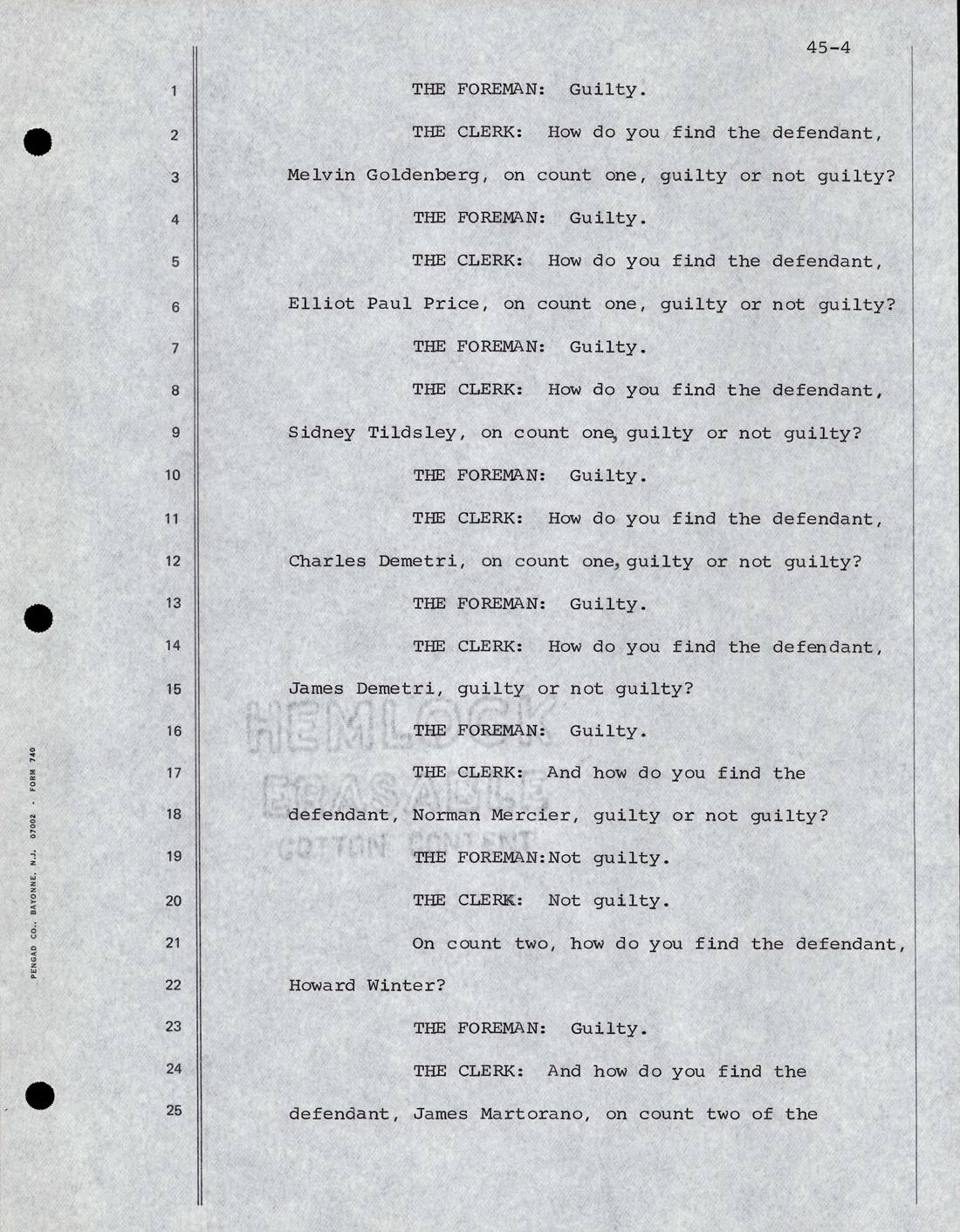
The National Archives at Boston holds the case file of United States v. Howard T. Winter et al., a 52-count horse-race-fixing indictment of 1979. Five of its trial transcripts are digitized and were read at cover level: the opening and Anthony Ciulla’s testimony, the fifth day, the thirtieth day, the charge to the jury, and the verdict, of which one page was read in full. The First Circuit’s opinion on the new-trial motions records that no witness said Winter belonged to an organized crime syndicate. The direct-appeal opinion, United States v. Winter, 663 F.2d 1120, is filed with the New England records.
None of these records uses the name “Winter Hill” for a group. The name appears in later records filed with the New England material, which apply it to James Bulger and Stephen Flemmi. Part 02 of the FBI’s Bulger file, Boston reports of 1974 and 1975, is added here; its page images could not be retrieved, and its OCR is too broken to quote.
People: Howard T. Winter, James Martorano, Anthony Ciulla.
Owney Madden, New York
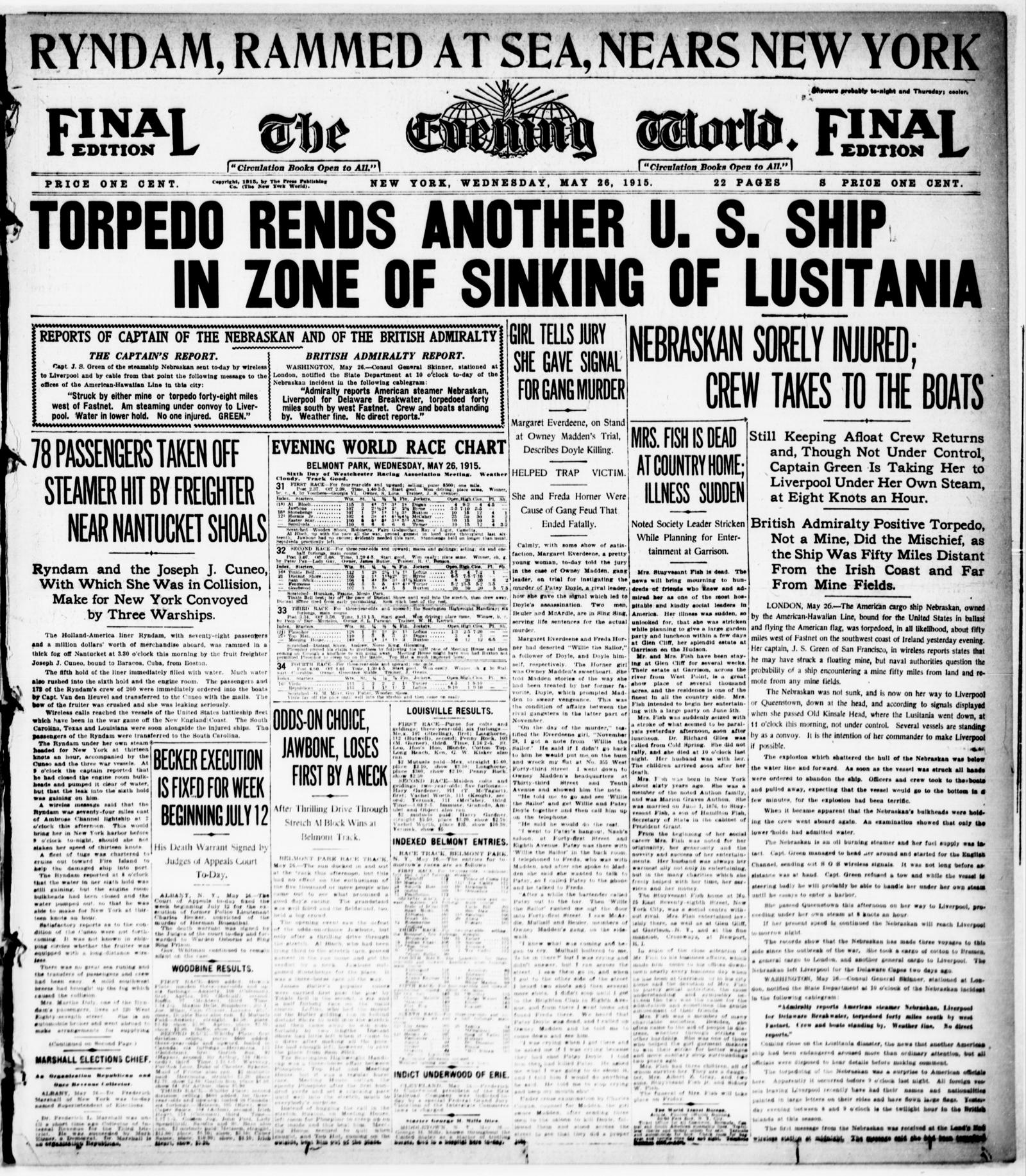
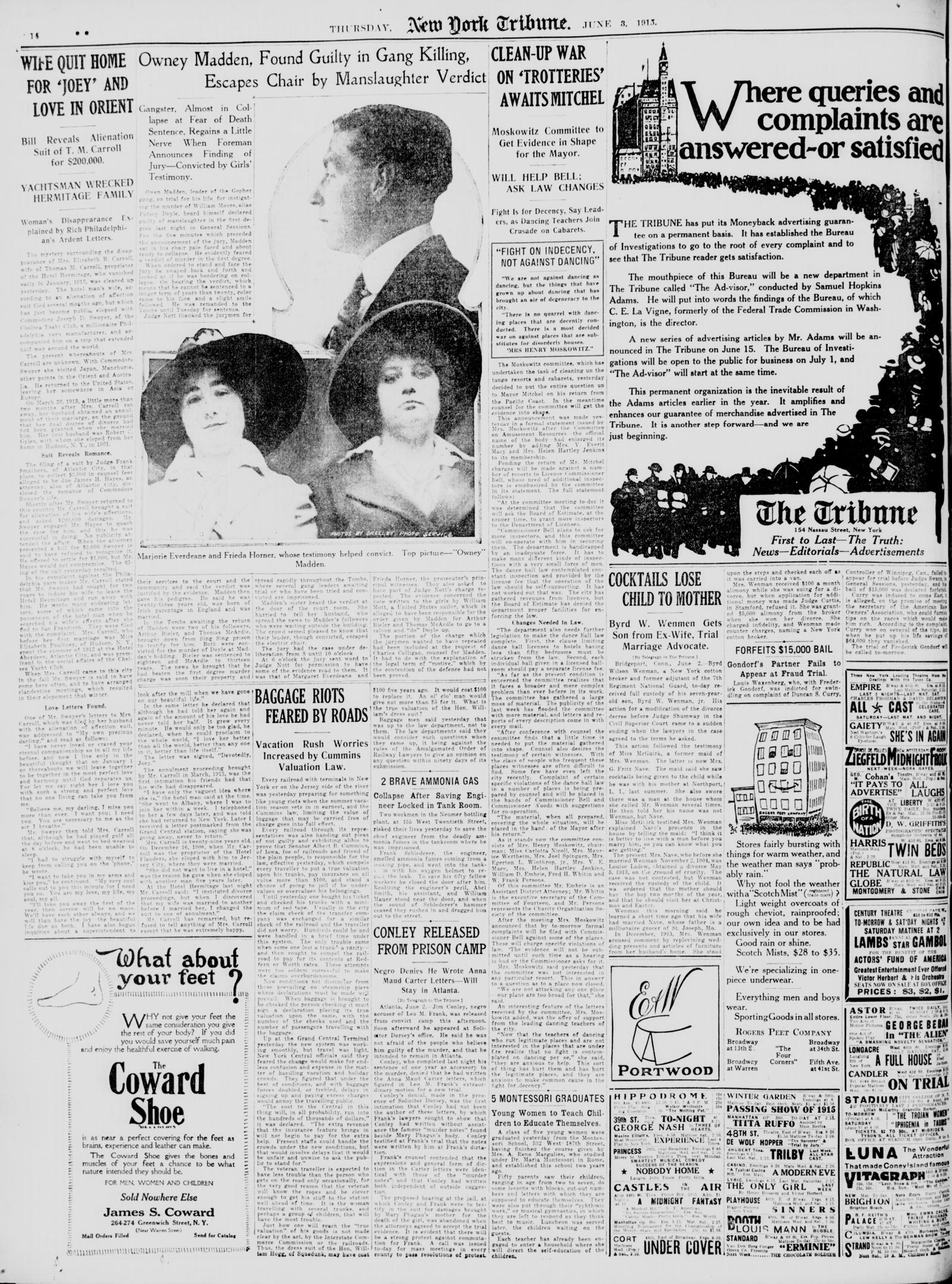
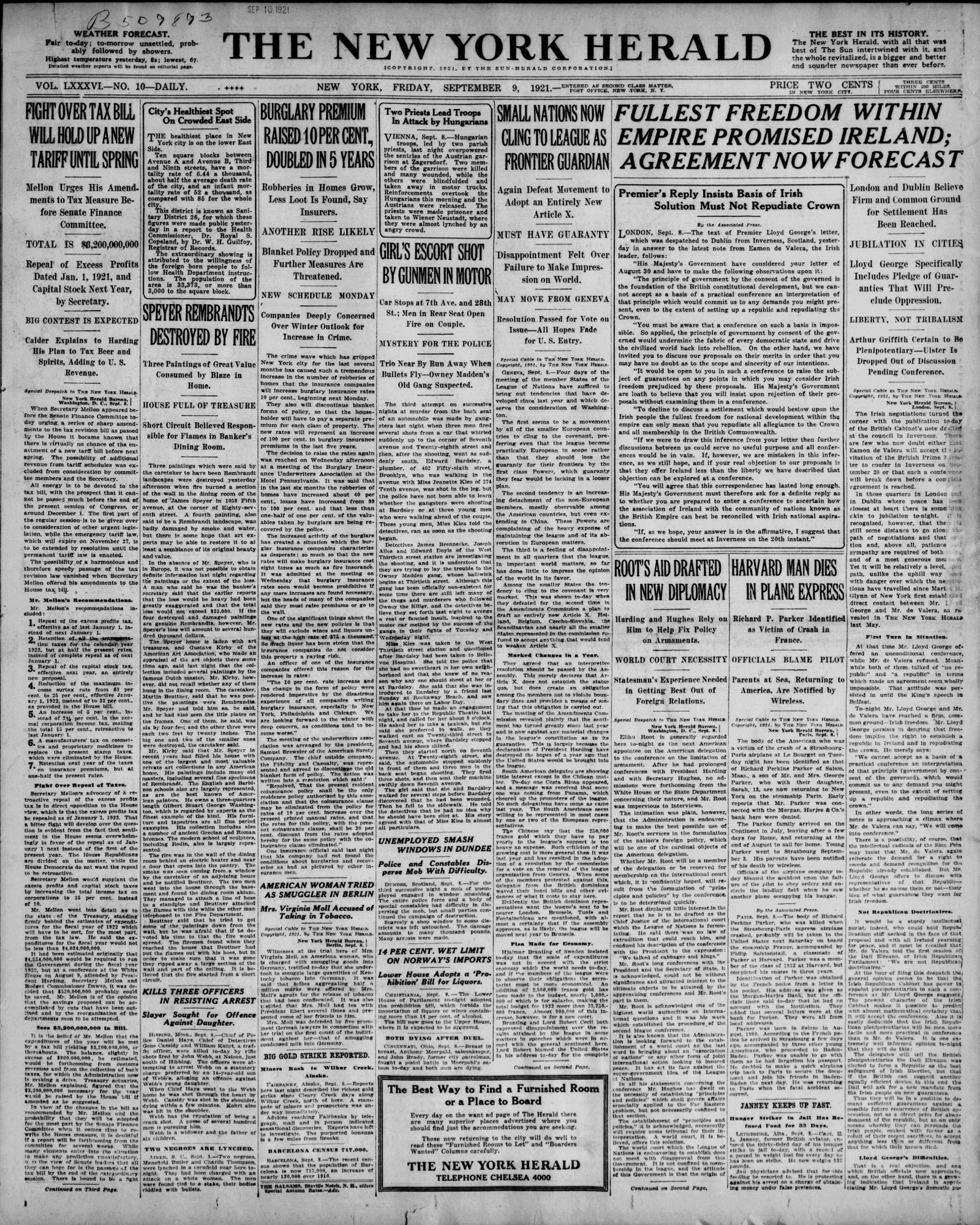
No federal case, FBI file or prison record about Madden has been found. The records are newspaper pages and other men’s testimony. The Evening World of 26 May 1915 reports testimony at his state trial for instigating the killing of Patsy Doyle, and the New-York Tribune of 3 June 1915 reports the manslaughter verdict. The New York Herald of 9 September 1921 reports a police theory blaming his former gang for a shooting. In the Kefauver hearings he is named by Virgil Peterson of the Chicago Crime Commission, in questions to Louis Campagna and Daniel Serritella, and in the testimony of Harry Stromberg and Frank Wiener. The 1915 OCR is badly degraded; the quotations were read on the scans.
Egan’s Rats, St. Louis
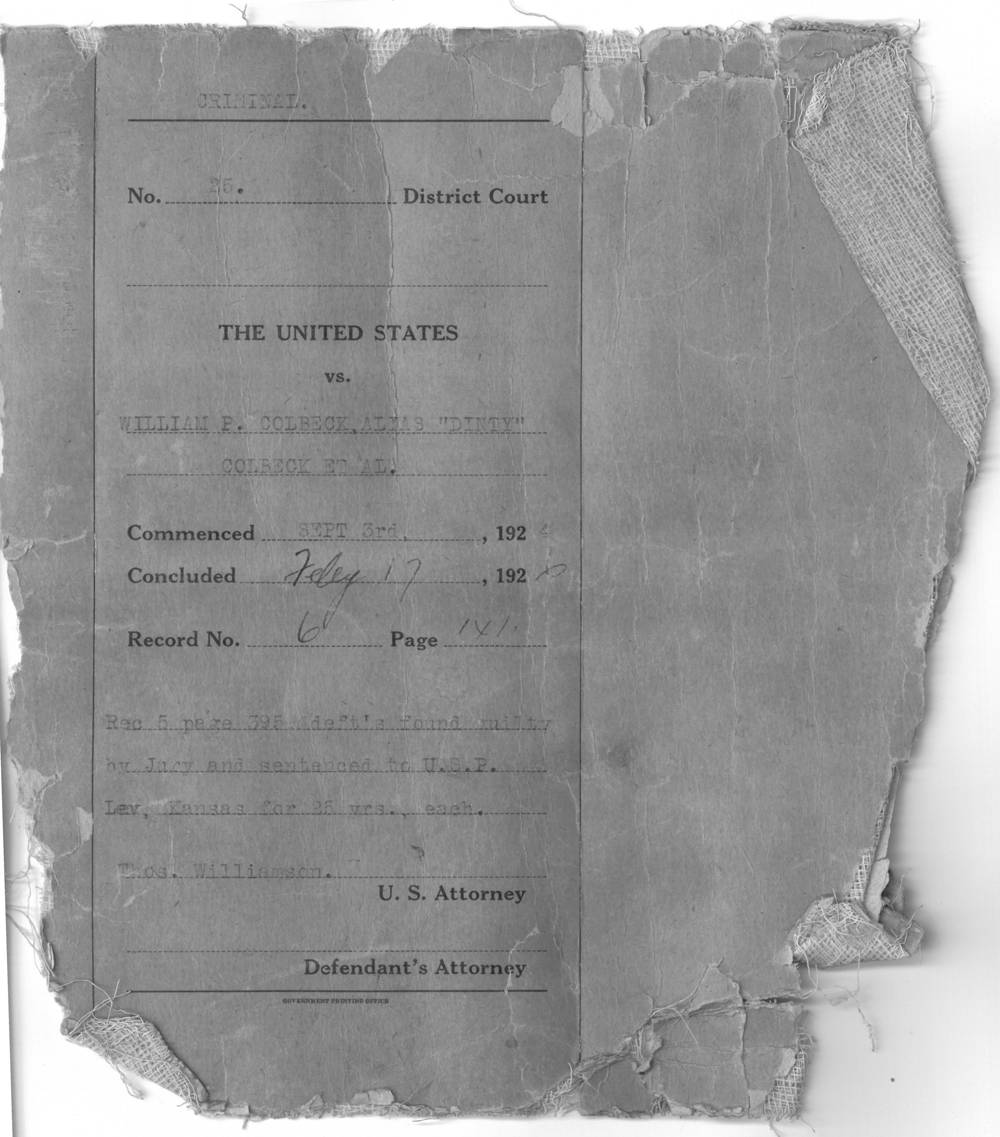
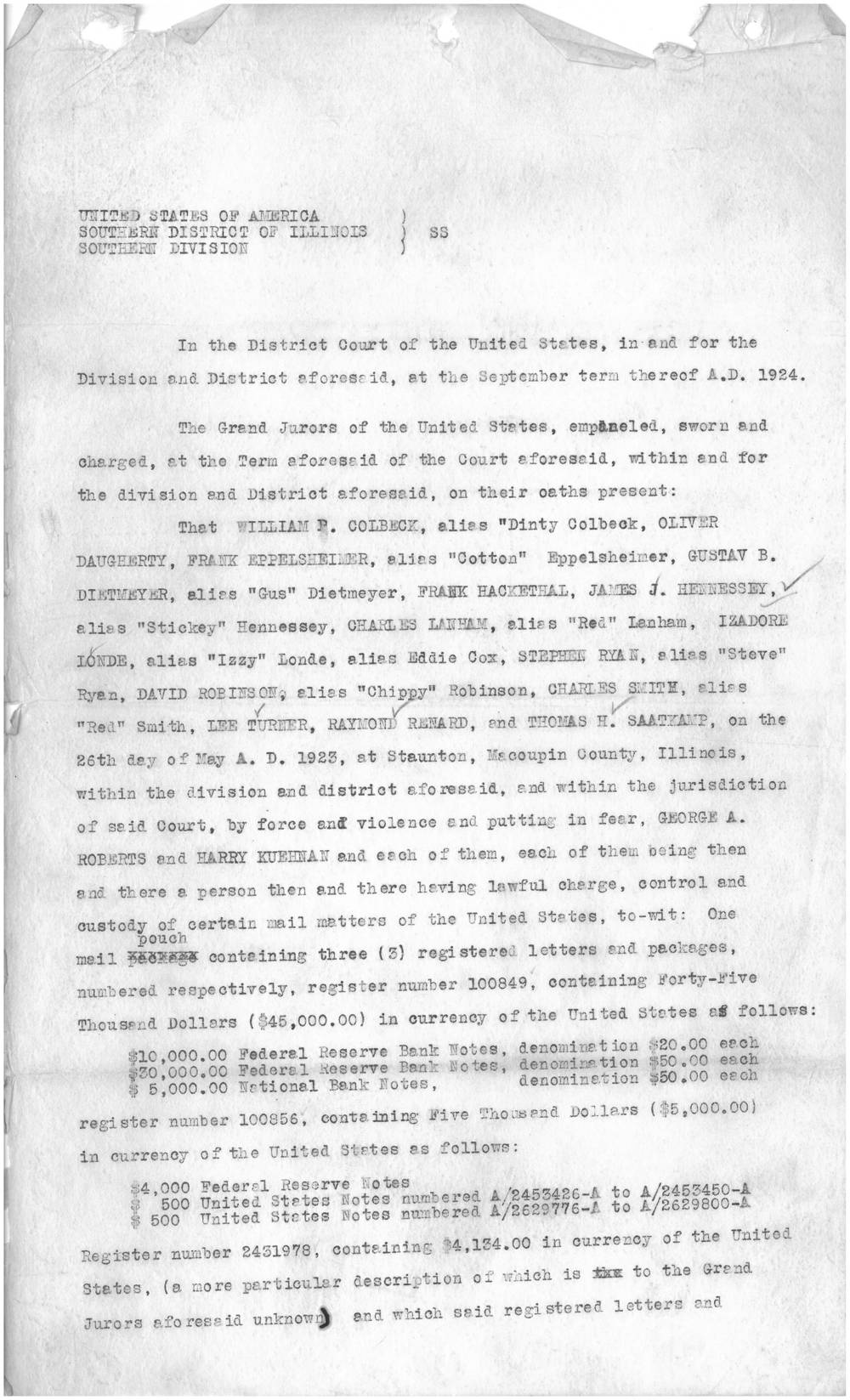
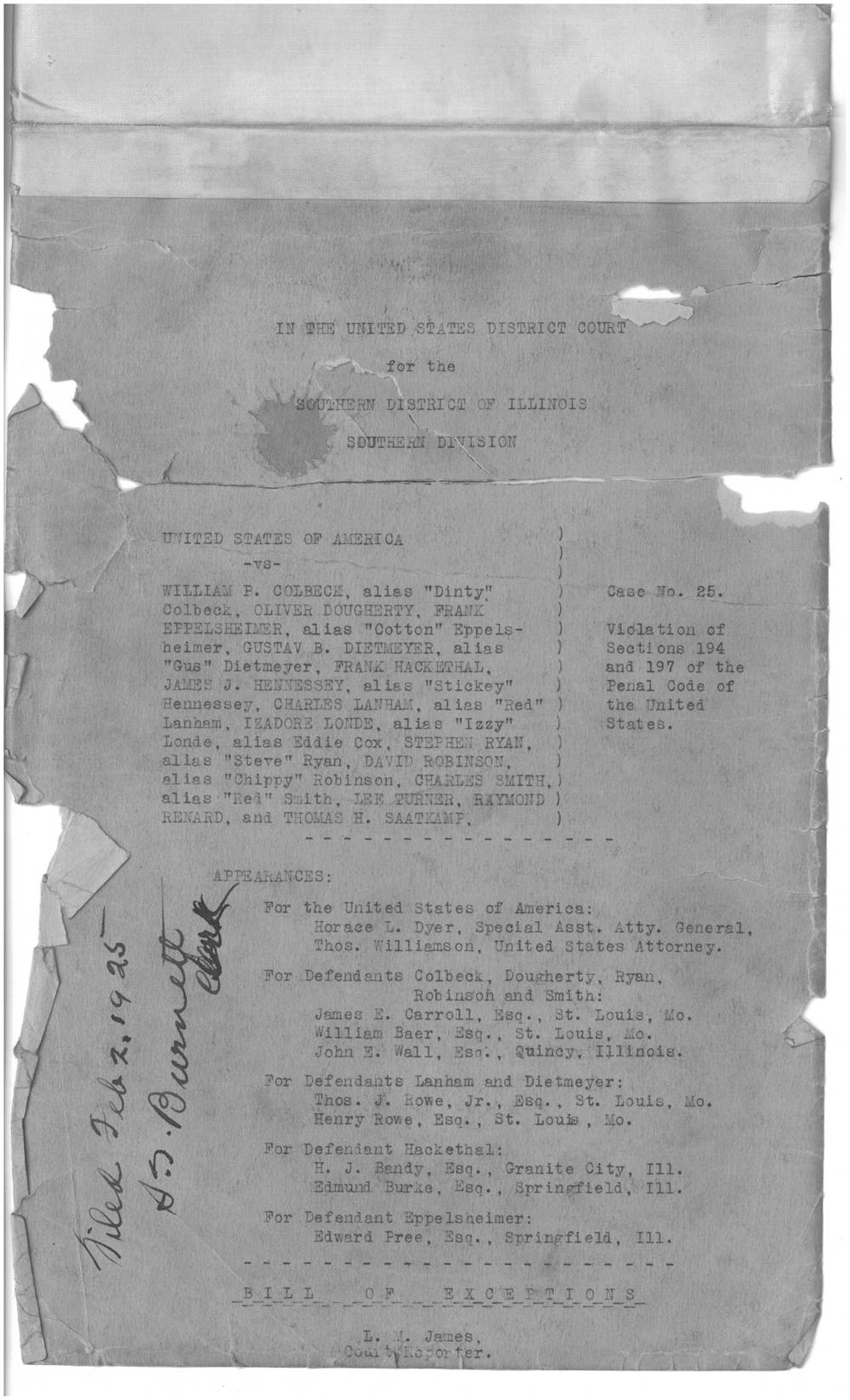
“Egan’s Rats” is the National Archives’ name for the defendants in its description of the case file for the 1923 Staunton, Illinois mail robbery, and the 1924 press’s. The court records do not use it. The indictment charges fourteen men; the trial transcript was read at title and index level; and the Seventh Circuit’s Colbeck v. United States affirmed nine convictions and 25-year sentences in 1925.
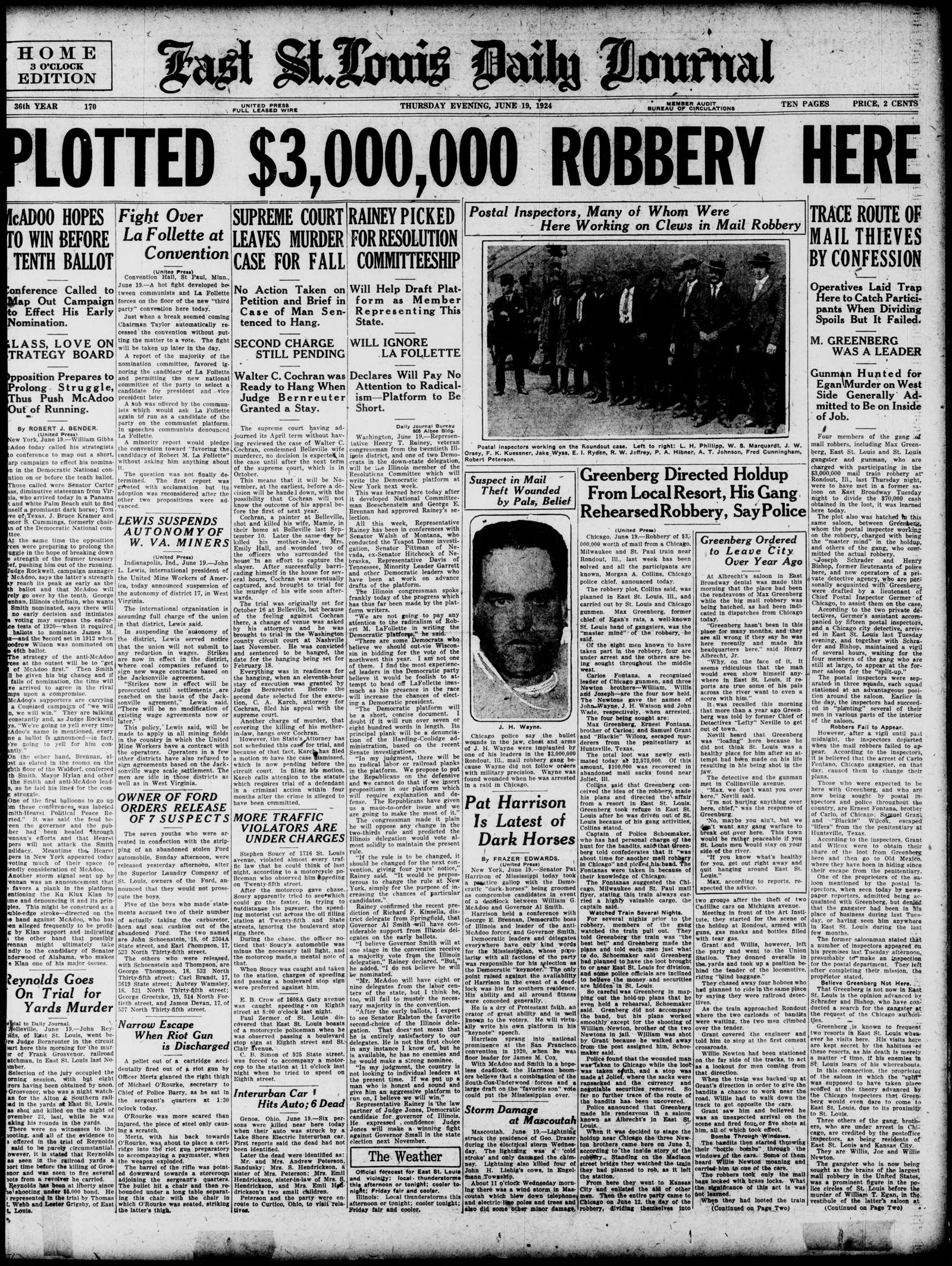
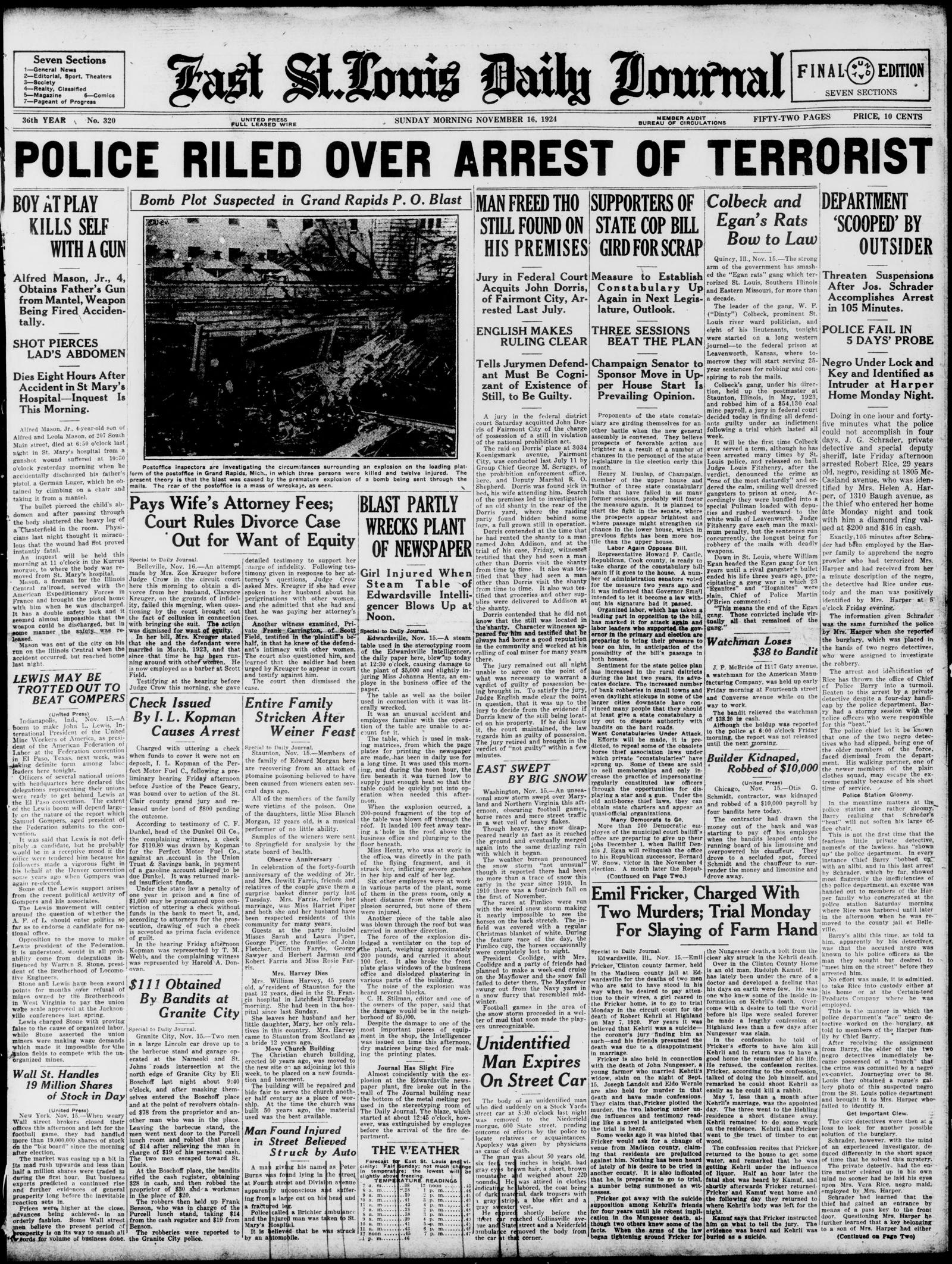
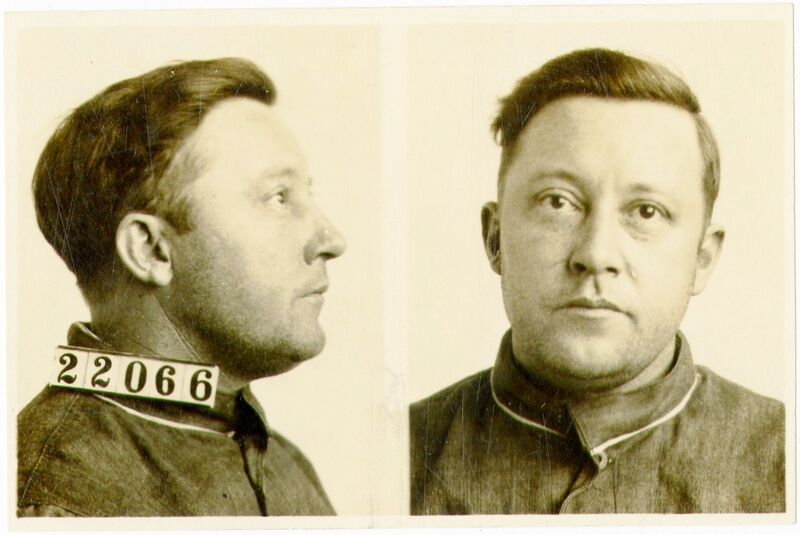
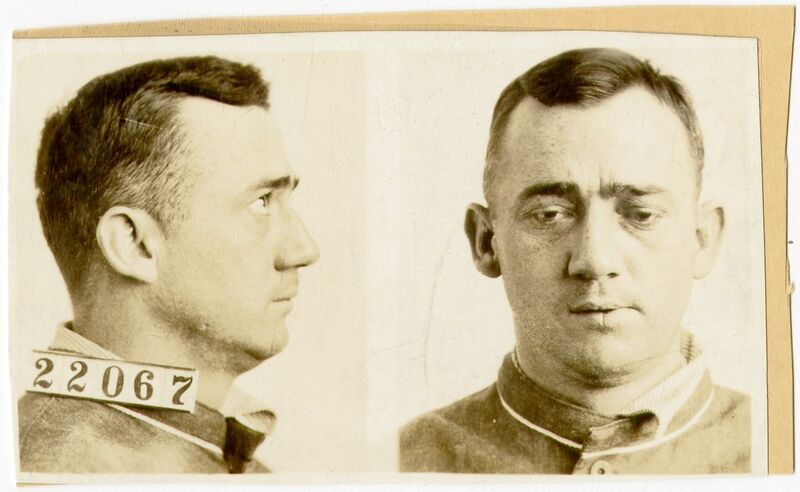
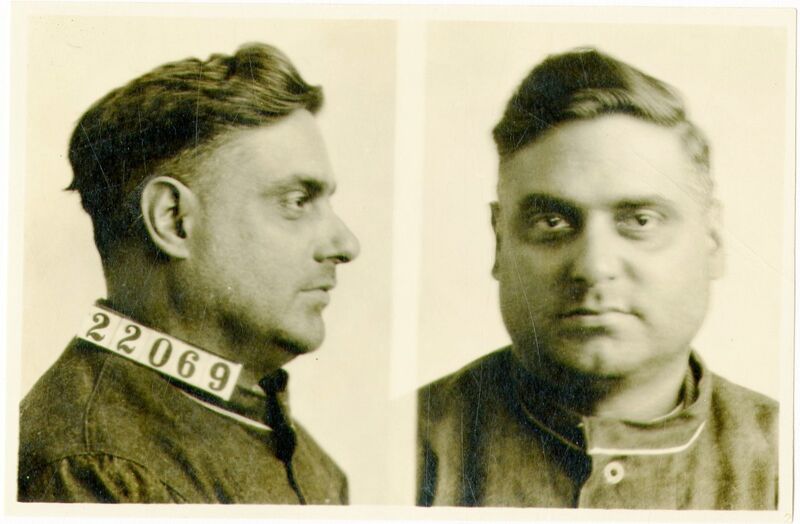
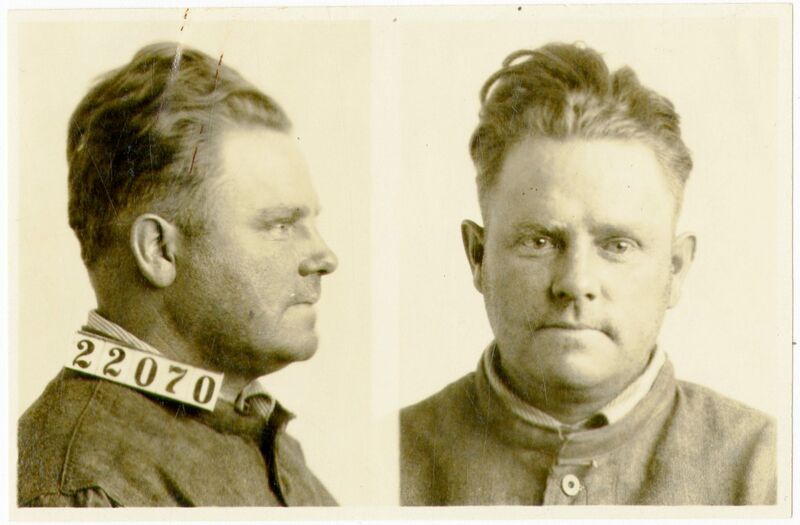
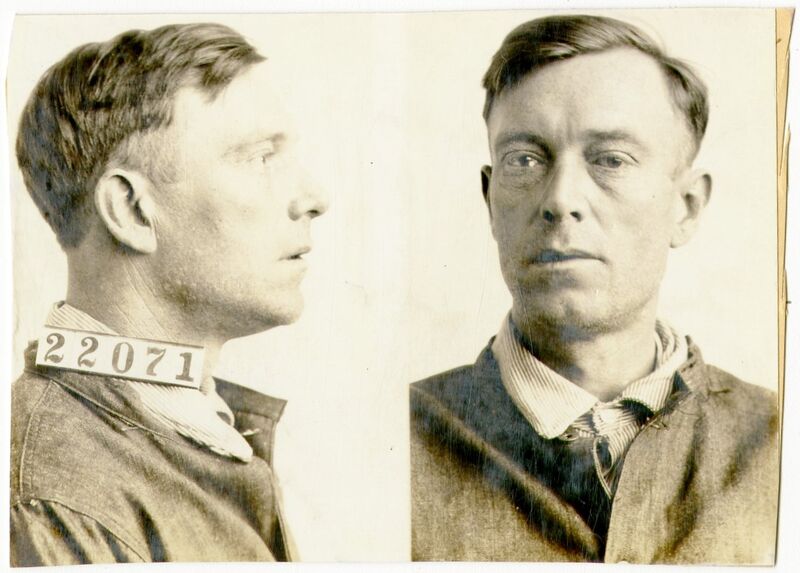
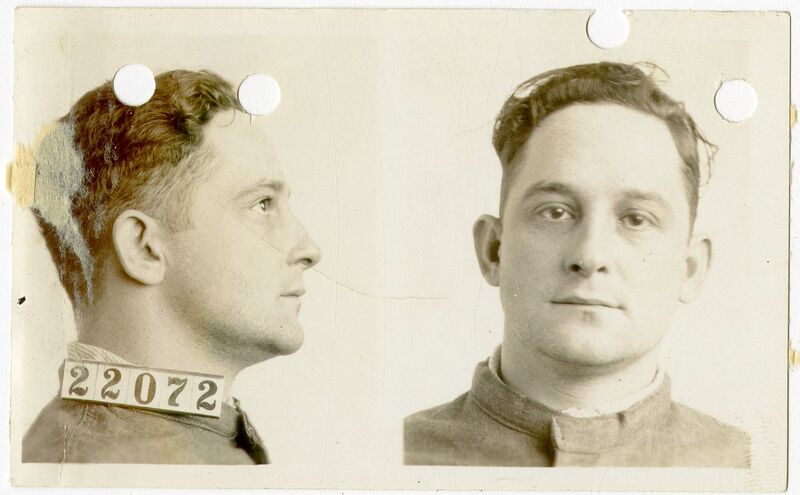
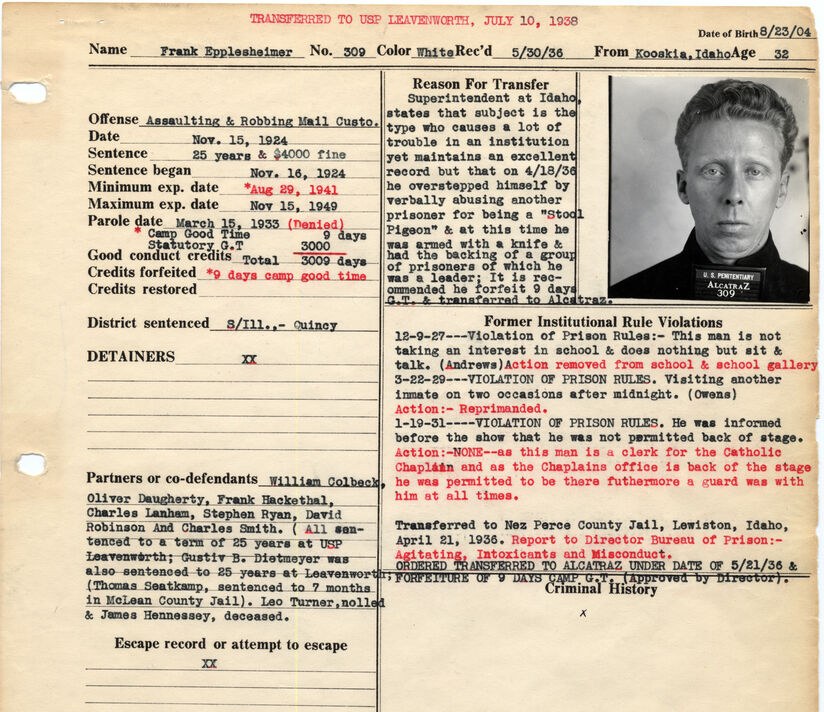
Six Bureau of Prisons identification photographs from Leavenworth, Nos. 22066 to 22072 (22068 not found), carry the names of six of those defendants on their backs. The National Archives catalogs each under the man’s name only. This archive’s match of the photographs to the case rests on the names on the backs, the run of numbers, and the Alcatraz page of Frank Epplesheimer, which lists the same men as his codefendants and gives the place of sentence as Quincy. Two pages of the East St. Louis Daily Journal report the Rondout mail-train robbery, which police blamed on a “former chief of Egan’s rats,” and the sentencing at Quincy. A 1950 Senate staff exhibit, Kefauver Part 4A, Exhibit 50, states without a source that Colbeck was killed in St. Louis in 1943.
People: William P. Colbeck, Oliver Daugherty, Gustav B. Dietmeyer, Frank Hackethal, Charles Lanham, Stephen Ryan, Frank Eppelsheimer, David Robinson, Charles Smith, Raymond Renard.
Danny Greene, Cleveland
The records on the 1977 killing of Danny Greene are filed with the Cleveland records: the Sixth Circuit’s 1984 opinion in United States v. Licavoli, 725 F.2d 1040, and Senate testimony of 1988. This section adds one record, the Sixth Circuit’s 1986 order abating the appeal of James Licavoli after his death. It does not mention Greene.